Room and access
Grand piano size and access: prepare the room and route
Prepare a clear picture of the room, delivery route and proposed piano position. Use the checklist to gather useful venue information, then share the actual proposal with us for assessment.
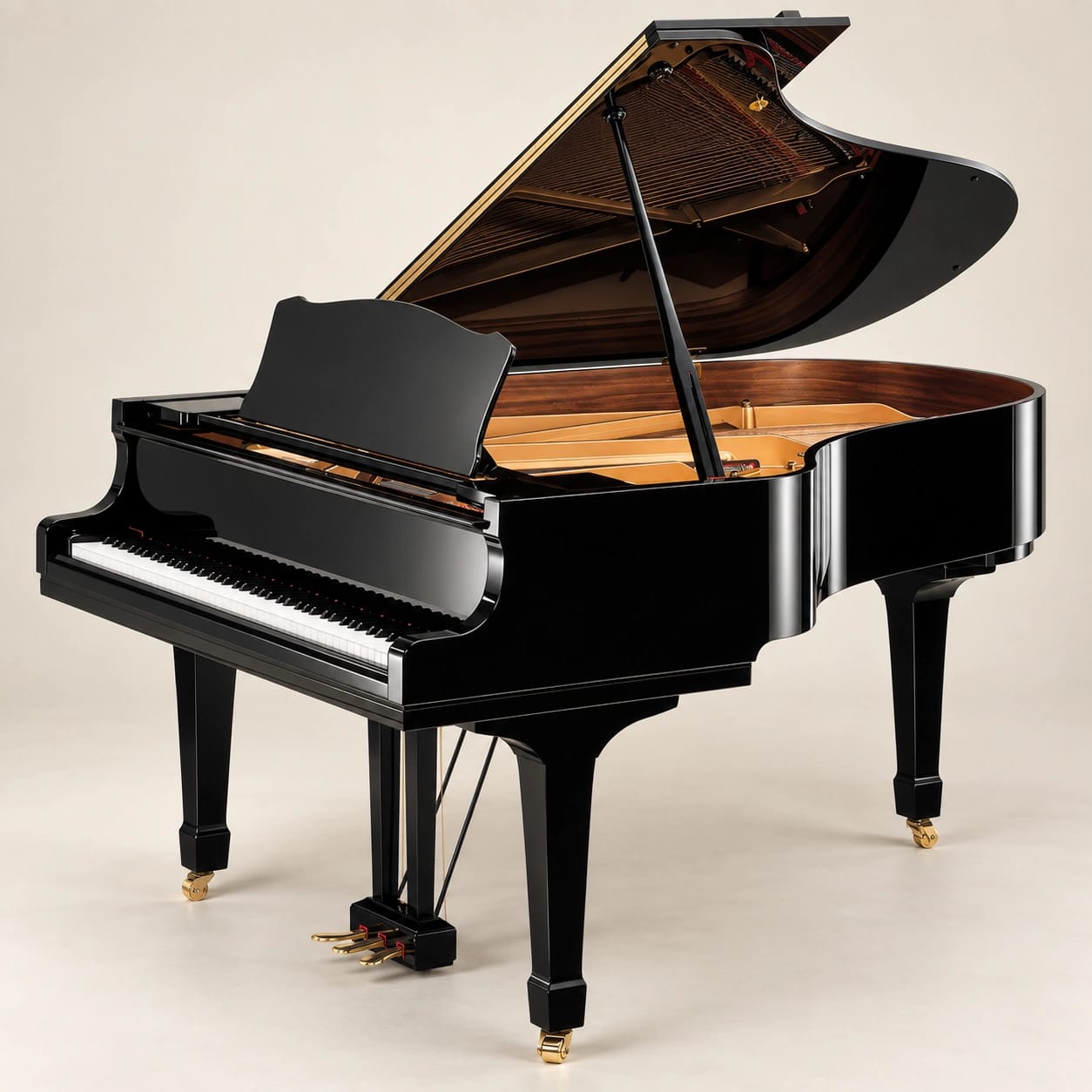
Black, white and clear grand pianos. We confirm availability and arrangements for each booking.
At a glance
What matters for your hire.
Plan the final position and the complete delivery route separately. Record the room layout, intended use, changes of level, doors, turns, lift information and access periods. Send that information for assessment. Published piano dimensions, photographs and a completed checklist do not establish that a doorway, lift, stage or floor is suitable.
At a glance
From room idea to an assessable route
Name the instrument and use
Identify the proposed piano and what will happen around it.
Sketch the final room
Show the real furniture and activity layout.
Trace the whole route
Connect the arrival point, transitions and final position.
Flag specialist questions
Separate lift, stage, structural and handling assessments.
Confirm both visits
Agree delivery and collection conditions before relying on the plan.
Let’s talk about your hire
Have a date or venue in mind?
Tell us the occasion, the piano and the details you know. We can help work through the rest.
Your enquiry
Prepare an access enquiry brief
Organise non-sensitive route questions. This does not calculate fit or send information to the business.
Your notes stay in this page. Nothing is sent or saved automatically.
0 / 4,000 enquiry-note characters. Only answered fields and selected checks are included.
Read or select your brief
Piano size and access enquiry brief

Proposed instrument and use: To confirm
Final-position plan: To confirm
Route sequence: To confirm
Changes of level: To confirm
Venue information available: To confirm
Collection changes: To confirm

Planning checklist
[ ] Use the actual piano model rather than a similar instrument.
[ ] Show the room as it will be furnished.
[ ] Connect route photographs to a numbered sketch.
[ ] Identify approximate or missing measurements.
[ ] Flag all changes of level for assessment.
[ ] Check access for collection as well as arrival.
[ ] Obtain specialist confirmation instead of calculating safe fit.
[ ] Communicate changes before using an earlier assessment.

Planning notes only. Piano availability, access and arrangements need confirmation before booking.
The practical details
Plan your hire with confidence.
Explore the parts that matter to your plans. If you’re unsure, we can talk them through with you.
A little more about this hire
The question “Will a grand piano fit?” has more than one answer. There is the space occupied by the instrument, the usable space needed around it and the route required to place it in the room. A floor plan that answers only the first question can miss the parts that make a booking difficult.
This guide helps you gather useful information before an access assessment. It is not a moving guide and it does not calculate safe clearances, lifting methods or floor capacity. Those decisions belong with the venue and appropriate specialists using the actual instrument, route and conditions.
You can make the assessment more useful by describing the whole route, showing what will be in the room and being clear about how the piano will be used. The aim is a complete picture with uncertainties labelled, rather than a confident answer based on one doorway measurement.
Explore the topics on this page
Separate the instrument, activity and route
Start with three sketches or notes. The first identifies the proposed instrument and its position. The second shows the activity around it: the player, audience, camera positions, furniture or display circulation. The third follows the route from the authorised loading location to the final position. Keeping these views separate helps prevent a visually attractive layout from being mistaken for a delivery assessment.
Read the detail about Separate the instrument, activity and route
The collection currently includes the white Stenberg 152, black Yamaha C3 and clear Teschendorf M170. Use the actual model name when discussing the proposal. Do not substitute dimensions from a similarly named instrument, a manufacturer's different version or a photograph found elsewhere. Ask the business to confirm the instrument information needed for your particular assessment.
Space around a piano depends on the intended activity and the room. A photographic composition has different working requirements from a performance or a display beside visitor circulation. Describe the task rather than inventing a universal clearance. The final arrangement must be considered with the venue’s requirements, the performer or production team’s needs and the supplier’s assessment of the instrument and route.
Record the final room as it will actually be used
An empty-room photograph is a useful start, but the delivery may happen after tables, chairs or scenery have been installed. Show the expected room condition at arrival as well as the finished layout. Mark substantial objects, fixed counters, narrow passages and any part of the floor plan that will be occupied by another supplier’s equipment.
Read the detail about Record the final room as it will actually be used
Give the proposed piano location a clear label. If you are considering alternatives, identify them as options rather than moving the label between versions of the plan. Explain why each position is being considered: sightlines, visual composition, performance focus or the relationship to another part of the programme. The reason can help the team suggest a workable alternative when the preferred location raises questions.
Do not turn a rough sketch into a scaled drawing by adding precise-looking numbers that have not been measured. State which dimensions are measured, which come from venue documents and which are approximate. Include the date of your own observation if the room is still changing. A simple accurate sketch is more useful than a polished plan that conceals uncertainty.
Follow the route from the correct arrival point
Ask the venue which arrival point a piano delivery would be permitted to use. The public entrance and the supplier entrance may not be the same. Begin the route description there, then follow every transition to the intended room: external approach, entrance, corridors, doors, corners, changes of level and the final position.
Read the detail about Follow the route from the correct arrival point
Photographs should show how these parts connect. A close-up of a doorway without its approach can leave the next turn unclear. Use a numbered sequence that corresponds to the route sketch, and add a short note describing what each image shows. If a section cannot be inspected, record that gap instead of assuming it resembles another part of the building.
Include restrictions on the use of that route, such as venue-controlled access periods or areas shared with guests. Ask the venue to confirm its own rules. Do not infer permission from the fact that furniture or other equipment has previously been delivered there. A route that works for a different object or a different event is useful context, not approval for this piano booking.
Treat doors and turns as connected questions
A single width measurement cannot describe an entire route. The approach to an opening, the direction of travel afterwards and nearby obstructions can all matter to the assessment. Record what is present without deciding how the instrument should be manoeuvred. The specialists responsible for the delivery need to determine the method, equipment and feasibility.
Read the detail about Treat doors and turns as connected questions
Where measurements are requested, make clear what was measured. A door leaf, a structural opening and the usable opening with the door in its permitted position are different things. Ask the venue or supplier which information they need rather than sending an unexplained number. If doors have fixed hardware or restricted opening, show that in the photographs and description.
Do not remove doors, alter fittings or assume equipment can be dismantled to make a route work. Any proposed building change belongs with the authorised venue representative and relevant specialists. The same caution applies to interpreting published piano dimensions: body measurements are not a promise about how an instrument will pass through a connected sequence of spaces.
Identify stairs, stages and lifts early
Changes of level should be visible in the first enquiry. The booking process distinguishes stairs or stage access from lift access, but selecting an option does not certify that the actual route is suitable. Describe the location and nature of each change, and ask what supporting information is required for assessment.
Read the detail about Identify stairs, stages and lifts early
For a lift, request the venue’s relevant information and operating conditions. That may include its dimensions, stated capacity and who controls access, but do not use those figures to make your own loading decision. The combined requirements of the instrument and the proposed delivery method need specialist consideration. A lift label alone does not resolve the complete route into and out of it.
For a stage or raised platform, ask the venue who can confirm the structure’s suitability for the proposed use. Do not convert a published piano weight into a floor-loading calculation or assume a temporary platform is equivalent to a permanent stage. Keep structural approval, delivery access and performance layout as separate questions, and avoid promising a final position until the relevant answers are available.
Give the performer or production team a usable layout
If the piano will be played, ask the performer what they need to understand about its position and relationship to the room. Share a layout rather than expecting the model name to answer every question. Include other performers, the audience direction and any cueing or production requirements that affect the proposed arrangement.
Read the detail about Give the performer or production team a usable layout
For photography or filming, identify intended camera positions and whether the composition changes during the session. If those changes would require moving the piano, explain that before booking. A request for several shots is not automatically a request for several approved instrument positions. Plan around an agreed placement where possible and have any proposed movement assessed separately.
For a display, consider how people will move around the completed setting and how other furnishings are installed. Ask the venue to confirm its applicable circulation and safety requirements. This guide does not specify universal public-access clearances. Its purpose is to ensure that the piano position is considered within the whole room, rather than added after every other part of the layout has been fixed.
Plan the room condition at delivery and collection
The route needs to work at both ends of the hire. A corridor that is clear during installation may later contain packed furniture, staging or catering equipment. Ask the event or site team how the agreed route will remain available for collection, and include that task in the handover rather than leaving it to whoever happens to be present.
Read the detail about Plan the room condition at delivery and collection
Record which role opens the building, controls any restricted area and confirms that the room is ready. Delivery and collection may fall on different days or shifts, so one person’s knowledge should not be the only record. Share the relevant plan privately with the people responsible and keep a current copy of the accepted arrangements.
If the room, access point or programme changes, tell the business before relying on the old assessment. Do not assume a nearby room is interchangeable or that a later collection can use another entrance. The revised route may need different information or may not be accepted. Changes are easier to resolve when communicated before other equipment and schedules make the original plan difficult to adjust.
Build an access pack that answers useful questions
Keep the pack concise enough to review. Start with the model being considered, intended use, proposed dates and a description of the venue type. Add the final-position sketch, numbered route photographs and any relevant venue documents. Include a clear list of unanswered questions so the recipient does not have to infer what is still missing.
Read the detail about Build an access pack that answers useful questions
Use filenames or labels that describe the route sequence, such as arrival point, first corridor and room entrance. Avoid a collection of unlabeled images taken in different directions. If there are alternative routes, give each one a separate label and explain whether the venue has approved it for consideration. Permission to assess a route is different from confirmation that delivery can proceed.
Before sending, check the pack against the actual proposal. Remove obsolete plans, identify approximate measurements and ensure the piano location is consistent across documents. Personal addresses, access codes and contact details should go only through the appropriate private correspondence. The browser tool on this page is for organising the questions, not for storing sensitive site information or approving the route.
Include a plain-language description of any difference between the inspection and the event day. For example, a temporary display may be absent when photographs are taken but present when delivery is scheduled. State who can verify the final arrangement and when that information will be available. Where several suppliers share the space, ask the organiser to coordinate their plans so the route description reflects the combined setup. This does not require you to decide the delivery method. It ensures the people assessing the route know which conditions are stable and which are still changing. An assessment based on an accurate incomplete picture is more useful than one based on a complete-looking plan that leaves out a material change.
Recognise when to pause and ask for assessment
Pause when an answer depends on equipment, lifting, structural capacity or a route you cannot inspect. These are not gaps to fill with a general rule from the internet. Tell the business what is uncertain and ask who needs to assess it. You can still explore the booking while being honest that the location is not yet confirmed.
Read the detail about Recognise when to pause and ask for assessment
The same applies to outdoor or partly exposed positions. A roof, marquee or covered walkway should not be treated as automatic evidence of suitable conditions. Describe the exact proposal and ask for individual assessment. Do not move an instrument outside or change the setting based on a diagram intended only to organise an enquiry.
A useful outcome is a clear accepted plan, or an early decision to explore another location. Neither requires you to become a piano mover. Your contribution is accurate information, an available venue contact and timely communication when conditions change. Let the responsible specialists decide the physical arrangements and keep the confirmed route and position with the final booking record.
The collection
Find your grand piano.
Explore the instrument as well as its finish. We can talk through the right option for your plans and dates.
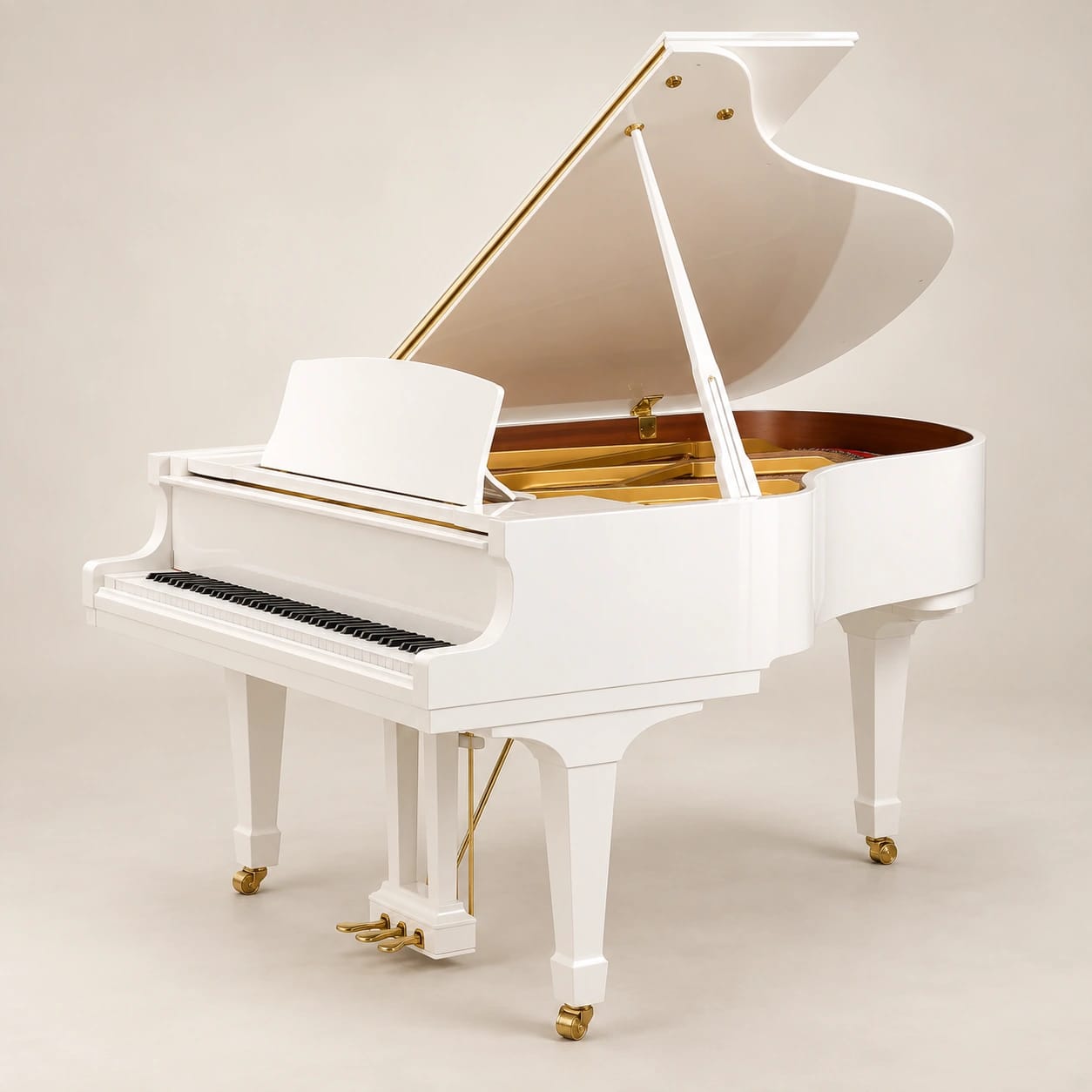
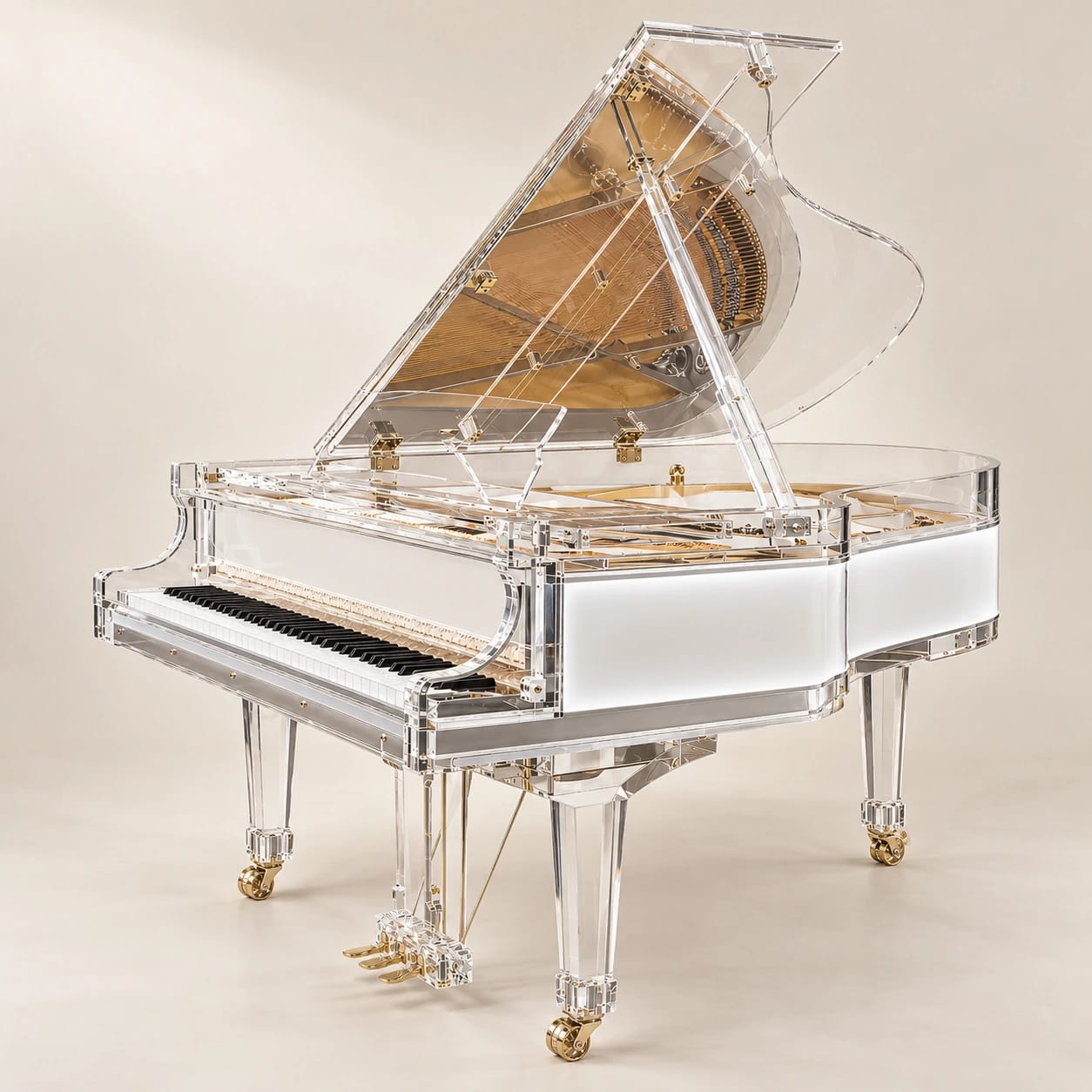
Studio visualisations. Date availability and venue arrangements are confirmed separately.
Good to know
Your questions, answered.
Can I use the product dimensions to confirm a doorway fit?
No. Product dimensions describe the instrument, not the complete delivery method or connected route. Provide the actual model, opening information, approach and subsequent turns for assessment. Do not treat a single measurement, a photograph or an online comparison as confirmation that delivery is possible.
Does selecting lift access in the booking form approve my lift?
No. It identifies an access requirement for the booking. The particular lift, its operating conditions and the connected route still need appropriate assessment. Obtain the venue’s information and ask what else is required; do not calculate suitability from the lift’s displayed capacity alone.
Should I measure the space for a player as well as the piano?
Describe the intended activity and include the player, audience or production requirements in the layout. The appropriate working space depends on the actual use and venue conditions. This page does not supply a universal clearance or replace the performer’s requirements and the venue’s assessment.
What if we want to change the piano’s position after delivery?
Raise possible position changes before booking and request agreement for any later change. Do not move the instrument yourselves or assume that remaining in the same room makes relocation acceptable. The new position, route and appropriate specialist arrangements may need reassessment.
Can the access pack include photographs from the venue website?
They can help explain a general idea, but identify their source and do not treat them as a current route inspection. The venue may have changed or the images may omit important transitions. Current, clearly labelled information about the actual proposed route is needed for a useful assessment.
Let’s talk about your hire
Tell us what you’re imagining.
Tell us the occasion, the piano and the details you know. We can help work through the rest.