Plan your hire
Piano hire guides: find the next decision to make
Find the guide that answers your next piano hire question, from choosing the instrument to preparing the venue. Use the practical checklists and tools, then talk through any remaining details with us.
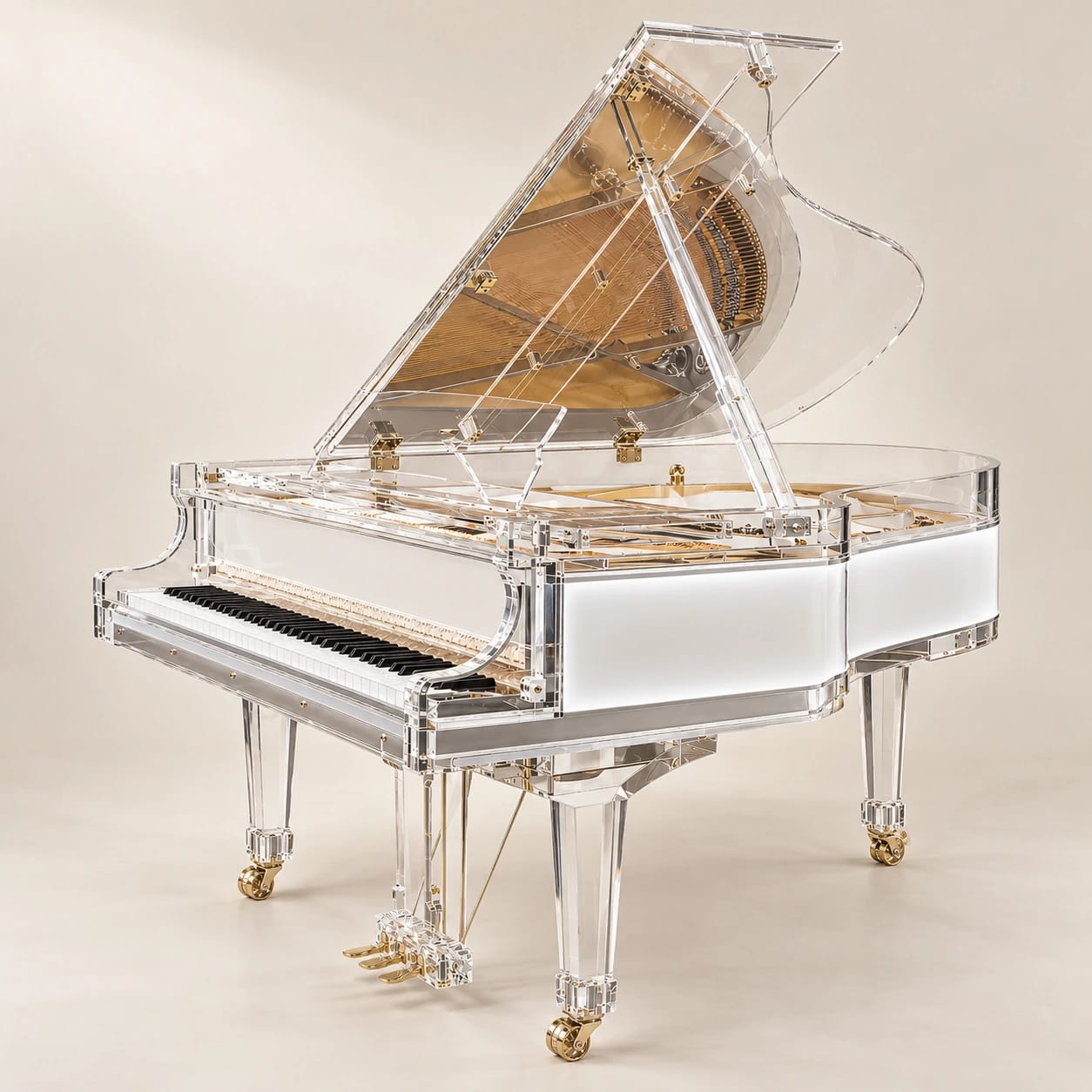
Black, white and clear grand pianos. We confirm availability and arrangements for each booking.
At a glance
What matters for your hire.
Begin with purpose, location and dates. Then use the size-and-access guide for physical planning, the event checklist for coordination, the duration guides for timing choices and the specialist briefs for your intended use. Confirm unresolved arrangements with Piano Hire Australia before relying on them.
The collection
Find your grand piano.
Explore the instrument as well as its finish. We can talk through the right option for your plans and dates.


Studio visualisations. Date availability and venue arrangements are confirmed separately.
At a glance
Find the next planning step
Define the purpose
Explain performance, display, photography or a combination.
Locate the uncertainty
Choose space, timing, coordination or specialist use.
Open the relevant guide
Collect information for that decision.
Build a short brief
Separate preferences from requirements and unknowns.
Ask for confirmation
Use the enquiry or booking process to agree arrangements.
Let’s talk about your hire
Have a date or venue in mind?
Tell us the occasion, the piano and the details you know. We can help work through the rest.
The practical details
Plan your hire with confidence.
Explore the parts that matter to your plans. If you’re unsure, we can talk them through with you.
A little more about this hire
There is no need to solve every piano-hire question at once. Start with the decision that could change the rest of the plan: what the instrument is for, where it will stand, when it is needed or what still needs permission. The guides in this collection help you turn those questions into a clear request, with enough information for the business and venue to assess the arrangements.
Some visitors already know the exact piano and date. Others are exploring whether a grand piano belongs in a property campaign, event or photographic brief at all. Both are sensible starting points. Use this page to identify your next step rather than treating a long checklist as a requirement to understand the whole delivery process yourself.
The guides offer preparation methods and questions. They do not approve access, promise availability or replace the terms of an accepted booking. Where the answer depends on your venue, schedule or intended use, gather the relevant information and ask for confirmation.
Explore the topics on this page
Start with the outcome you want
A useful opening brief explains what the piano should do. Is someone playing it for an audience, is it the visual focus of a room, or is it part of a photographic composition? If it serves several purposes, list each one. A display that later becomes a live performance creates different questions from a display that is never intended to be played.
Read the detail about Start with the outcome you want
Write the outcome in ordinary language before choosing a model. You might need a traditional dark instrument for a formal stage, a light visual element in a styled room or a clear instrument that allows the surroundings to remain visible. Those are preferences to discuss, not claims that a particular finish will produce a business result or suit every space.
The current collection contains three grand pianos: the white Stenberg 152, black Yamaha C3 and clear Teschendorf M170. Their product pages are the place to compare the actual instruments. Keep questions about availability, particular technical requirements and your proposed use in the enquiry. A photograph can help communicate a preference, but it cannot establish the physical suitability of an instrument for your venue.
Use the access guide before committing to a position
The size-and-access guide helps you separate three questions that are often combined: whether the piano looks right in the room, whether there is enough usable space for the intended activity and whether the delivery route can be accepted. A positive answer to one is not an answer to the others. A large room can still have a difficult approach.
Read the detail about Use the access guide before committing to a position
Begin with an outline of the proposed location and the route from the venue’s authorised loading point. Note changes of level, doors, turns, lifts and any restricted access periods. Collect existing plans if the venue has them, but explain when they are approximate or when the room will contain furniture not shown on the plan.
Your task is to provide a clear description, not to calculate safe loading or certify that a piano will fit. The venue and appropriate specialists need to confirm the relevant requirements. If a proposed location is uncertain, identify an alternative for discussion rather than assuming the instrument can be repositioned on arrival. The separate floor-plan template can help organise the information without pretending to be an access assessment.
Choose a timing guide for the actual use
A piano booking has more than a start and finish date. There may be a rehearsal, room dressing, optional tuning, guest access and a period for clearing equipment afterwards. Identify the earliest required use and the latest permitted collection, then check whether the venue’s supplier access periods support that sequence.
Read the detail about Choose a timing guide for the actual use
Use the same-day versus overnight comparison when the question is whether everything can happen on one booked date. Same-day refers to delivery and collection on the same future date; it is not a promise of delivery today. The ordinary online process requires at least two days’ notice. An urgent enquiry is still a request to assess possibilities, not confirmation of availability.
Use the long-term guide when the proposal extends beyond the standard online duration choices or depends on a changing campaign end date. Hires beyond thirty nights need an individual quote. That guide helps you explain intended use, site responsibility and the questions to resolve about extensions or collection. It does not create a rolling rental agreement or imply that an open-ended period has been accepted.
Bring an event together with the event checklist
An event involves several people who may each see only part of the plan. The venue understands room access, the performer knows the playing requirements, the organiser controls the programme and the supplier assesses the hire arrangements. The event checklist helps collect those pieces into one current version rather than sending everyone a different fragment.
Read the detail about Bring an event together with the event checklist
Start with the decision owners. Record which role can approve the location, which role confirms the schedule and who will be present for the relevant handovers. Personal names and contact details belong in private correspondence. The planning tool can use role descriptions so the brief remains useful without collecting unnecessary personal information.
Work backwards from the first use. Identify the room condition required for placement, any optional tuning request and the time at which the instrument must be ready. Then work forwards from the last use to collection. If another event or a cleaning team needs the room afterwards, show that dependency. The checklist is a coordination aid, not permission to move the instrument or alter the agreement on the day.
Find the right specialist brief for your project
A specialist brief is useful when ordinary event information misses the reason you are hiring. A photography project may need the proposed camera views and room dressing explained. A performer brief may need the instrument preference and programme described. A memorial plan may need careful coordination between music and spoken contributions without placing unnecessary decisions on the family.
Read the detail about Find the right specialist brief for your project
Select the guide that matches the person doing the organising. The photographer planning a shoot has different responsibilities from the event planner booking a piano for a client. Likewise, an agent overseeing a property campaign needs a record of approvals and dates, while a stylist needs to coordinate the installation with furniture and photography. The related audience pages address those professional handovers.
Use only the details that affect your project. A guide should reduce uncertainty rather than encourage you to invent answers for fields that do not apply. Mark an unknown as unknown and identify who can resolve it. A short, accurate brief with a few visible questions is more useful than a long document containing assumed access, unapproved timing or an instrument choice nobody has discussed.
Keep choices, requirements and confirmations separate
These three categories make a planning document easier to read. A choice is something you prefer, such as a finish or proposed position. A requirement is something the project needs, such as readiness before a rehearsal. A confirmation is something the relevant party has agreed. Mixing them can make an attractive idea appear more settled than it is.
Read the detail about Keep choices, requirements and confirmations separate
For example, an event organiser may prefer a piano beside a window. The performer may need to see a cue from elsewhere in the room. The venue may approve one route but not another. Record those as separate statements until a position has been discussed and accepted. Do not remove a constraint simply because the preferred photograph or floor plan looks convincing.
Use a simple status beside outstanding questions: to discuss, information requested or confirmed. Include the date of your own planning update so colleagues can identify the latest version. That date refers to your brief, not a claim that this website has reviewed your venue. When a material fact changes, bring the question back to the people responsible instead of treating an earlier confirmation as permanently valid.
Read product information and practical terms together
The collection pages explain the available instruments. The process page explains the general booking journey. The terms explain responsibilities. Reading them together gives a fuller picture than using any one page as a complete agreement. A product image, for example, does not confirm delivery to the place shown in your mood board.
Read the detail about Read product information and practical terms together
Avoid transferring details from another supplier’s website or an old hire into this booking. Stock, services, timing and terms can differ. The fact that a performer has used a similarly named piano before also does not establish that every specification or arrangement is identical. Share genuine requirements and ask about the particular instrument offered.
On-site tuning is optional and should be requested explicitly when needed. A proposed extension, a venue change or a different placement may need reassessment. If you are comparing quotes, compare the complete scope, not just a line labelled hire. Keep the current accepted quote and terms with the final schedule so the people organising the event are working from the same information.
Use the planning tools without mistaking them for approval
The tools in these guides build a brief or checklist from information you enter. They are deliberately focused on preparation: the result should help you ask better questions and remember relevant details. A completed field does not mean the business has read it, approved it or reserved a piano. Copy the result into your own working document when useful.
Read the detail about Use the planning tools without mistaking them for approval
Do not enter payment details, private addresses or personal contact information into a general planning tool. Descriptions such as function room, private residence or appointed venue representative are usually enough to organise the first draft. Share booking-specific personal information only through the appropriate private enquiry or booking process.
Review the output before sending it on. Remove irrelevant points, explain uncertain measurements and distinguish a preferred date from one already agreed. If a tool asks about access, its purpose is to capture what needs assessment, not to calculate a safe route. If it asks about timing, its output is a proposed sequence rather than a delivery promise. The final arrangements still require confirmation.
If several people are contributing, nominate one person to consolidate the brief rather than circulating every unfinished version. Ask contributors to return the answer to a specific question and identify its source: a venue plan, a performer requirement or an agreed booking detail. Keep those answers beside the relevant question. This makes it easier to distinguish an actual response from a suggestion added during discussion. When the brief is ready, read it as someone seeing the project for the first time. They should be able to identify the purpose, the proposed arrangement and the remaining questions without reconstructing the conversation that produced it. This small editorial step often makes a planning document much more useful than adding another page of background.
Know when you have enough information to enquire
You do not need a perfect event plan before contacting the business. A useful initial enquiry can contain the intended use, preferred instrument or finish, approximate dates, location and the most important unresolved constraint. Explain whether you are exploring an idea or ready to discuss a defined booking. That context helps keep the conversation at the right level.
Read the detail about Know when you have enough information to enquire
Before you rely on an arrangement, however, the important unknowns need resolving. A clear access description, an agreed period and a shared understanding of the intended use matter more than a beautifully designed brief. If a venue decision could change the whole proposal, say so early. It is better to identify a dependency before committing other suppliers to a timetable.
Return to the relevant guide when the plan changes. You may begin with a visual idea, move to access questions and then use the event checklist to coordinate the final schedule. The guides are designed for that progression. Keep the final booking correspondence as the authoritative record and use your planning documents to make its practical requirements clear to everyone involved.
Want to organise your notes first?
Your enquiry
Choose your planning starting point
Create a short list of the decisions to make next. This tool does not send or approve a booking.
Your notes stay in this page. Nothing is sent or saved automatically.
0 / 4,000 enquiry-note characters. Only answered fields and selected checks are included.
Read or select your brief
Piano hire planning starting point

Intended purpose: To confirm
Main unresolved question: To confirm
Information already available: To confirm
Decision owner: To confirm
Next action: To confirm

Planning checklist
[ ] State the intended use in one sentence.
[ ] Separate preferences from essential requirements.
[ ] Identify the earliest use and latest permitted collection.
[ ] Keep access questions visible.
[ ] Choose a guide that matches the current uncertainty.
[ ] Review the brief before sharing it.
[ ] Confirm arrangements through the booking process.

Planning notes only. Piano availability, access and arrangements need confirmation before booking.
Good to know
Your questions, answered.
Which guide should I read first?
Start with the uncertainty most likely to change the plan. If you are unsure about the room or route, use the size-and-access guide. If the location is settled but several people need coordinating, use the event checklist. If the dates are the problem, compare same-day, overnight or longer hire arrangements.
Can I use the guides before choosing a piano?
Yes. Define the intended use and the requirements first, then compare the current collection. It is useful to identify a preferred finish, but a final selection also needs the actual dates, proposed location and any technical requirements discussed. A guide or product page does not reserve an instrument.
Do the tools send a request to Piano Hire Australia?
No. They help you prepare a copyable brief in your browser. Review the information, remove anything unnecessary and use the appropriate enquiry or booking route when ready. Completion of a tool is not evidence that the business has received, checked or accepted your plan.
What if a guide raises a question I cannot answer?
Leave the question visible and identify who can answer it. A venue representative may hold access information, while a performer may need to clarify playing requirements. You can still make an initial enquiry with those uncertainties explained. Avoid filling the gap with an assumption that later becomes an instruction.
Let’s talk about your hire
Tell us what you’re imagining.
Tell us the occasion, the piano and the details you know. We can help work through the rest.