Event preparation
Event piano checklist: from first brief to collection
Bring your event’s piano decisions into one practical checklist. Work through the instrument, venue, preparation and collection, then use your brief to discuss the details that still need an answer.
Black, white and clear grand pianos. We confirm availability and arrangements for each booking.

At a glance
What matters for your hire.
Confirm the intended use and instrument, obtain venue permission, document the full access route, agree readiness and collection requirements, request optional services explicitly and assign a role for each handover. Review changes before the event and keep the accepted booking as the authoritative record.
At a glance
Move from questions to an agreed event plan
Define the brief
Explain the purpose, instrument preference and fixed constraints.
Check the venue
Gather permission and complete access information.
Coordinate readiness
Bring rehearsal, optional services and room setup together.
Confirm the handovers
Assign roles and agree collection before the event.
Review changes
Keep the accepted booking and current schedule aligned.
Let’s talk about your hire
Have a date or venue in mind?
Tell us the occasion, the piano and the details you know. We can help work through the rest.
Your enquiry
Build your event piano checklist
Capture non-sensitive planning information and copy it into your working brief. This tool does not send a booking request.
Your notes stay in this page. Nothing is sent or saved automatically.
0 / 4,000 enquiry-note characters. Only answered fields and selected checks are included.
Read or select your brief
Event piano planning checklist

Event purpose: To confirm
Instrument preference: To confirm
First readiness requirement: To confirm
Venue permission and access: To confirm
Requested services: To confirm
Collection and handover: To confirm

Planning checklist
[ ] Explain every intended use.
[ ] Confirm the actual instrument rather than only a finish.
[ ] Obtain permission for the specific room.
[ ] Document the whole route and changes of level.
[ ] Request tuning explicitly if needed.
[ ] Keep performer and venue schedules consistent.
[ ] Agree collection before the event.
[ ] Assign roles for both handovers.
[ ] Request confirmation for material changes.

Planning notes only. Piano availability, access and arrangements need confirmation before booking.
The practical details
Plan your hire with confidence.
Explore the parts that matter to your plans. If you’re unsure, we can talk them through with you.
A little more about this hire
A useful event checklist does more than collect ticks. It shows what has been decided, what still needs an answer and who can provide that answer. Piano hire touches the event programme, the venue, the performer and the people controlling access, so a missing detail can sit between teams without anyone realising they own it.
Use this checklist as a working document from the first enquiry through to collection. You do not need every answer before contacting Piano Hire Australia. You do need to make uncertainty visible, especially where it affects the proposed instrument, location, timing or intended use.
The checklist is for coordination. It does not approve a route, reserve a piano or replace the current terms and accepted booking. Delivery, collection and requested services need confirmation for the actual event. Keep the final arrangements together so everyone responsible is working from the same version.
Explore the topics on this page
Write a one-paragraph event brief
Start with the purpose of the piano, the type of event, the proposed venue and the dates. Explain whether the instrument will be played, displayed, photographed or used in several ways. The person reviewing the enquiry should be able to understand the proposal without reading a full production document or interpreting a mood board.
Read the detail about Write a one-paragraph event brief
Add the most important constraint. That might be a fixed rehearsal time, a restricted venue access period or an unresolved room position. Put it near the beginning rather than hiding it in an attachment. A clear constraint helps the conversation focus on what could change the arrangement, while ordinary preferences can be considered around it.
Keep the brief factual. Do not describe an instrument as available until the booking process confirms it, and do not promise delivery arrangements on behalf of the business. If the venue or programme is provisional, say so. An accurate early brief is useful even when incomplete; a confident but assumed brief can create instructions that nobody has actually agreed.
Confirm the instrument with the people using it
Compare the current collection with the intended use and presentation. The available models are the white Stenberg 152, black Yamaha C3 and clear Teschendorf M170. Identify the model being considered rather than using only a colour description, particularly when a performer or production team has a specific requirement.
Read the detail about Confirm the instrument with the people using it
Ask the performer for the information that genuinely affects the choice. Share that requirement with the business and distinguish an essential condition from a preference. Do not assume that every grand piano, or another instrument with a similar model name, meets the same needs. The actual instrument and the proposed programme must be discussed together.
If the choice is mainly visual, still check how it relates to the room and activity. A preferred image does not establish that the instrument fits the space or that a similar scene is possible at the venue. Mark visualisations as references to an idea rather than evidence of a previous hire, and avoid building the final programme around an unconfirmed selection.
Get permission for the actual room and proposed use
Ask the venue whether an outside hired piano can be considered in the specific room and position. A general venue booking does not answer every supplier or instrument question. Identify any venue conditions relevant to arrival, placement, operation and collection, then share them with the business for assessment.
Read the detail about Get permission for the actual room and proposed use
Make sure the permission relates to the intended activity. A piano displayed during a reception, played during a ceremony and used for a later performance may touch different parts of the venue programme. Explain the full proposal rather than obtaining a general answer to an incomplete description. If the room changes after the first discussion, reopen the question.
For outdoor or partly exposed proposals, request individual assessment. Do not assume a marquee, canopy, terrace or temporary cover establishes suitable conditions. Identify an alternative indoor proposal if useful, but do not describe it as an approved fallback until it has been discussed. Venue permission and the supplier’s acceptance are separate parts of the decision.
Gather access information for both visits
Document the complete proposed route from the authorised arrival point to the piano position. Include changes of level, doors, turns, lifts and restricted areas. The size-and-access guide explains how to organise this information without attempting to choose a moving method or certify physical suitability yourself.
Read the detail about Gather access information for both visits
Check what the route will look like when the event is set up. Furniture, staging, signs and other suppliers’ equipment can change the usable path after an empty-room inspection. Tell the organiser which parts need to remain available under the confirmed arrangements. Do not assume that a route accepted for arrival will automatically be clear at collection.
The booking process distinguishes stairs or stage access from lift access, but selecting either option is not an access approval. Ask what information is needed for the particular venue and instrument. Avoid unsupported doorway, lift, floor or stage-loading claims. The people responsible for the premises and the specialist delivery arrangements need to assess those questions using current information.
Build the schedule around first readiness
Write the earliest time the instrument must be ready, including rehearsal or preparation before guests arrive. Then identify the venue access period that could support that requirement. Do not substitute the public event start for the first actual piano use. A programme can appear comfortable until the rehearsal and room-dressing sequence are added.
Read the detail about Build the schedule around first readiness
On-site tuning is optional. If required, request it explicitly and discuss its place in the schedule. The FAQs ask customers to allow a quiet hour for a tuning visit; the visit itself and its timing still require confirmation. Coordinate other activity in the room rather than assuming a requested tuner can work through every stage of setup.
Same-day hire refers to delivery and collection on the same booked future date, not immediate delivery today. The standard online process requires at least two days’ notice. If timing is urgent or unusual, explain the request and wait for a response. A preferred window, enquiry or provisional programme does not establish that the arrangement is available.
Assign roles for the handovers and the room
Identify which role can confirm the room is ready and which role will be present for the agreed handover. These may be different people for arrival and collection. Keep their contact details in private booking correspondence and ensure they can access the current plan without relying on a message forwarded at the last moment.
Read the detail about Assign roles for the handovers and the room
During the event, someone should know the agreed piano position and how to raise a concern or proposed change. This is especially useful when a planner leaves before the reception ends or a venue changes shifts. Do not assume responsibility transfers automatically because another team is now in the room; clarify the arrangements with the relevant parties.
Read the hire terms alongside the venue agreement and ask about unclear responsibilities before acceptance. The checklist cannot grant permission to move the piano, alter the setup or arrange work on it. If the programme requires a later position change, identify that need in advance so the business can assess appropriate arrangements rather than leaving a decision to the event team on the day.
Keep the performer and production brief consistent
Give the performer the confirmed instrument details and the agreed readiness information. If a detail remains provisional, label it that way. Avoid sending a venue running order that presents an unconfirmed delivery request as a fixed arrival. The same distinction should appear in the organiser’s schedule and the information provided to other suppliers.
Read the detail about Keep the performer and production brief consistent
Ask the production team to identify any part of its plan that changes the piano position, access or use. Camera angles, lighting layouts and other stage equipment may influence the proposed arrangement. Describe those requirements for discussion rather than assuming the piano can be repositioned once the team sees the completed room.
Keep performer services separate from instrument hire unless a specific arrangement has been agreed. The presence of a piano does not establish that a pianist, sound system or technical crew is included. Check each supplier’s scope and retain the relevant confirmations. This prevents an instrument booking from carrying assumptions about other parts of the event programme.
Write a collection plan before the event begins
Collection should be part of the original plan rather than an afterthought when guests leave. Record the last intended use, the venue’s room-release requirement and the agreed collection arrangement. Explain if other suppliers need to remove equipment first or if the venue restricts access during particular periods.
Read the detail about Write a collection plan before the event begins
Ask who will ensure the route reflects the confirmed plan. A room full of packed furniture can be quite different from the installation layout. Tell the relevant event team what needs coordinating, without inventing handling instructions or asking them to move the piano. If the route or position has changed, communicate that before the collection visit.
If the event may overrun, raise the possibility early. Do not assume a collection team can wait indefinitely, switch days or use another entrance without agreement. The appropriate response may be a revised hire period or a different event sequence, but it needs discussion. Keep the accepted arrangement visible in the final schedule and private handover notes.
Make a final check and record material changes
Before the event, compare the current plan with the accepted booking. Check the instrument, dates, intended use, location, position, access description and requested services. Focus on differences rather than simply confirming that a booking exists. A small programme change can affect readiness or collection, while a room change can affect the entire assessment.
Read the detail about Make a final check and record material changes
Use one change log with a short description, the question it creates and whether it has been confirmed. The published FAQs explain that hire-time and venue changes are reviewed case by case. Do not assume a request is accepted because it has been sent, or because another event supplier has agreed to the same change.
After the hire, keep any useful planning notes for your next enquiry. Record what information was difficult to obtain or which internal handover needed more clarity. Do not treat a successful arrangement as blanket approval for a future venue, date or instrument. The checklist can be reused, but its answers should be current for each booking.
Give outstanding decisions a practical deadline based on the event sequence. A final instrument preference may be needed before the booking can be confirmed; a venue position decision may be needed before the route can be assessed. These are examples of dependencies to discuss, not universal cut-off rules imposed by this guide. Ask the relevant parties when they need the information and record the answer. If a decision cannot be made by then, tell the business rather than allowing the request to proceed with an assumption. The organiser can then understand which part of the programme remains provisional and avoid issuing conflicting instructions.
Give each on-site role the information it needs
The final checklist should produce a short handover for each role, not an instruction to read the entire project history. The person opening the venue needs the relevant arrival and access information. The performer needs the confirmed instrument and readiness details. The person responsible after the event needs the collection arrangement and the route conditions. Keep each handover consistent with the same accepted booking.
Read the detail about Give each on-site role the information it needs
Before circulating those notes, check that they contain confirmed information and identify anything still outstanding. If a detail is private, send it only to the people who need it through the appropriate channel. A useful handover makes the next action clear without implying authority to change the plan. Anyone receiving an unexpected request should know which role will contact the business for confirmation.
The collection
Find your grand piano.
Explore the instrument as well as its finish. We can talk through the right option for your plans and dates.

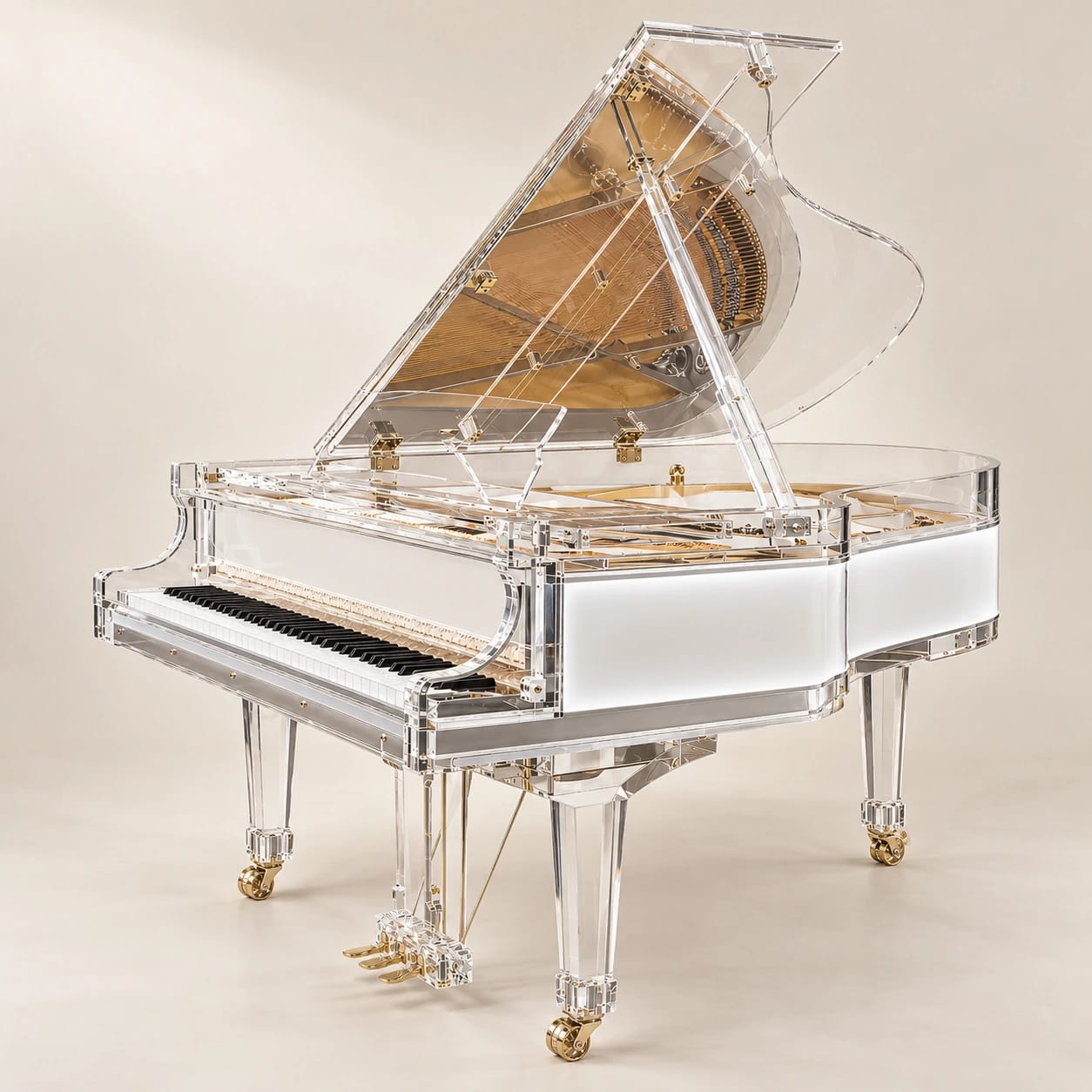
Studio visualisations. Date availability and venue arrangements are confirmed separately.
Good to know
Your questions, answered.
Do I need every checklist item completed before enquiring?
No. Send the useful information you have and identify the gaps. An initial enquiry can be provisional, but important uncertainties must be resolved before you rely on an arrangement. The checklist is designed to make those questions visible rather than encourage you to invent answers.
Does the checklist approve a venue for piano delivery?
No. It helps assemble information for assessment. Venue permission, the complete route and the proposed instrument still need the appropriate confirmation. Do not treat checked boxes, a floor plan or a selected access option as a certificate that delivery is possible.
Who should own the checklist?
Choose a role that can keep the organiser, venue and other relevant parties working from one current version. That might be the event planner or the person arranging the hire. Ownership of the document does not replace the responsibilities in the accepted booking and venue agreements.
Should we include tuning in the event schedule?
If on-site tuning is wanted, request it explicitly and discuss the timing. It is optional and is not established simply by booking a piano. Include the agreed visit alongside rehearsal and room activity so everyone understands when the space needs to be ready.
What should we do if the room changes late?
Tell the business promptly and describe the new room, position and route. Do not assume a nearby room is equivalent to the accepted location. The changed proposal may need assessment, and other parts of the booking such as timing or collection may need to be reconsidered.
Let’s talk about your hire
Tell us what you’re imagining.
Tell us the occasion, the piano and the details you know. We can help work through the rest.