Compare white and black
White vs black grand piano
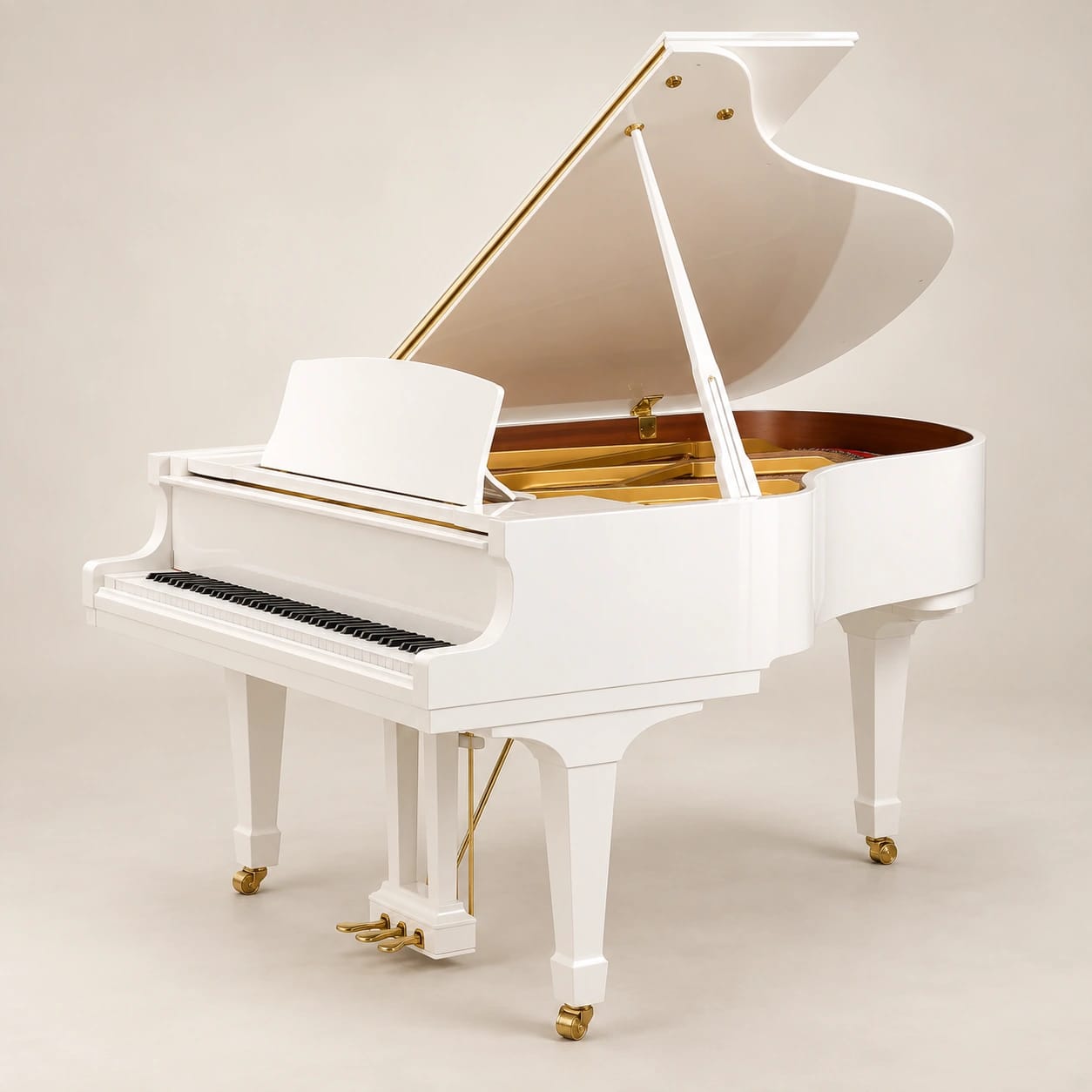
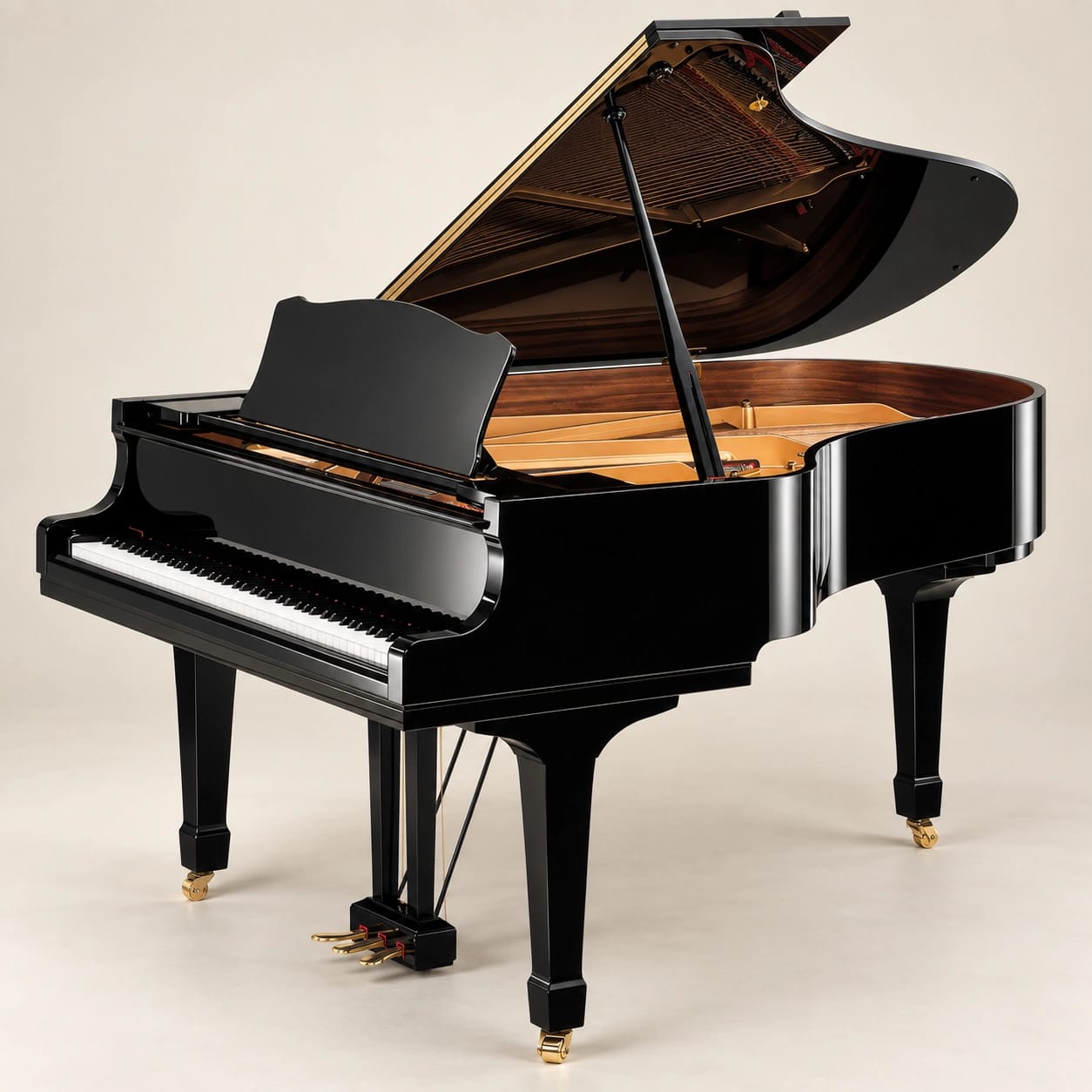
Compare the white Stenberg 152 and black Yamaha C3 in the context of your room, photographs and music. Consider the actual models with your performer, then discuss the preferred instrument with us.
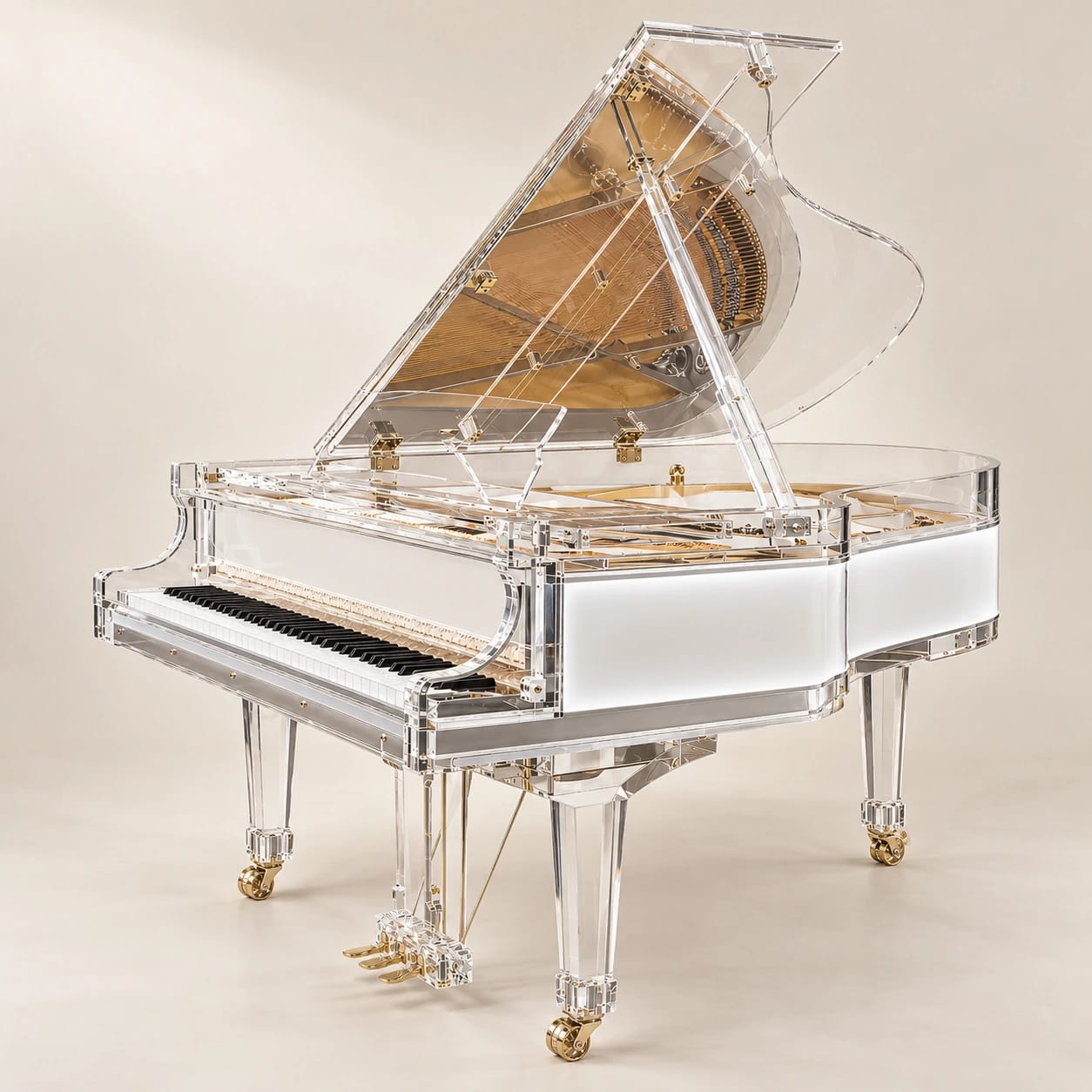
Black, white and clear grand pianos. We confirm availability and arrangements for each booking.
At a glance
What matters for your hire.
Compare the white Stenberg 152 and black Yamaha C3 in the context of your actual room, lighting, programme and photographs. Ask the performer to assess the proposed instrument separately from the visual choice. Colour alone does not establish musical suitability, room fit or delivery access. Identify any essential requirement, confirm the named model and date, and supply the same complete access information whichever finish you prefer. The live booking or quote controls the final hire scope and cost.
The collection
Find your grand piano.
Explore the instrument as well as its finish. We can talk through the right option for your plans and dates.
Studio visualisations. Date availability and venue arrangements are confirmed separately.
At a glance
Choose a model with clear reasons
Define the visual intention
State what the piano should do within the actual room and images.
Name the two options
Compare Gordon/Stenberg 152 and Sebastian/Yamaha C3 accurately.
Ask the performer
Resolve musical acceptance and preparation needs where relevant.
Assess the practical proposal
Supply dates, venue, route and position for the named model.
Confirm the choice
Record the accepted model and update the shared event brief.
Let’s talk about your hire
Have a date or venue in mind?
Tell us the occasion, the piano and the details you know. We can help work through the rest.
The practical details
Plan your hire with confidence.
Explore the parts that matter to your plans. If you’re unsure, we can talk them through with you.
A little more about this hire
Choosing between a white and a black grand piano is partly a visual decision, but the two stocked options are also different instruments. Piano Hire Australia's white piano is Gordon, a Stenberg 152. The black piano is Sebastian, a Yamaha C3. Treat them as named models to consider, not the same piano with a change of paint.
This comparison helps you work through the room, images, musical use and practical brief before choosing. It does not declare one finish more elegant, more professional or better sounding. The useful choice is the model and presentation that answer your particular event or production requirements, subject to availability and assessment.
Explore the topics on this page
Recognise that this is a model choice as well as a finish choice
The white option in the current collection is the Stenberg 152, known as Gordon. The black option is the Yamaha C3, known as Sebastian. Their identities matter when you enquire, particularly if a performer has a model requirement. Write the exact model in the brief so the stylist, musician and supplier are discussing the same instrument.
Read the detail about Recognise that this is a model choice as well as a finish choice
Do not attribute every difference between the two instruments to colour. A preference about musical response belongs in a discussion of the actual model and player's needs. A preference about how the piano reads in a photograph belongs in the visual brief. Keeping those questions separate prevents an aesthetic description from becoming an unsupported musical claim.
If you need a real acoustic grand but have no initial finish preference, ask the performer to consider the available options before building the room design around one. If the visual concept requires a particular finish, say that clearly and still obtain musical acceptance where playing is involved. Neither team should discover late that the other treated a preference as a fixed requirement.
The collection also includes the clear Teschendorf M170, Oscar. That is a separate option to investigate if the brief calls for it, rather than a reason to force a white-versus-black comparison when neither addresses the desired result.
Look at contrast within the actual room
Gather a current image or plan of the room as it will be used. Include the main background, flooring, large furniture and planned event styling. Ask what you want the piano to do visually: stand out, sit within a restrained composition, or create a relationship with a particular feature. Those are useful design intentions without requiring a universal rule about either finish.
Read the detail about Look at contrast within the actual room
A white or black object can read differently as its surroundings and illumination change. Ask the photographer or lighting person to assess the proposed combination rather than assuming one will always be more visible or more discreet. The decision should consider the actual view and output, not a colour preference detached from the space.
Use a small set of relevant references and label them as inspiration. A collection image or interior visualisation does not prove the piano has been hired at your venue or that the same visual result will be reproduced. Avoid treating an attractive room image as a technical or historical claim.
If several stakeholders have different preferences, ask each to identify the practical reason. “We need the instrument to remain distinct from this backdrop in the main shot” is easier to discuss than “black always looks better”. A specific intention gives the team something to test in the proposed composition.
Evaluate the main view at the time and in the arrangement that matters to the event, as far as the visual team can reasonably assess it. A room image taken under different lighting can still be useful context, but it should not be treated as a final appearance test. Ask the photographer or stylist to identify what remains uncertain and whether that uncertainty affects the choice of instrument or simply their own setup.
Keep a record of the visual priority rather than a long list of aesthetic adjectives. If the important aim is a clear silhouette beside a particular backdrop, say that. If the priority is a close image of the performer, explain the relationship between the subject and instrument. Specific intentions allow the visual team to solve the image within the agreed hire arrangement.
When the two options both answer the visual brief, let the remaining practical decisions stay visible: performer acceptance, actual date availability and the assessed proposal. There is no need to invent a strong colour preference merely to make the comparison end with a winner. A balanced decision can state that either appearance is acceptable while a named instrument still awaits confirmation.
Review the choice through the photographs you need
List the important images rather than trying to optimise every possible angle. A wide reception photograph, a portrait at the keyboard and a close detail of hands may place different demands on the visual composition. Share those priorities with the photographer and ask how the proposed finish relates to the subject and background.
Read the detail about Review the choice through the photographs you need
Consider wardrobe and nearby styling as part of the same frame. The question is not whether a white or black piano matches everything, but whether the important details remain clear in the chosen image. Let the photographer plan exposure, lighting and composition; the hire page does not promise a particular photographic result from a finish choice.
If the piano will appear in both stills and video, tell the production team. They may need to consider different views, lighting setups or performance moments. Keep those production decisions separate from the instrument availability enquiry so a visual preference does not become a request for unapproved movements during the shoot.
When a reference depends on a specific prop, attachment or interaction, ask about that use before approving the treatment. Choosing a finish does not grant permission to place products, floral structures or equipment on the instrument. The visual plan still needs to respect the agreed care and use of the hired piano.
Ask the musician about the instrument rather than the colour
If the piano will be played, send the proposed model information to the musician. Explain the performance format and ask whether they have essential requirements or preferences. Do not tell them the colour choice settles the musical decision, and do not assume an adjective in a product description is a guarantee of the result they need.
Read the detail about Ask the musician about the instrument rather than the colour
For an accompaniment, recital, ensemble performance or recording session, the player and relevant production team should assess their own requirements. The hire supplier can respond to specific questions about the proposed instrument and preparation. A broad claim that one colour is “for performance” and the other “for display” would obscure the actual model and use decisions.
Optional on-site tuning can be requested through the booking process. Discuss it in relation to the intended playing and schedule, whichever model is preferred. If a performer asks for a particular preparation, raise it early and obtain a response rather than assuming it follows automatically from choosing the piano.
Record who can accept a model change. If the preferred finish is unavailable on the requested date, a different instrument should not be treated as an automatic substitute when musical acceptance matters. Keep the alternative open for discussion until the relevant person has considered it.
Compare placement and access on their own facts
Provide the exact venue address, proposed room and intended position for either choice. Ask the venue for the loading route and information about stairs, lifts, stages or other relevant features. The instrument's colour has no role in establishing whether that route can be used or whether the final position is suitable.
Read the detail about Compare placement and access on their own facts
Do not treat a model number or a single published measurement as a fit test. The complete movement and placement need assessment by the appropriate supplier and venue specialists. This comparison does not certify doorway clearance, floor capacity, stage rating or lift suitability for either instrument.
Prepare a simple layout that includes the performer and surrounding activity, not just a piano-shaped outline. The musician, audience or camera position may influence orientation, while the venue needs to consider its own use of the room. Ask the responsible parties to review the proposal rather than moving the instrument repeatedly to find a preferred look.
If choosing the other model changes the plan, send the revised details for assessment. Do not assume that approval for one named instrument automatically applies to another. The final booking and room plan should agree on the exact model and position being considered.
Avoid turning styling preferences into handling assumptions
A particular finish can invite a styling idea, but the intended interaction still needs approval. Tell the hire team about props, flowers, temporary branding or other objects proposed near or on the piano. The appropriate solution may be a separate stand or a different composition. Do not assume that a display-only booking allows unrestricted decoration.
Read the detail about Avoid turning styling preferences into handling assumptions
Brief the people using the space about the agreed boundaries. A photographer, florist, guest or performer may not know what has been discussed with the supplier. Give them a clear route for questions rather than relying on them to infer rules from the instrument's appearance or from another event.
If presentation needs attention during the hire, follow the supplier's instructions. Do not invent a cleaning method or assume a product suitable for one surface is appropriate for the piano. Report a concern and ask how it should be handled. This is especially important when a production is under time pressure to complete a photograph.
Any repositioning also needs to follow the agreed arrangements. A finish choice does not make the instrument easier for general event staff to move, and a visual preference for another angle is not authority to shift it. Plan the important views around an assessed position wherever possible.
Make a practical comparison of availability and scope
Ask about the preferred model and actual date before finalising a concept that depends on it. A piano being listed in the collection means it is part of the offering, not that it is free for every booking. If your date or venue is provisional, say so and ask what information is needed for a confirmed arrangement.
Read the detail about Make a practical comparison of availability and scope
Compare current booking or quote details on the same scope: hire dates, venue, access, optional tuning and collection. Do not assume the two models have identical totals or invent a colour-based price difference. The live pricing and specific accepted arrangement should answer the cost question.
Consider your flexibility explicitly. Is the finish essential to a client-approved concept, or could the visual plan adapt if the musician accepts another model? Would a date change affect the rest of the event? These are decisions for your team, not reasons to assume the supplier can reserve alternatives indefinitely.
Once the model is selected, update the shared brief and remove ambiguous wording such as “white or black piano to be confirmed” from operational documents. If the choice remains open, keep it clearly provisional. The aim is for every person involved to know whether they are reviewing options or working from a confirmed selection.
Record why the chosen option answers the brief
Write a short decision note with the preferred model and the reasons it suits the project. Include the visual intention, the performer's acceptance if relevant and any remaining access or availability questions. A good note explains the choice without claiming that the alternative is inferior in every setting.
Read the detail about Record why the chosen option answers the brief
Use the comparison to reveal conflicts early. The stylist may favour one finish while the performer needs to consider the actual model. The photographer may prefer a different background treatment rather than a different piano. Those discussions can produce a clearer plan when they happen before the booking is finalised.
After confirmation, share the relevant information with the venue and production team. Keep the accepted model, position and preparation aligned across the booking, room plan and run sheet. A later change should be communicated as a specific revision, with any necessary renewed acceptance or assessment.
The brief builder on this page helps organise your preferences and questions. It does not recommend a winner, score musical quality or check stock availability. Use it to prepare a focused conversation with the performer, visual team and Piano Hire Australia, then rely on their actual responses for the final decision.
Want to organise your notes first?
Your enquiry
White or black piano decision brief
Capture the reasons and questions behind your preference. This tool does not rank sound quality, calculate fit or check availability.
Your notes stay in this page. Nothing is sent or saved automatically.
0 / 4,000 enquiry-note characters. Only answered fields and selected checks are included.
Read or select your brief
Piano finish and model decision

Event or production purpose: To confirm
Visual intention: To confirm
Room and lighting context: To confirm
Preferred model: To confirm
Musical acceptance: To confirm
Practical questions: To confirm

Planning checklist
[ ] Colour preference separated from model identity
[ ] Actual room and photographic needs considered
[ ] Performer acceptance obtained where relevant
[ ] No musical claim inferred from colour alone
[ ] Access assessed for the named instrument
[ ] Props and interactions raised for permission
[ ] Current availability and scope confirmed

Planning notes only. Piano availability, access and arrangements need confirmation before booking.
Good to know
Your questions, answered.
Is a white grand piano better for weddings?
There is no universal finish rule. Consider the actual room, lighting, styling and photographs you want, and ask the musician to assess the proposed instrument if it will be played. The stocked white and black options are different models, so the choice is more than colour. A useful decision explains why the selected model answers your own visual and musical brief rather than treating a wedding convention as a requirement.
Does the black piano sound different because it is black?
Colour alone should not be used to explain musical suitability. The stocked black Yamaha C3 and white Stenberg 152 are different named instruments. Ask the player to consider the actual proposed model and raise specific musical or preparation requirements with the hire team. Avoid translating a finish preference into a claim about tone, response or recording performance that has not been established for your project.
Can we swap models if we change the styling?
Contact the hire team with the proposed change and wait for confirmation of availability and any revised arrangements. If a musician has accepted the original instrument, obtain their response to the new model where needed. The venue and access plan may also require review. A styling change does not automatically update the booking or establish that another instrument is available for the same dates.
Can we decide the position after delivery when we see the colour?
Plan the proposed position before delivery and provide it for assessment. If the visual team wants to compare arrangements, use a room plan and discuss the alternatives in advance. Do not rely on repeated crew moves after arrival to settle the look. Any changed position needs to be raised with the responsible hire and venue teams, with the actual movement following the agreed arrangements.
Let’s talk about your hire
Tell us what you’re imagining.
Tell us the occasion, the piano and the details you know. We can help work through the rest.