Choose the right product
Real grand piano vs piano shell
Work out whether your production needs a real acoustic grand or a piano shell. Compare the musical and visual requirements, then explore our real grand pianos if they match your brief.
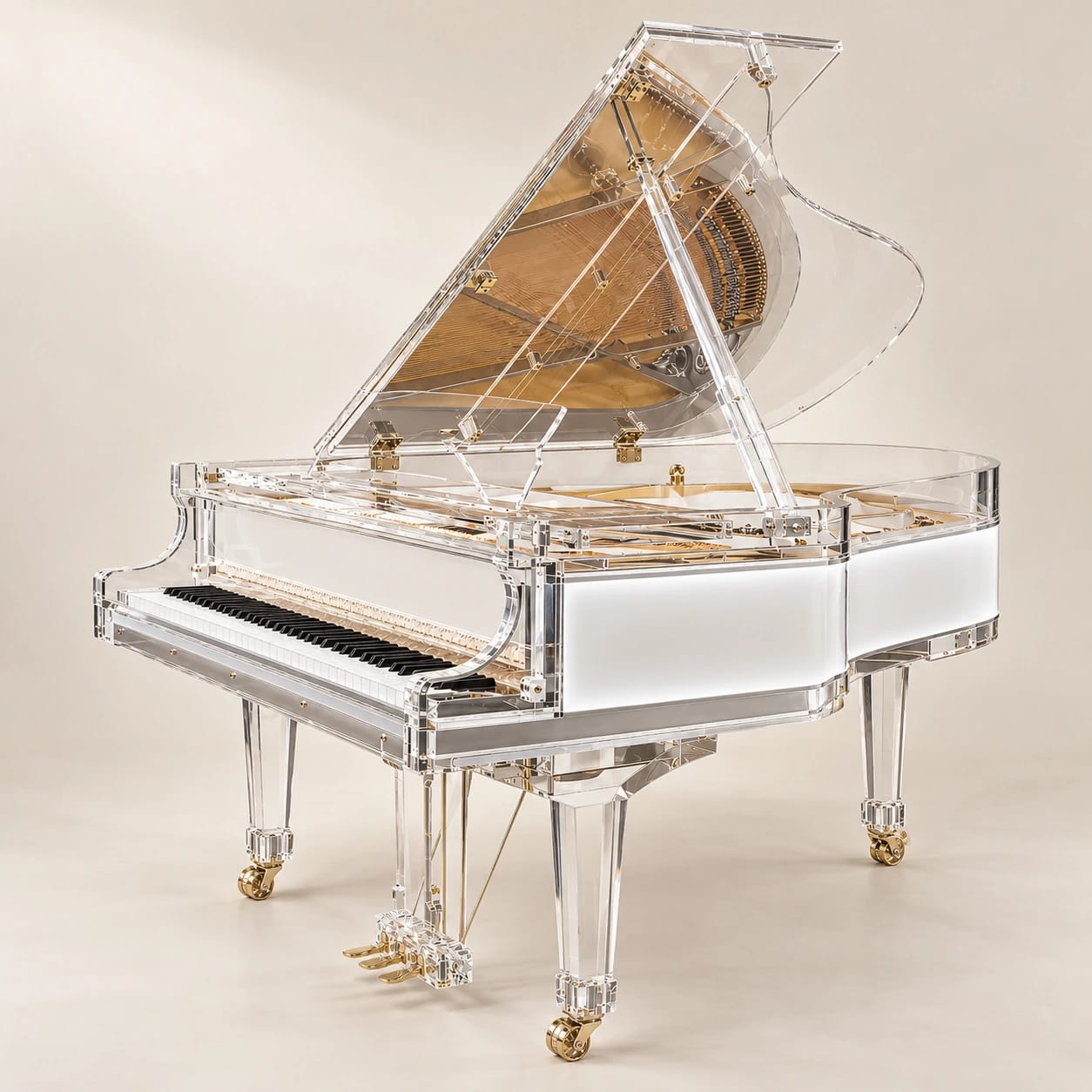
Black, white and clear grand pianos. We confirm availability and arrangements for each booking.
At a glance
What matters for your hire.
Choose the product around what must happen on the day. If the player needs a real acoustic grand, assess a named grand piano with them. If the production mainly needs a grand-shaped enclosure around a keyboard, or a visual prop, a shell may be a different route to investigate. Confirm exactly what a shell supplier includes; the shell, keyboard and sound system are separate questions. Piano Hire Australia’s current offering is three real grand pianos, subject to availability and the agreed hire arrangements.
The collection
Find your grand piano.
Explore the instrument as well as its finish. We can talk through the right option for your plans and dates.
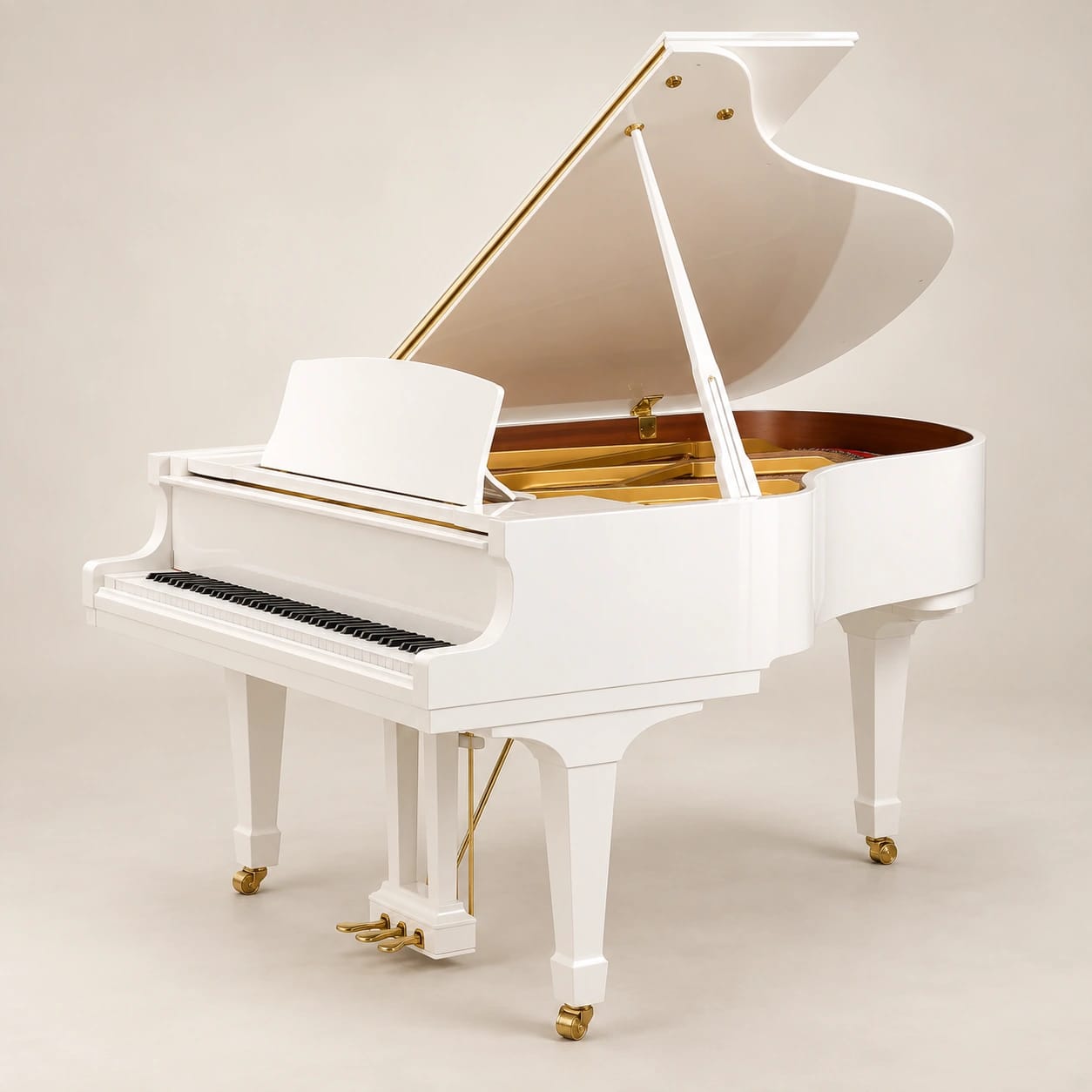
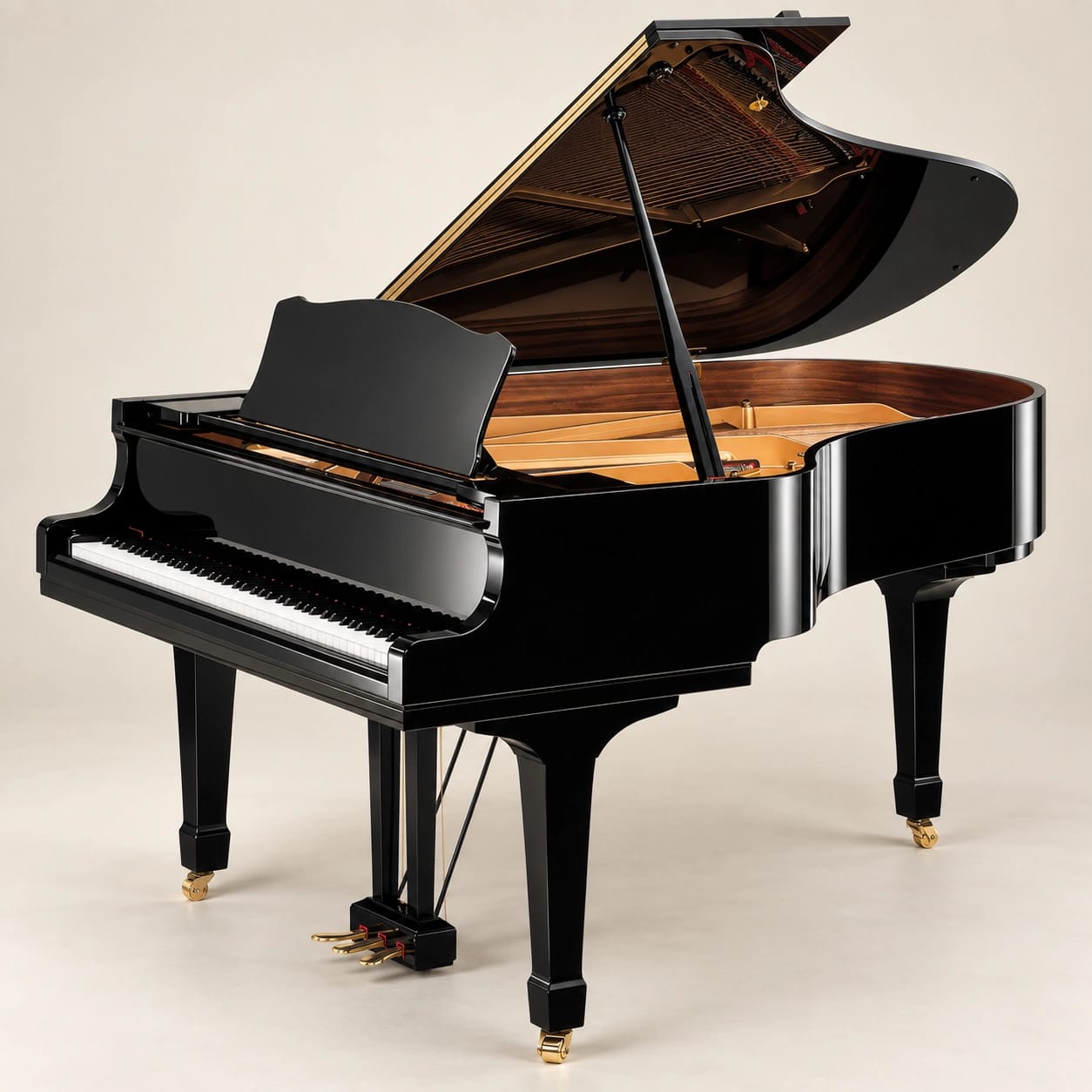
Studio visualisations. Date availability and venue arrangements are confirmed separately.
At a glance
Choose by the job, then verify the product
State the sound requirement
Acoustic grand, keyboard-based setup or no performed sound.
List the essential views
Specify camera angles, visible details and permitted interactions.
Confirm performer needs
Have the musical decision-maker assess the exact offered setup.
Compare complete scopes
Ask about equipment, preparation, transport and collection.
Approve the specific plan
Use current supplier confirmations for the chosen product.
Let’s talk about your hire
Have a date or venue in mind?
Tell us the occasion, the piano and the details you know. We can help work through the rest.
The practical details
Plan your hire with confidence.
Explore the parts that matter to your plans. If you’re unsure, we can talk them through with you.
A little more about this hire
A grand piano and a piano shell can look related in a photograph while answering different production needs. Before choosing, decide whether you need the acoustic instrument itself, the appearance of a grand around another sound source, or a visual object that will not be played.
Piano Hire Australia supplies real grand pianos. It does not list piano shells, digital pianos or upright pianos in its current collection. This comparison helps you recognise when that collection matches your brief and when you should investigate a different product with a supplier who offers it. Neither option should be selected solely from the words “piano hire” on a quote.
Explore the topics on this page
Start with the source of the sound
Write down what the audience or recording needs to hear. A performer may want to play the acoustic instrument itself, while another production may be built around an electronic keyboard and its own sound setup. Those are different briefs even if both are described casually as a “grand piano on stage”. Get the player or musical director to state the requirement before comparing appearances.
Read the detail about Start with the source of the sound
A piano shell is a product category offered by other suppliers. For example, Pivot City Productions describes a shell available on its own or with a keyboard and sound system. That example demonstrates why you must inspect the inclusion list; the grand-shaped object and the equipment making the sound are not necessarily the same item. It does not establish the specifications or inclusions of every shell on the market.
For a real grand, ask the player to consider the actual model being offered. Piano Hire Australia's collection lists Gordon, a white Stenberg 152; Sebastian, a black Yamaha C3; and Oscar, a clear Teschendorf M170. Naming the instrument avoids a booking in which the visual team assumes one piano and the musician expects another.
If the brief is uncertain, pause before choosing. Ask whether acoustic playing, keyboard control or purely visual presence is essential. The answer should drive the product enquiry; it should not be reconstructed from whichever object happens to be easiest to book.
Distinguish an appearance brief from a performance brief
For a visual production, describe the views that matter. A wide room shot, a close-up of hands and a view into an open instrument ask different questions. Give the supplier a clear shot or stage brief and ask what the proposed item actually provides. Do not assume that a shell will reproduce every detail of a grand, or that a real piano can be used in any desired way because it is visually convincing.
Read the detail about Distinguish an appearance brief from a performance brief
If the person at the instrument is performing live, involve them in the decision. Their needs may concern the playing experience and musical task rather than the silhouette. If the action is mimed, prerecorded or purely staged, make that explicit within your production team. The equipment decision should be honest about the intended use, including any sound that will be captured on set.
A real piano used for display is still a real hired instrument. A styling concept does not turn its lid, keys or body into unrestricted set-building surfaces. Ask about proposed props, attachments and unusual interactions before approving the creative treatment. Avoid plans that depend on standing, sitting or placing equipment on parts of the instrument without express permission.
Prepare one brief that both creative and technical teams can read. State what must be seen, what must be heard and what the performer must physically do. That is more useful than a mood board which leaves the central product requirement unstated.
Compare complete packages rather than headline items
A meaningful comparison uses the full scope of each proposed hire. For a real grand, record the named instrument, hire dates, address, access assessment, transport and placement arrangements, collection and any optional on-site tuning. Use the current booking or quote to establish what is included and what is charged. Do not transfer an old price from a different event into the comparison.
Read the detail about Compare complete packages rather than headline items
For a shell option from another supplier, ask separately about the shell, keyboard, bench or other seating, sound system, required connections and any operator. Check who delivers and assembles the specific item, who verifies it is ready for use, and what the collection arrangement is. Do not infer those details from a generic product image or another supplier's package description.
Then add your production team's responsibilities. A live event may still require a performer and audio crew; a filmed production may need sound recording and playback decisions. Those costs and tasks should remain visible even if they are managed by a different company. An apparently shorter equipment list can conceal work that has simply moved to the venue or crew.
Ask both suppliers the same practical scope questions where they apply, but avoid forcing the products into identical technical descriptions. The aim is an honest comparison of two ways to meet the brief, not a claim that one is universally cheaper, easier or better.
When reviewing the responses, retain the supplier's own product name and inclusion wording. Do not rewrite an unanswered component as included simply to make a comparison sheet look complete. Mark the gap and ask for clarification. A comparison with a visible unknown is more useful than a neat total built from an assumed keyboard, transport service or preparation task.
Check access without relying on a product stereotype
Do not assume that anything called a shell will fit through the route, be suitable for a stage or be simple for your crew to handle. Obtain the actual supplier's specifications and movement instructions for that product. A category name is not a weight, a packing dimension, a lift assessment or permission to move it yourself.
Read the detail about Check access without relying on a product stereotype
The same discipline applies to a real grand. Share the unloading location, complete route, final position and any stairs, stage or lift with Piano Hire Australia. The responsible people must assess the proposal. Published instrument information helps frame that conversation but should not be treated as a clearance calculation or proof of floor capacity.
Consider collection conditions as well as arrival. The room may be full of guests, set pieces or packed equipment when the hire ends. Give the supplier the actual access constraints and have the venue explain what remains available. A plan that works during an empty-room build is incomplete if it cannot explain the agreed removal.
If the intended position changes after approval, send the new information for review. A different room or platform can change the assessment for either product. Keep the decision with the supplier and venue specialists rather than converting a rough comparison article into a technical authorisation.
Give the performer a genuine choice to assess
When live playing matters, send the performer the proposed instrument or keyboard details before the booking is finalised. Ask them to identify essential requirements and any acceptable alternatives. Avoid describing a shell with an unspecified keyboard as equivalent to a named acoustic grand, or assuming that a preference for a grand-shaped stage set settles the musical question.
Read the detail about Give the performer a genuine choice to assess
The performance format also matters to the discussion. A short entrance cue, a full solo recital and a band arrangement may lead the player and audio team to ask different questions. Describe the actual task without making universal claims about what each product can or cannot achieve. The people responsible for the music need enough information to assess the specific setup.
For the Piano Hire Australia option, request any optional tuning and communicate special preparation requirements early. A booking selection is not automatic acceptance of every technical rider clause. For a keyboard-based option, ask the other supplier and performer what equipment and setup are required. Keep those responsibilities explicit instead of expecting the visual supplier to infer the music brief.
Record acceptance by the authorised musical decision-maker. This is particularly useful when a client chooses the visual concept but a hired musician arrives later. The performer should not discover on the day that the production booked a fundamentally different setup from the one they expected.
Think through filming and close-up interaction
A filmed production can expose assumptions that a distant stage view would not. List the camera angles, hand movements and interactions needed for the scene. Ask whether the proposed product supports those specific actions and whether they are permitted. If a shot depends on a detail inside or beneath the instrument, seek a direct answer rather than relying on a wide promotional photograph.
Read the detail about Think through filming and close-up interaction
Coordinate the sound decision with the shot list. If you need usable live audio, the recording team must assess the instrument and room. If the scene uses playback, decide how the performer will follow it and what the production intends to record. These are production responsibilities; a piano hire does not determine the audio method or guarantee the final recorded result.
Do not build unsafe or unauthorised action into the storyboard. Explain any plan involving costumes, props, repeated contact, unusual lid positions or equipment near the instrument. The supplier can advise on what needs confirmation. A creative concept remains a proposal until the relevant use is agreed.
Where the concept can work with more than one product, compare actual references supplied for each option. Test the decision against the important shots rather than against an abstract preference for “authenticity”. The best fit for the production is the one whose confirmed features answer the real brief, not the one with the most persuasive label.
Account for preparation and changeover time
Create a separate schedule for each shortlisted option. Include delivery, placement or assembly, the relevant preparation, performer checks, any audio setup and the first required use. Ask the supplier which arrangements can be confirmed. Do not assume a shell needs no setup, or that a real grand can be recorded or performed on immediately after arrival without the agreed preparation.
Read the detail about Account for preparation and changeover time
If the piano appearance is only one part of a larger show, describe the changeover. Will the item stay in one place, or does the concept require a movement? Who would perform that movement, and has it been assessed and approved? Avoid assigning it to stage crew by default. The confirmed method must come from the responsible supplier and venue team.
Piano Hire Australia's online booking requires at least two days' notice. Same-day hire means delivery and collection on the same booked future date, not instant availability today. For a short or unusual schedule, enquire about the exact dates and proposed windows before committing the production to them.
Consider whether the item can remain securely in the agreed position between uses. If that would involve an overnight hire or a different collection date, include it in the enquiry. A decision based on total workflow is more reliable than one based solely on the minutes the object appears in front of an audience.
Use a decision record that explains the choice
Summarise the decision in a few concrete statements: the required sound source, the required visual result, the performer's acceptance, the assessed location and the confirmed supply scope. If one option does not meet an essential requirement, record that reason. Avoid unsupported judgements such as “shells always look fake” or “real grands are always impractical”.
Read the detail about Use a decision record that explains the choice
If a real grand is the appropriate option, continue with the exact collection model and the normal Piano Hire Australia booking process. If a shell better matches the requirement, seek a separate enquiry with a supplier who offers that product. This page is not a shell catalogue, a cross-supplier reservation service or a statement of partnership.
Keep unresolved questions visible until they are answered. You may know the desired look but still need performer acceptance or an access assessment. That is a useful planning state, provided it is described honestly. A checklist tick should mean a decision has been made, not merely that someone has thought about the topic.
The comparison brief below helps you record those requirements without calculating a winner. It does not estimate costs, certify access or tell a musician which instrument to accept. Copy the result into your own production discussion and use the suppliers' current, specific responses to make the final choice.
Want to organise your notes first?
Your enquiry
Grand or shell comparison brief
Record what the production needs. This tool does not choose a winner, quote a price or supply a shell.
Your notes stay in this page. Nothing is sent or saved automatically.
0 / 4,000 enquiry-note characters. Only answered fields and selected checks are included.
Read or select your brief
Piano product comparison brief

Required sound source: To confirm
Essential visual details: To confirm
Performer requirements: To confirm
Location and access questions: To confirm
Package inclusions to check: To confirm
Timing and movements: To confirm

Planning checklist
[ ] Sound requirement stated independently of appearance
[ ] Exact product identified rather than a generic piano label
[ ] Performer has assessed the proposed musical setup
[ ] Shell inclusions checked with its own supplier if relevant
[ ] Route and placement left for proper assessment
[ ] Unusual actions and attachments raised for permission
[ ] Current quotes compared on complete scope

Planning notes only. Piano availability, access and arrangements need confirmation before booking.
Good to know
Your questions, answered.
Does Piano Hire Australia supply piano shells?
The current collection lists three real grand pianos: the white Stenberg 152, black Yamaha C3 and clear Teschendorf M170. It does not list piano shells, digital pianos or upright pianos. If your production specifically needs a shell, investigate that product with a supplier who offers it and confirm their actual inclusions. Do not book a grand on the assumption that it is an empty prop.
Can a shell make sound on its own?
Check the exact product and package with its supplier. The primary supplier example cited here offers a shell either alone or with a keyboard and sound system, which shows why the enclosure and sound equipment need separate questions. Do not generalise that example into a specification for every shell. Your performer and audio team should accept the complete proposed setup before it becomes the production plan.
Is a real piano necessary for a photo shoot?
It depends on the shots, actions and sound requirements. A production that needs the details and playing of a real acoustic grand has a different brief from a distant decorative silhouette. Describe the important views and interactions, then ask each supplier about the actual product and permitted use. A real grand used only visually still needs the same agreed care, movement and placement arrangements as a hired instrument.
Which option will cost less or be easier to deliver?
There is no reliable universal answer in this guide. Compare current quotes for the full scope, including equipment, delivery, access, preparation, collection and any production services supplied separately. Ask about the actual route and product rather than assuming a category is easy to handle. A lower headline hire amount may not describe the same package or solve the same musical and visual requirements.
Let’s talk about your hire
Tell us what you’re imagining.
Tell us the occasion, the piano and the details you know. We can help work through the rest.