Weddings
Piano hire for weddings
Choose a grand piano for the music and setting you are planning for your wedding. Explore the three instruments, then talk with us about your venue, dates and preparation.
Black, white and clear grand pianos. We confirm availability and arrangements for each booking.
At a glance
What matters for your hire.
Choose the piano’s wedding role and room first, then discuss the model with your musician and stylist. Confirm the venue’s access and placement requirements, delivery and collection arrangements and any requested on-site tuning. Instrument hire does not include a pianist or sound system. A second location or an outdoor setting needs separate assessment rather than an assumed move or approval.
The collection
Find your grand piano.
Explore the instrument as well as its finish. We can talk through the right option for your plans and dates.

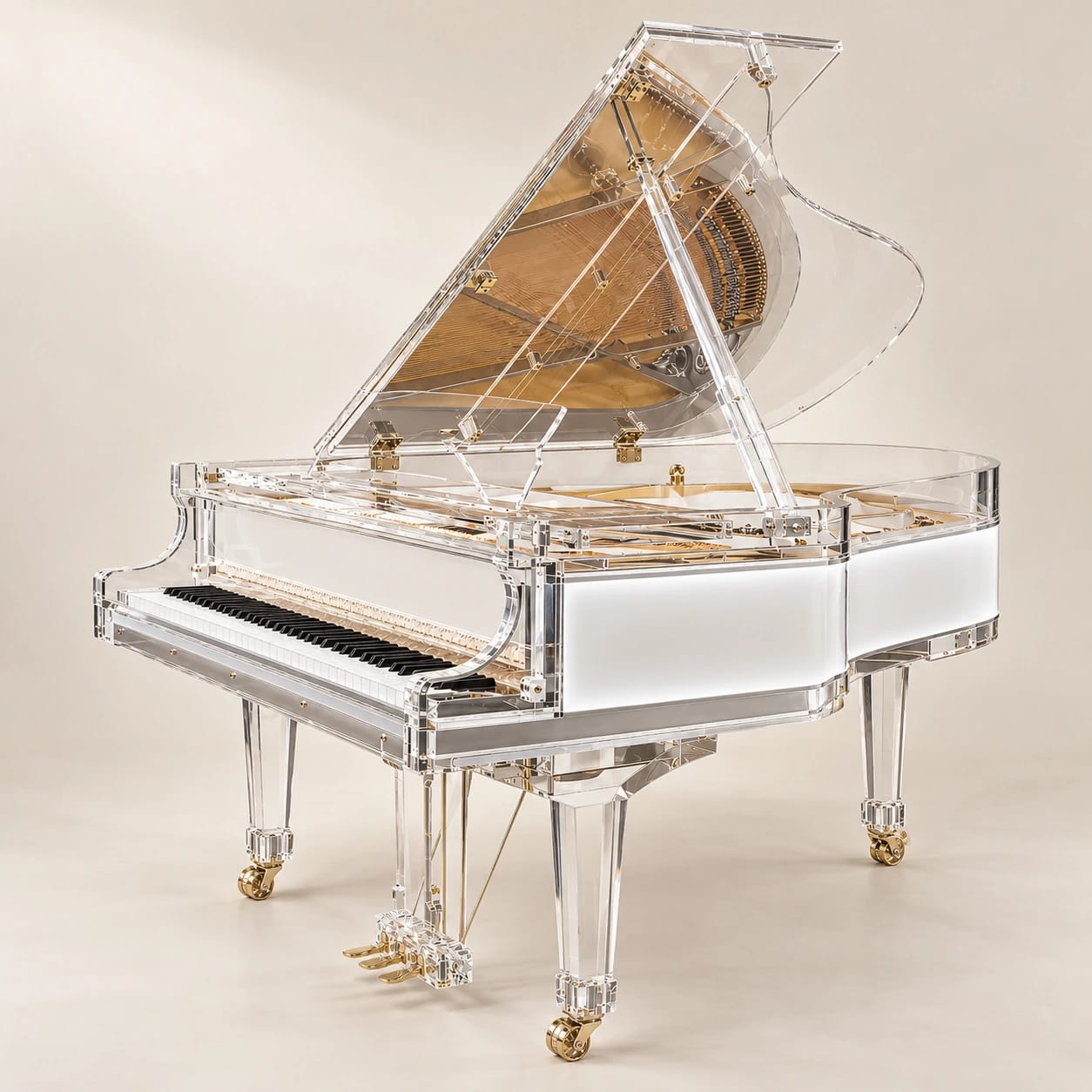
Studio visualisations. Date availability and venue arrangements are confirmed separately.
At a glance
Fit the piano into your wedding day
Choose the wedding role
Identify ceremony music, reception use, imagery or a combination.
Agree the instrument
Discuss the model with the musician and creative decision-maker.
Confirm the locations
Assess the intended position and declare any proposed move.
Set preparation and collection
Connect venue access, optional tuning and the wedding programme.
Keep one final brief
Retain the confirmed arrangement and check later changes against it.
Let’s talk about your hire
Have a date or venue in mind?
Tell us the occasion, the piano and the details you know. We can help work through the rest.
The practical details
Plan your hire with confidence.
Explore the parts that matter to your plans. If you’re unsure, we can talk them through with you.
A little more about this hire
A wedding piano should have a clear place in the day you are planning. It might accompany the ceremony, welcome guests to the reception or form part of the setting you want to photograph. Before choosing a finish, decide where the piano belongs and whether it will be played. Those answers make the conversations with your musician, stylist and venue much more straightforward.
This guide brings the main wedding decisions together. It helps you choose an instrument brief and a workable hire period without treating the ceremony and reception as though they always happen in the same place. You can then use the more specific ceremony or reception pages for the details of that part of the celebration.
Explore the topics on this page
Start with the moment you want the piano to support
Think about the part of the wedding where the piano matters most to you. It could be live music as guests take their seats, a ceremony accompaniment, a reception performance or a visual detail in the room. Write that purpose down before collecting more reference photographs. A clear role helps you decide which other choices are essential and which are flexible.
Read the detail about Start with the moment you want the piano to support
If several moments are important, list them in order and add the location of each. A piano used for ceremony music and later reception entertainment may be able to remain in one agreed position, or the plan may involve separate rooms. That difference matters to the booking. It should be discussed early, not discovered when the wedding programme is already final.
Keep the musical idea separate from the instrument arrangement. A meaningful song can be performed in different ways, and your musician should advise on their own part. The hire discussion establishes the requested piano, its location and the practical arrangements. When the two conversations meet in a shared plan, you can make decisions with a clearer understanding of what has actually been agreed.
Consider the three finishes in the real room
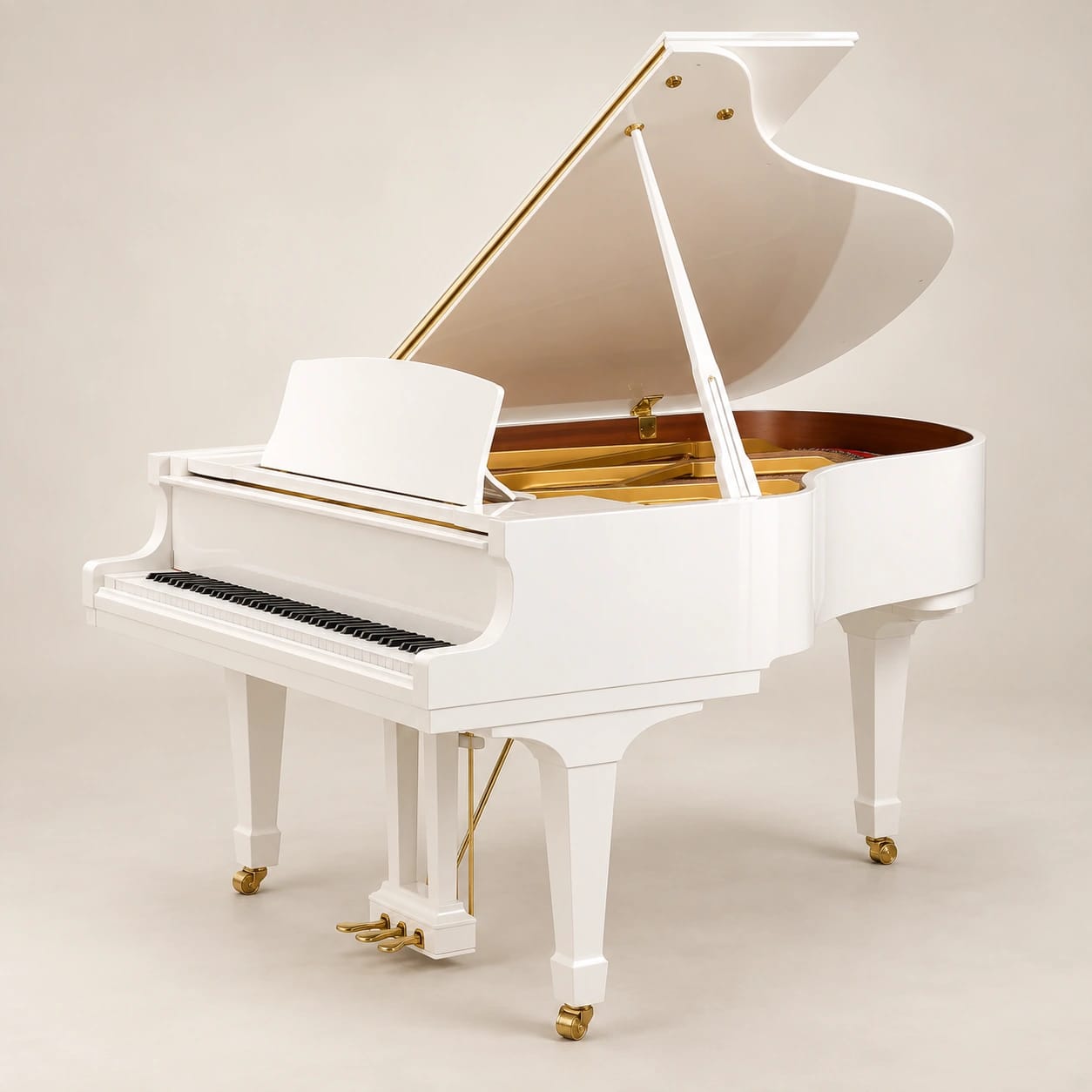
The collection includes the white Stenberg 152, black Yamaha C3 and clear Teschendorf M170. Begin by looking at them alongside the actual room setting rather than choosing from a finish name alone. The backdrop, surrounding furniture and photographic angles may all influence your preference. These are creative considerations to discuss with the stylist or photographer, not guarantees about how every venue will look.
Read the detail about Consider the three finishes in the real room
If the piano will be played, ask the musician to consider the model as well as the appearance. The person choosing the floral palette and the person performing may have different priorities, and both can be recorded in the brief. If one model is strongly preferred, say why. If you would consider an alternative, make that clear before availability is checked.
Do not assume that a preferred appearance establishes physical suitability. The final position and transport route still need assessment. A reference photograph from another setting is useful inspiration, but it is not proof that the same arrangement is approved at your venue. Use the image to explain the look, then use the booking discussion to establish what can be arranged for your actual date and location.
Give the ceremony its own practical plan
A ceremony has a sequence that is different from a reception. Guests arrive, take their seats and settle before the formal proceedings begin. The piano needs to be ready at the agreed point in that sequence, with the musician able to prepare without conflicting with the ceremony setup. Discuss the required-ready time rather than giving only the ceremony’s start time.
Read the detail about Give the ceremony its own practical plan
Ask the venue where an outside hired instrument may be placed and whether that position works with the ceremony layout. The celebrant, musician and venue can consider their respective requirements. You do not need to resolve technical access yourself, but you do need to identify the intended position and any restrictions that the piano team should assess.
If the ceremony is planned outside, explain the proposal before relying on it. Outdoor, garden and other unusual settings require individual assessment; a garden image on a mood board does not establish permission or suitability. A backup room is also a proposed location that needs consideration. The ceremony guide can help you prepare these questions while keeping the final approval with the relevant people.
Plan the reception around how the room will operate
At a reception, the piano may be present through several activities: guest arrival, a meal, speeches, performances and later socialising. Decide when it will be played and whether its position needs to work for the entire reception. That helps the venue consider the layout and helps the musician understand the programme without assuming the instrument will be moved between activities.
Read the detail about Plan the reception around how the room will operate
A room can look spacious while empty and work very differently once tables, chairs, a dance floor and production equipment are installed. Share the proposed finished layout and ask when the route to the piano position will be available. The relevant venue or staging professional should assess any stage arrangement. This page does not certify a layout or tell you that a particular platform can support an instrument.
Collection needs a place in the reception plan as well. Ask when the venue requires the room to be cleared and which access arrangements apply after the event. Late guest departure does not automatically create a late collection appointment. Discuss the available options with the team and record the agreed arrangement so the wedding party is not left trying to improvise it at the end of the evening.
Keep any ceremony-to-reception move visible
When a wedding uses two rooms or sites, it is tempting to describe the piano as serving both and leave the transition for later. Instead, write down every proposed position and the time between them. A move within the same building is still a movement of the instrument. It needs an agreed handling arrangement and a realistic place in the programme.
Read the detail about Keep any ceremony-to-reception move visible
Ask whether the event can meet its goals with one approved position. For example, the musical plan might be organised around the reception room rather than relying on a relocation after the ceremony. That is a discussion for the couple, musician and venue; it is not a suggestion that every alternative will be available. The useful point is to consider the dependency before the schedule becomes fixed.
Never plan on guests, wedding staff or other suppliers moving the piano themselves. If a relocation is important to the wedding, tell the piano team at the enquiry stage. The final booking should reflect the assessed sequence. Treat any later request to move it as a change that needs agreement, rather than a small styling adjustment that can be decided on the day.
Coordinate music and optional tuning
The pianist is a separate booking unless you have independently arranged otherwise with a performer. Ask your musician which instrument information they need and when they want the piano ready. They may also want to understand the room and the programme. Passing that information early is more useful than asking them to adapt to an unconfirmed instrument choice shortly before the wedding.
Read the detail about Coordinate music and optional tuning
On-site tuning is optional. Discuss whether you want it and how it would fit the day rather than assuming it comes automatically with every hire. Where a visit is requested, the published process asks for a quiet opportunity for the work. Coordinate that with venue preparation and any other production activity, then confirm the actual arrangements for the booking.
If microphones, amplification or other equipment are required, the musician and sound supplier should address their own needs with the venue. Instrument hire alone does not establish how the music will carry through the room. Keep these responsibilities separate in your checklist while making sure their schedules connect. This avoids a situation where each supplier assumes another one has arranged an important part of the performance.
Build a hire period around preparation and departure
The wedding date is the centre of the brief, but it may not be the whole hire period. The venue may offer an earlier setup opportunity, the musician may need preparation time, or collection may need to occur later under an agreed arrangement. Start with the venue’s available times and work towards the event’s required-ready point, then discuss suitable dates with the piano team.
Read the detail about Build a hire period around preparation and departure
Same-day hire means delivery and collection on the same booked date. It is not a promise of immediate delivery or a guarantee that a tight wedding timetable can be accommodated. If the day depends on an exact transport time, explain that requirement. An ordinary delivery window should not be interpreted as a precise appointment unless a particular arrangement has been confirmed.
Keep a distinction between a convenient preference and a fixed constraint. You may prefer delivery while the florist is working, but the venue may have a firm deadline for supplier access. Sharing both helps the team assess the actual request. Once the hire is confirmed, retain the agreed dates and arrangements alongside the final wedding schedule so later changes can be checked against them.
Review the cost and responsibilities before confirming
Current pricing comes from the live booking system or your individual quote. Review it using the same instrument, dates and access plan that you have discussed with the venue. If your wedding budget includes a pianist, sound, staging or styling, keep those items separate so you can see which supplier is responsible for each part. A piano booking should not be taken as a complete entertainment package.
Read the detail about Review the cost and responsibilities before confirming
Read the applicable terms and clarify any part that is unclear before confirming. If the booking includes a security deposit, check that arrangement specifically rather than assuming every hire includes one. Changes to the date, venue or hire period should be discussed with the team and considered under the current agreement. Do not rely on a general wedding checklist for cancellation or payment conditions.
Choose one practical coordination route for the instrument arrangements. That could be through your planner or another person you have appointed to organise suppliers. The aim is to reduce repeated questions on the day while ensuring important decisions reach the right people. It does not transfer the venue’s responsibility for its requirements or the piano team’s responsibility for assessing the hire.
Use a short final brief to settle the open questions
Use the wedding brief builder on this page to collect the piano’s role, preferred model, location, timing and unresolved questions. It creates copyable text locally in your browser. It does not send anything, reserve an instrument or replace the booking process. There is no need to enter guest names, personal contact information or payment details to make the planning summary useful.
Read the detail about Use a short final brief to settle the open questions
Read the outline with your musician and venue before submitting the final enquiry. They should be able to identify any missing decision within their own responsibilities. If the room, position or timing is still provisional, keep that visible. A brief that honestly names two unresolved questions is easier to work with than one that sounds complete because assumptions have been presented as facts.
Once the booking arrangements are confirmed, keep the current version with the wedding programme. If the ceremony location changes, a rehearsal is added or the reception finishes at a different time, check whether that affects the piano plan. The purpose of planning early is not to remove every possible change; it is to make the important connections clear enough that changes can be handled deliberately.
Want to organise your notes first?
Your enquiry
Build your wedding piano brief
Create a planning summary to discuss with the venue and musician. It does not submit an enquiry.
Your notes stay in this page. Nothing is sent or saved automatically.
0 / 4,000 enquiry-note characters. Only answered fields and selected checks are included.
Read or select your brief
Your wedding piano outline

Wedding use: To confirm
Preferred piano: To confirm
Locations: To confirm
Key times: To confirm
Movement questions: To confirm
Music preparation: To confirm

Planning checklist
[ ] The musician knows which instrument is requested.
[ ] The venue knows the proposed position.
[ ] Every planned use and location is listed.
[ ] Any relocation has been raised for assessment.
[ ] Optional tuning is an explicit decision.
[ ] Collection has been considered alongside delivery.
[ ] The final arrangements will be matched to the wedding schedule.

Planning notes only. Piano availability, access and arrangements need confirmation before booking.
Good to know
Your questions, answered.
Can we use the piano for both ceremony and reception?
Explain both uses and their locations before booking. If the instrument can remain in one agreed position, the plan may be straightforward to discuss. If it needs to move, the relocation and timing must be assessed separately. Do not assume that hiring for the wedding automatically includes movement between rooms or venues.
Can we book a white or clear piano just for photographs?
You can enquire about a visually focused hire and state the preferred model or finish. Include the actual preparation, photography and collection periods, and say whether the instrument will also be played. The location and placement still require assessment even when the primary purpose is photographic rather than musical.
Do we need to organise a pianist ourselves?
The piano hire does not itself book a performer. Arrange the musician separately and involve them in the instrument discussion before confirmation. Ask what preparation time and other equipment they need, then coordinate those requirements with the venue and any relevant production suppliers.
What if the weather changes our ceremony location?
Raise the proposed alternative location during planning and ask what can be assessed. A different room or site may change access, placement and timing. Do not assume an outdoor booking or a backup position is approved from a reference image. Any change needs to be communicated and agreed through the booking process.
Let’s talk about your hire
Tell us what you’re imagining.
Tell us the occasion, the piano and the details you know. We can help work through the rest.