Plan your photo shoot
Planning a photo shoot with a grand piano
Turn the shot list into a practical piano shoot plan. Work through the instrument, position, permitted interactions and schedule, then use the brief to discuss your proposed hire with us.
Black, white and clear grand pianos. We confirm availability and arrangements for each booking.
At a glance
What matters for your hire.
Build the shoot around a short list of essential shots and a named piano. Confirm the location’s permission, provide the full access route for assessment, and agree placement before fixing the lighting and camera plan. Separate delivery, optional tuning if needed, photography and collection in the schedule. Raise props, attachments, unusual interactions and any outdoor element before booking. The brief builder helps organise those decisions; it does not reserve an instrument or certify that a location is suitable.
At a glance
Build the shoot around an agreed position
Prioritise the shots
Identify essential views, actions and whether live sound is required.
Select the named piano
Review finish and musical needs with the relevant decision-makers.
Assess the location
Confirm permission and submit the complete route and position.
Agree the treatment
Raise props, attachments, outdoor elements and proposed movements.
Schedule and release
Confirm the hire sequence and the handover after the final shot.
Let’s talk about your hire
Have a date or venue in mind?
Tell us the occasion, the piano and the details you know. We can help work through the rest.
Your enquiry
Piano shoot planning brief
Create a practical note for the producer and hire enquiry. This does not reserve a piano or approve a shot.
Your notes stay in this page. Nothing is sent or saved automatically.
0 / 4,000 enquiry-note characters. Only answered fields and selected checks are included.
Read or select your brief
Piano shoot production brief

Essential shots: To confirm
Piano and finish: To confirm
Sound requirement: To confirm
Location and position: To confirm
Props and interactions: To confirm
Shoot and hire sequence: To confirm

Planning checklist
[ ] Essential and optional shots separated
[ ] Named model and date availability checked
[ ] Location permission covers the intended activity
[ ] Access and final position supplied for assessment
[ ] Props and unusual actions raised for approval
[ ] Any movement is explicitly planned with the hire team
[ ] Call sheet uses confirmed arrangements
[ ] Collection role and route remain available

Planning notes only. Piano availability, access and arrangements need confirmation before booking.
The practical details
Plan your hire with confidence.
Explore the parts that matter to your plans. If you’re unsure, we can talk them through with you.
A little more about this hire
A piano shoot becomes easier to organise when the instrument is part of the shot plan from the start. Decide which images or scenes justify bringing it in, then work through the location, placement, styling and schedule needed to make those shots possible.
This is a preparation guide for a specific shoot, rather than a portfolio of past work or a promise about a location. It is useful whether you are producing a portrait session, editorial story, product image or a small filmed performance. The goal is to arrive with an agreed plan, not to discover on set that a key shot depends on an unapproved move or an unavailable instrument.
Explore the topics on this page
Write the shots that make the hire worthwhile
Begin with the images the project actually needs to deliver. Describe the subject, the intended view of the piano and the action in each essential shot. A pianist's hands, a wide interior and a product positioned near an instrument create different requirements. Make the essential list short enough that the team can recognise when a creative change affects the hire plan.
Read the detail about Write the shots that make the hire worthwhile
Separate essential shots from optional experiments. If the production needs one particular angle, identify the space and placement that angle requires before booking. If an idea is simply something to try if time allows, mark it that way. This stops a late optional concept from quietly becoming the reason the piano must move to a different room.
Decide whether the piano will be heard. A silent stills session, a film using playback and a live recorded performance need different preparation. If usable live audio matters, involve the sound team and player early, and consider optional on-site tuning through the hire process. Do not assume that a visually attractive location produces the required recording result.
Give the supplier a concise description of the intended use, including any unusual interaction. A mood board can help communicate style, but it should accompany plain statements about what people will do around the instrument. Avoid expecting an image reference to function as permission for every action depicted in it.
For each essential shot, identify the decision that could stop it being made: an unconfirmed view, an unapproved interaction, a musical requirement or a position still awaiting assessment. Resolve those dependencies first. This gives the producer a practical order for preparation without pretending every image can be guaranteed. Keep the client aware when a treatment depends on a response that has not yet arrived. The final shot list should reflect what the production can actually arrange, with optional ideas clearly separated from the agreed use of the instrument and the time available at the location.
Choose the model in the actual visual context
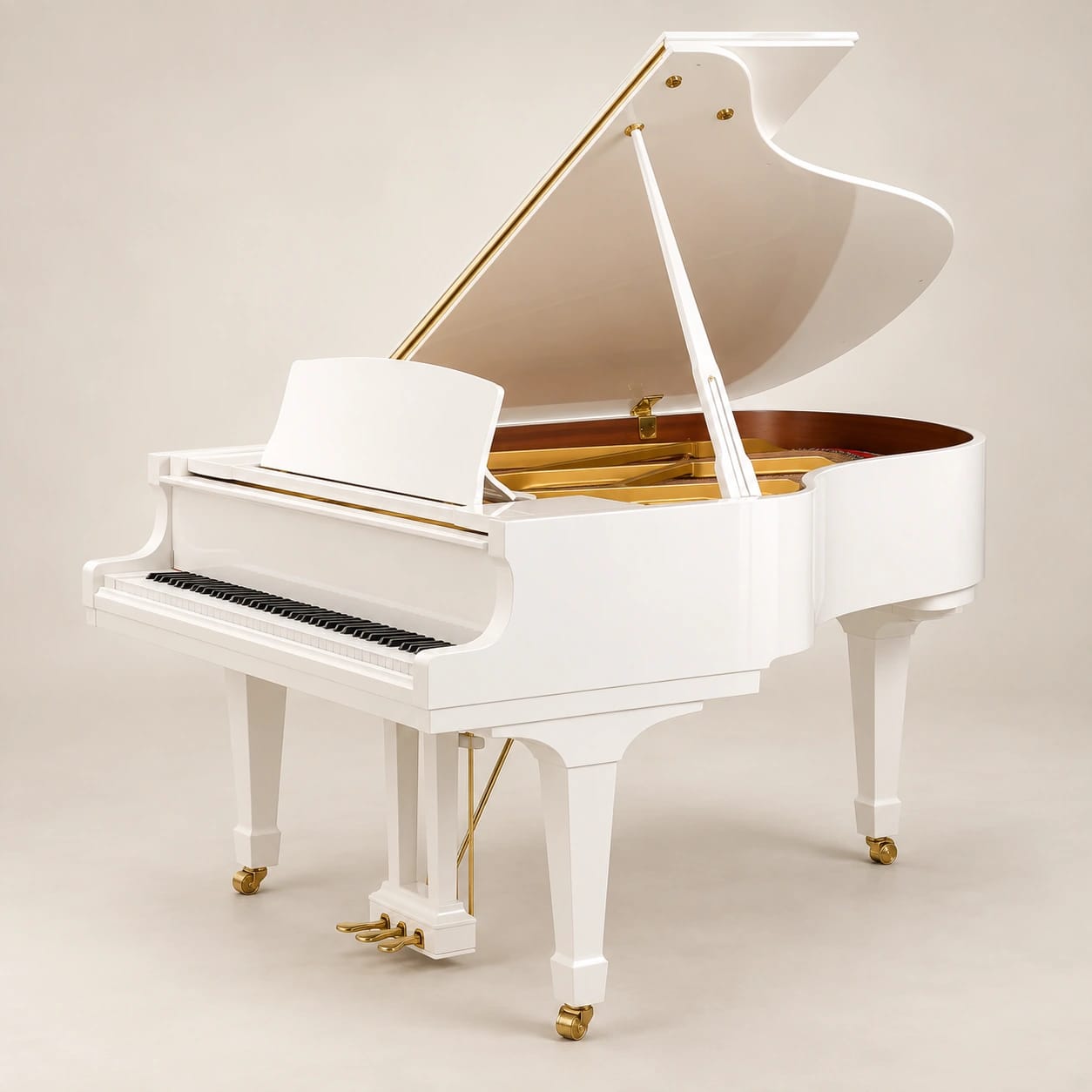
Piano Hire Australia lists three grand pianos: white Gordon, the Stenberg 152; black Sebastian, the Yamaha C3; and clear Oscar, the Teschendorf M170. Use the exact name and model in your enquiry. A description such as “the light one” can be ambiguous when the creative team is comparing a white piano and a clear one.
Read the detail about Choose the model in the actual visual context
Look at the proposed finish alongside the location surfaces, wardrobe and background. Ask the photographer which edges and details must remain readable in the final frame. Treat those as visual planning questions rather than universal rules about which colour photographs best. The lighting, composition and output format determine how the chosen instrument is represented.
A stock or concept image is not a location assessment. Ask for the current product information relevant to your decision, then give the team the actual room and access details. Do not use a photograph of a piano in another setting as proof that it will fit, be permitted or look identical at your location.
If the subject will play, include their musical acceptance in the choice. The finish decision and the performer decision can be separate approvals. Confirm the chosen model and dates before printing the call sheet or promising a particular instrument to the client.
Assess the location before finalising the set
Obtain permission from the person responsible for the location to bring in the hired instrument and use the proposed space. Explain the intended activity, equipment and schedule. A general room booking does not necessarily answer questions about deliveries, building access, set dressing or filming. Record the answers that affect your shoot rather than assuming the location contact has seen the whole creative brief.
Read the detail about Assess the location before finalising the set
Provide the unloading location, route and final position for assessment. Include stairs, lifts, stages, narrow or changing sections and any access restrictions reported by the location. The moving specialists and responsible venue parties need to assess the actual proposal. This guide provides no doorway clearance, floor-load approval or do-it-yourself moving method.
Ask about the route at both ends of the hire. A room can be easy to reach before other crews arrive and obstructed after a set is built. Tell the production team which path must remain available, and nominate a role to coordinate access. Do not schedule collection through a finished set without checking how it will work.
If an outdoor area, courtyard or partially enclosed structure is in the concept, describe it explicitly as a request for individual assessment. Do not assume a roof, marquee or favourable forecast establishes suitability. Keep an alternative creative plan available until the proposed location and use have been accepted.
Lock the piano position before the lighting build
Put the proposed piano position on the working set plan and review it against the essential shots. Show the subject position, camera areas and major set pieces in relation to it. The drawing is a communication aid; it is not a to-scale clearance certificate or an instruction for the crew to move the piano themselves.
Read the detail about Lock the piano position before the lighting build
Ask the photographer to identify which shots can be made from the agreed position. If the plan relies on rotating or relocating the instrument between setups, raise every proposed move with the hire team before confirming the concept. Do not treat the piano like a lightweight prop that can be shifted whenever a new angle occurs to someone.
Keep the delivery route and placement area clear for the agreed arrival. Lighting stands, cables, backgrounds and props should be organised so they do not obstruct the specialist movement. Once the instrument is placed, build the lighting and set around the confirmed arrangement rather than using the instrument as an improvised equipment support.
If the room plan changes, update the shared drawing and obtain any necessary reassessment. Use a clear version label so the delivery team and photographer are not looking at different layouts. A small plan with an accurate final position is more useful than a polished drawing whose access information is out of date.
Turn the creative treatment into permitted actions
List the actions the talent and crew will perform near the piano. Playing, standing beside it, opening a shot with a hand near the keys, or placing an object close to the body should each be described accurately. Ask about any interaction that goes beyond ordinary playing or agreed display. Do not assume that a visual reference grants permission to sit on, climb on or load the instrument.
Read the detail about Turn the creative treatment into permitted actions
Treat props and attachments as separate approval questions. Flowers, fabric, product packaging, lighting accessories and temporary branding can all be part of a concept without necessarily being appropriate on the piano itself. Explain the intended placement and ask the hire team what is acceptable. Find another support or framing solution if permission is not given.
Brief the talent before the camera rolls. They should know the permitted actions and who to ask if the director suggests something new. A simple verbal check prevents an enthusiastic improvisation from becoming an unapproved use. The producer should remain responsible for communicating changes rather than expecting the subject to interpret hire terms during the shoot.
Keep food, drinks and production clutter away from the instrument according to the agreed care instructions. Do not invent a cleaning method for fingerprints or marks. If presentation needs attention, ask the supplier how it should be handled and use the approved process.
Give the day separate production and hire clocks
Your shoot call time is not necessarily the piano delivery time, and the last photograph is not automatically the collection appointment. Put the requested delivery, placement, any optional tuning, first shot, final shot and collection into separate lines of the schedule. Confirm the supplier arrangements before relying on them in the call sheet.
Read the detail about Give the day separate production and hire clocks
Online booking needs at least two days' notice. Same-day hire refers to delivery and collection on one booked future date; it does not mean immediate delivery today. If the shoot has a short window or an unusual timing combination, explain the actual constraint in an enquiry. Do not tell the crew a precise arrival or departure time has been secured until it has been agreed.
Allow for the tasks your own team controls: set preparation, subject readiness, lighting changes and pack-down. Give the piano an explicit release point so the crew knows when use ends and the collection handover begins. A late optional shot should not silently change the supplier's schedule.
If the shoot may run across more than one day, ask about the appropriate hire period before booking. Confirm how the instrument will remain in the agreed place and how the location will be accessed between sessions. An extension is a request to be approved, not a decision the production can make unilaterally.
Use one change log for client, crew and supplier
Choose a current version of the shoot brief and keep the important changes visible. When the client changes the set, ask whether that affects the instrument, location, permitted actions, dates or collection. Some creative edits have no hire impact; others require a new assessment. The producer's job is to tell the difference and communicate it promptly.
Read the detail about Use one change log for client, crew and supplier
A change message should explain the original arrangement, the proposed replacement and the response needed. “We have a new location” is incomplete without the address, room, access and timing. “The piano is now only a background prop” may still leave the same transport and placement requirements. Do not assume a smaller on-camera role makes the physical arrangements simpler.
Keep the client approval of the creative treatment separate from supplier permission for use. The client can approve a shot while the hire team still needs to respond to its practical implications. Mark those statuses separately in the production record so one approval is not mistaken for the other.
Before the shoot, distribute a short final note covering the chosen instrument, permitted activity, agreed position and schedule. Avoid sending the crew a long chain containing conflicting drafts. Make it clear who can authorise a creative change and who must be contacted if it affects the hire.
Close the shoot with a clear release and handover
When the essential work is complete, tell the responsible production role that the piano is released. Keep the agreed collection route available while other departments pack down. Do not let cases, background rolls or furniture accumulate in a path that has to be used for removal. Coordinate the sequence with the location and collection team.
Read the detail about Close the shoot with a clear release and handover
If the shoot finishes early or runs late, contact the hire team about any requested change. The creative schedule and the agreed hire arrangements remain separate until a variation is accepted. Ensure someone can provide access for the confirmed collection, including when the photographer or client has already left.
Report any concern about the instrument through the agreed channel rather than attempting a quick cosmetic fix. Retain the current booking documents and the final production brief. That closes the practical job without claiming an experience or outcome that has not been documented.
Use the planning tool on this page before the enquiry and again before the call sheet is issued. It creates a copyable note, not a booking or permission record. The most useful output is a list of specific decisions and remaining questions, so the shoot team can resolve them before arriving on location.
The collection
Find your grand piano.
Explore the instrument as well as its finish. We can talk through the right option for your plans and dates.
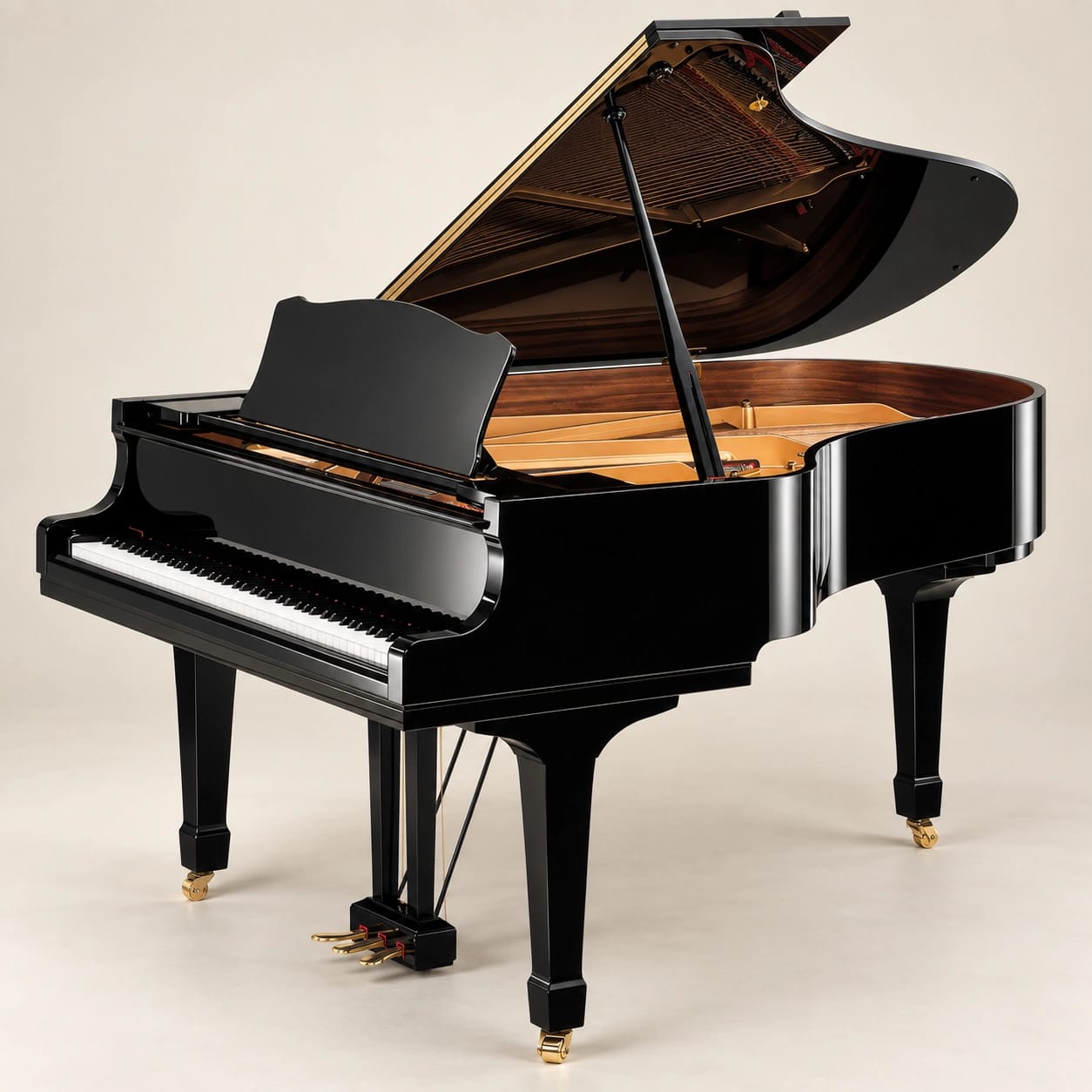
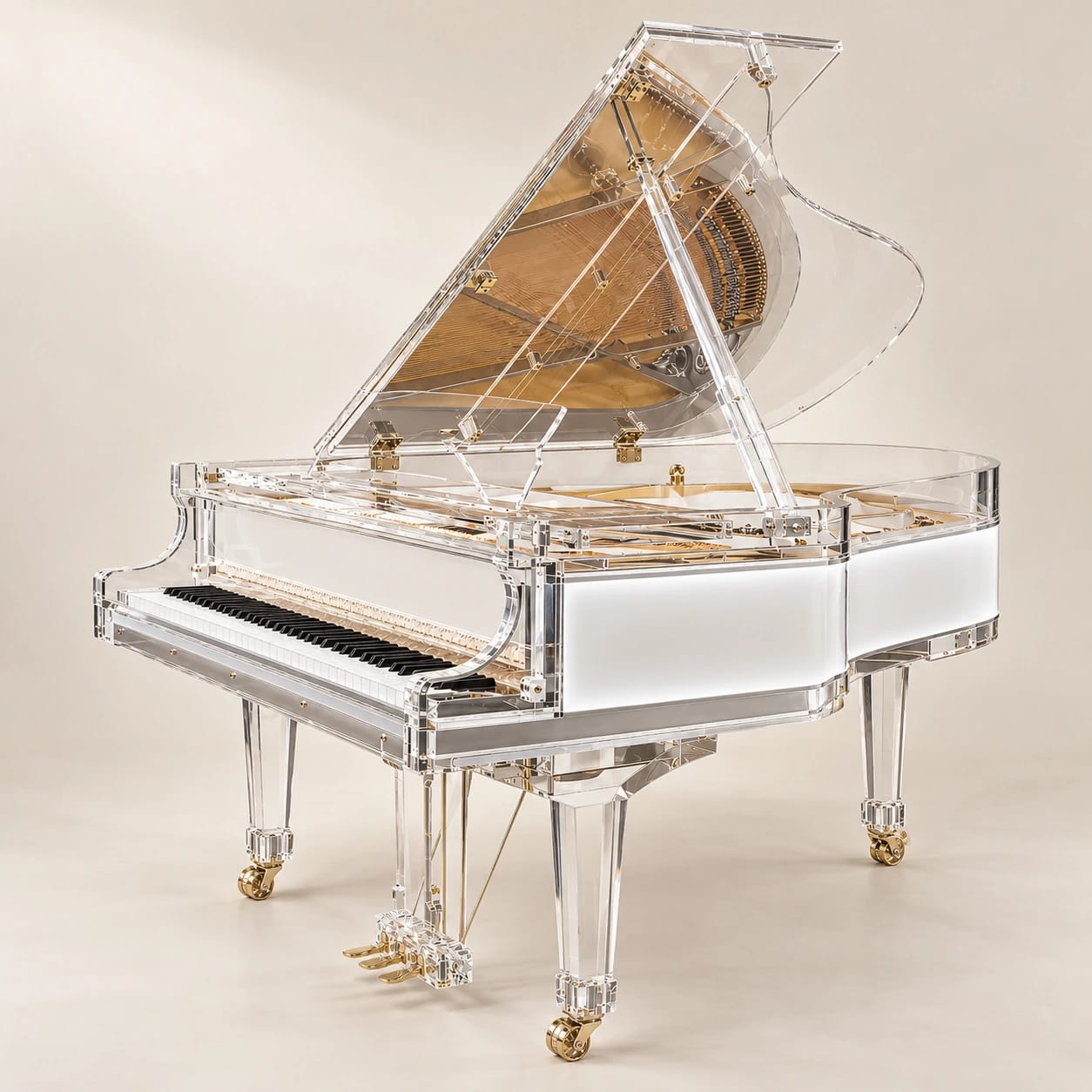
Studio visualisations. Date availability and venue arrangements are confirmed separately.
Good to know
Your questions, answered.
Can we move the piano for several camera angles?
Describe every intended repositioning in the enquiry and obtain the agreed arrangements. Do not assume the photographer, stylist or location crew can move the instrument between shots. Often the first planning step is to identify which essential angles can be made from one assessed position. If a move is necessary to the concept, it needs to be considered before the shoot rather than improvised on set.
Should we book tuning for a silent photo shoot?
Discuss the actual use with the hire team. A stills-only concept and a filmed live performance have different musical requirements, and optional on-site tuning should be considered in that context. If someone will play or usable audio will be recorded, involve the player and sound team. Do not select or omit a service on the assumption that every photography booking has the same needs.
Can we add flowers, branding or props to the piano?
Explain the exact proposal and ask for permission before building it into the approved treatment. A visual idea does not automatically authorise attachments, loads or contact with the instrument. Consider nearby stands or separate set pieces if the requested use is not accepted. The talent and crew should receive the agreed boundaries before shooting, especially where the concept invites improvisation.
Does same-day hire mean we can book a piano for today?
No. Same-day hire means delivery and collection on the same booked future date. Online booking requires at least two days’ notice, and the actual timing needs confirmation. If the shoot is urgent, make an enquiry with the date, location, model and required decision time. Treat it as a request for assessment until availability and arrangements are confirmed.
Let’s talk about your hire
Tell us what you’re imagining.
Tell us the occasion, the piano and the details you know. We can help work through the rest.