Longer hire periods
Long-term grand piano hire: planning beyond 30 nights
Plan a grand piano hire that extends beyond a single event. Work through the display or performance needs, room arrangements and proposed period, then discuss the longer hire with our team.
Black, white and clear grand pianos. We confirm availability and arrangements for each booking.
At a glance
What matters for your hire.
For a hire beyond thirty nights, send an individual enquiry with the intended use, proposed instrument, start and end dates, location, site responsibilities and any planned changes. Ask for a complete quote and explicit extension or collection arrangements. Do not assume a rolling monthly agreement, unlimited extensions or continuing availability.
At a glance
Plan a longer stay with a defined finish
Explain the project
Describe every intended use during the proposed period.
Define the dates
Separate readiness, final use and collection.
Assign site responsibility
Identify the role maintaining the booking and room information.
Agree the full scope
Include requested services and foreseeable changes.
Review and conclude
Request changes early and follow the confirmed collection plan.
Let’s talk about your hire
Have a date or venue in mind?
Tell us the occasion, the piano and the details you know. We can help work through the rest.
Your enquiry
Build a long-term hire enquiry
Prepare a non-sensitive project brief for an individual quote. The output does not reserve a piano or renew a booking.
Your notes stay in this page. Nothing is sent or saved automatically.
0 / 4,000 enquiry-note characters. Only answered fields and selected checks are included.
Read or select your brief
Long-term grand piano hire enquiry

Project purpose: To confirm
Preferred instrument: To confirm
Proposed period: To confirm
Site responsibility: To confirm
Planned changes: To confirm
Extension uncertainty: To confirm

Planning checklist
[ ] Describe all planned uses.
[ ] Separate the first use from the arrival request.
[ ] Identify a proposed collection date.
[ ] Confirm responsibility during the whole period.
[ ] Request optional services explicitly.
[ ] Flag any planned relocation for assessment.
[ ] Ask how changes and extensions are reviewed.
[ ] Keep the accepted booking terms with the project plan.

Planning notes only. Piano availability, access and arrangements need confirmation before booking.
The practical details
Plan your hire with confidence.
Explore the parts that matter to your plans. If you’re unsure, we can talk them through with you.
A little more about this hire
A grand piano that stays for a campaign or extended display needs a different brief from an instrument booked around one performance. The question is not simply how many nights to add. You need to explain what happens during the period, who controls the location and what should happen when the original end date approaches.
Piano Hire Australia’s standard online duration choices run through thirty nights. Longer or special hires are quoted individually. That is an invitation to discuss a defined proposal, not a published monthly rental package, an automatic extension or a promise that every long-term use is offered.
Use this guide to prepare that discussion. It focuses on temporary displays, campaigns and other proposed projects that need a longer period assessed. It does not advertise home-practice, teaching-studio, lease-to-own or purchase-finance arrangements. If your intended use is different, describe it and ask whether it can be considered.
Explore the topics on this page
Describe the project before requesting a duration
Explain why the piano needs to remain in place. A display accompanying a property campaign, a temporary presentation space and a series of planned events can each create a different pattern of use. The duration alone does not tell the business whether the instrument will be played, displayed, photographed or used in several ways during the period.
Read the detail about Describe the project before requesting a duration
Give the project a defined purpose and a provisional end point. If the end depends on another event, describe that dependency honestly. For example, a campaign may be scheduled for a fixed period but could be extended by its organiser. That does not mean the piano booking should be treated as open-ended; it means the enquiry should ask how a possible change would be assessed.
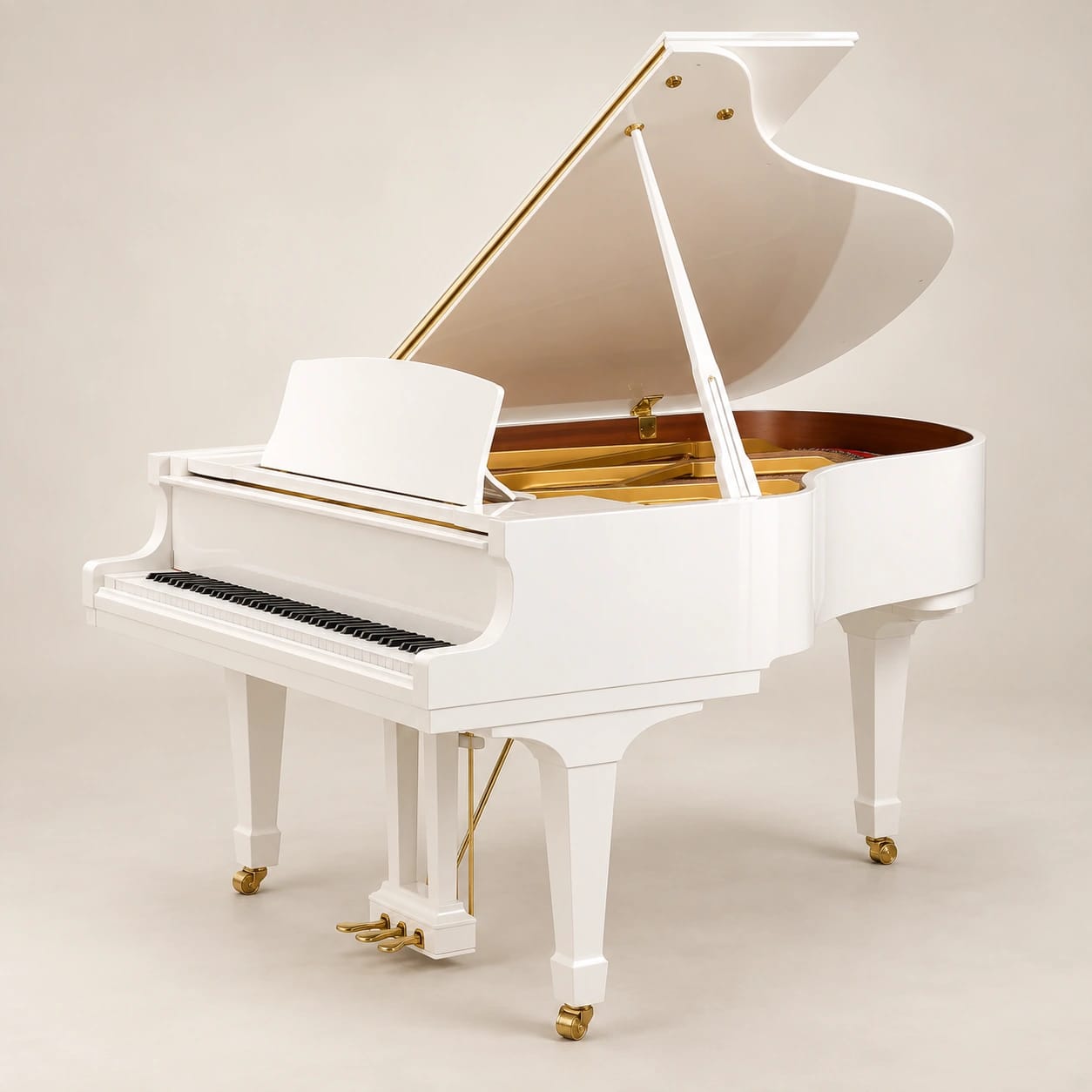
Identify the instrument being considered using the current collection. The white Stenberg 152, black Yamaha C3 and clear Teschendorf M170 are distinct choices, and a long requested period still needs an availability check. Do not build a project programme on the assumption that the preferred instrument can remain indefinitely or be replaced by an identical spare.
Set dates with a clear beginning and end
Separate the date you need the piano ready from the date you would like it delivered. Installation, photography or a launch may happen before the public-facing period begins. Explain those milestones so the proposed hire can be assessed against the whole project rather than only the dates printed on a campaign plan.
Read the detail about Set dates with a clear beginning and end
At the other end, distinguish the final use from the date the instrument can be collected. A display may close before the room is cleared, or access may depend on a building handover. Ask the venue or site manager what collection conditions apply. Include those conditions in the enquiry instead of assuming the instrument can stay until the rest of the project finishes.
Where dates are provisional, mark them as provisional and explain when they are expected to become clearer. A useful request can contain uncertainty, provided it is visible. Before you rely on the arrangement, the accepted booking needs a defined period and a clear understanding of any outstanding conditions. An internal calendar entry does not reserve the instrument or change the agreed collection date.
Plan responsibility while the piano remains on site
A longer stay may outlast the people who organised installation. The sales team, venue staff, cleaners or other contractors may interact with the space during the period. Identify which role maintains the current booking information and can respond if the room use changes or a concern is noticed. Keep the handover practical rather than assuming everyone will read the original enquiry.
Read the detail about Plan responsibility while the piano remains on site
Explain where the instrument is intended to remain and who controls access to that space. If the room is shared or used differently at different times, describe the pattern. Ask the business and venue to clarify applicable responsibilities. Do not infer permission for public playing, relocation or other use merely because the piano is present for several weeks.
Use the accepted terms as the reference for responsibilities, not this planning guide. If the venue has separate conditions, check how they relate to the piano booking and resolve uncertainty before acceptance. The purpose of this preparation is to identify questions early. It does not create a new insurance arrangement, transfer responsibility to another supplier or replace the agreement between the relevant parties.
Distinguish a static display from changing activity
A static display can become more complicated if its purpose changes midway through the period. Perhaps a launch is added to a display programme, a performer is invited to a later event or a photography session needs a different composition. List foreseeable changes in the initial enquiry so they can be discussed before the instrument is placed.
Read the detail about Distinguish a static display from changing activity
Keep a record of what has actually been agreed. An instrument hired as part of a visual display should not be assumed to include every service needed for a later performance. Optional tuning, access to the room and the performer’s requirements may need separate consideration. Equally, a request for a performance does not establish that the instrument can be moved between different rooms during the hire.
If the intended activity changes after acceptance, contact the business with the revised proposal. Explain what stays the same and what changes: location, position, use, dates or requested services. A clear comparison makes the request easier to assess. Do not treat a long period as a general permission to adapt the booking without confirming its practical implications.
Request tuning and maintenance arrangements explicitly
If the piano will be played during a longer hire, explain the programme and ask what tuning arrangements can be agreed. On-site tuning is optional. The existence of a longer booking does not establish an included visit schedule, a particular technician or an ongoing maintenance package. Keep any requested visits visible in the quote and confirmation.
Read the detail about Request tuning and maintenance arrangements explicitly
Ask how to report a concern during the hire and who should receive it. Describe what you observe without attempting repairs, adjustments or moving the instrument. The business can then explain the appropriate next step. Do not make arrangements with another party on the assumption that the original hire agreement allows them to work on the instrument.
For a display-only project, clarify the expectations that apply while the piano remains in the space. Presentation, supervision and changes to the surrounding setup can still matter even if no performance is planned. Use the current terms and booking correspondence to establish the responsibilities. Avoid relying on a maintenance routine from a previous supplier or a different instrument owned by the venue.
Prepare for site changes without assuming relocation
Extended projects often contain more than one room setup. Furniture may be restyled, signage replaced or a display area handed to another team. Identify these planned changes before the booking is agreed. Show whether they affect the piano’s position, the route to it or the ability to collect it at the end.
Read the detail about Prepare for site changes without assuming relocation
Do not assume a piano can simply be shifted while other work happens. Ask for assessment of any proposed change in position or room, including the intended date. The original delivery assessment does not automatically apply to a different route or layout. Changes may also affect the venue’s permissions and the people needed for the handover.
Keep the collection route visible in site planning. A corridor or loading area that was accessible at installation may later be used for storage or another project. Ask the site team how the agreed route will be available for the collection visit. This is a coordination task for the project, not an invitation to improvise an alternative moving method when collection is due.
Compare a complete quote for the proposed period
A long-term enquiry should ask for the complete arrangement rather than a monthly number without context. The instrument, dates, location, access, requested services and any unusual conditions belong together. Current prices come from the business’s booking and quote process. This guide does not publish an evergreen rate or suggest that a previous quote can be multiplied to cover a longer stay.
Read the detail about Compare a complete quote for the proposed period
When comparing alternatives, keep the assumptions consistent. If one option includes a different collection date or a requested service that the other excludes, identify that difference before comparing totals. Also separate costs charged by the venue or your own project suppliers from the piano quote. A single headline figure may not describe the complete project commitment.
Ask about any terms that are unclear before accepting. In particular, clarify what happens if you request a shorter period, a later collection or a change to the intended use. Do not infer cancellation rights, refunds, discounts or deposit requirements from the length of hire. The current accepted terms and the specific booking details govern the arrangement.
Discuss extensions before they become urgent
If a project could overrun, include that possibility in the first enquiry. Ask how an extension request should be made and what information would be needed. A possible extension is different from an agreed extension. The business may have other commitments for the instrument, so continuing availability must not be assumed.
Read the detail about Discuss extensions before they become urgent
Set an internal reminder to review the project’s end date while there is still time to discuss a change. The reminder is for your team; it does not create an automatic renewal. Check whether the original purpose, location and access arrangements remain the same. If more than the date is changing, describe the whole revised proposal.
The published FAQs explain that hire-time changes are reviewed case by case. Wait for confirmation before telling colleagues that collection has moved or that the piano will be available for another event. If an extension is not confirmed, continue planning around the existing agreement. This keeps a hoped-for additional period from becoming an assumption that disrupts the original collection arrangement.
For a campaign managed by several parties, decide who can authorise an extension request and who simply supplies an updated forecast. A sales team may expect another fortnight, while the person responsible for the hire still needs to review the cost and obtain confirmation. Keep those steps distinct. Record the latest intended end date, the reason it may change and the point at which your team will make its decision. Share the request through the agreed contact route and keep the response with the original booking. This prevents an informal discussion about a possible overrun from being mistaken for an accepted extension, particularly when installation and collection are being coordinated by different people.
Close the hire with an orderly handover
As the end approaches, check the collection arrangements against the current site conditions. Confirm that the relevant room and route are identifiable, the responsible representative has the booking information and any changes have been communicated. Do not leave the collection plan buried in correspondence with someone who has moved to another project.
Read the detail about Close the hire with an orderly handover
Tell the business about concerns or changes through the appropriate contact route. Keep your description factual and include the information requested for assessment. Do not attempt to resolve an instrument issue by moving, adjusting or arranging work independently. The agreed terms and the business’s instructions remain relevant until the hire is concluded.
Retain the final booking record for your own administration, including any accepted changes. If you plan another project, use what you learned to write a better brief, but make a fresh enquiry for the new dates and location. A completed long hire does not establish permanent availability, a standing monthly rate or approval of every future site. Each proposal needs its own current arrangements.
The collection
Find your grand piano.
Explore the instrument as well as its finish. We can talk through the right option for your plans and dates.

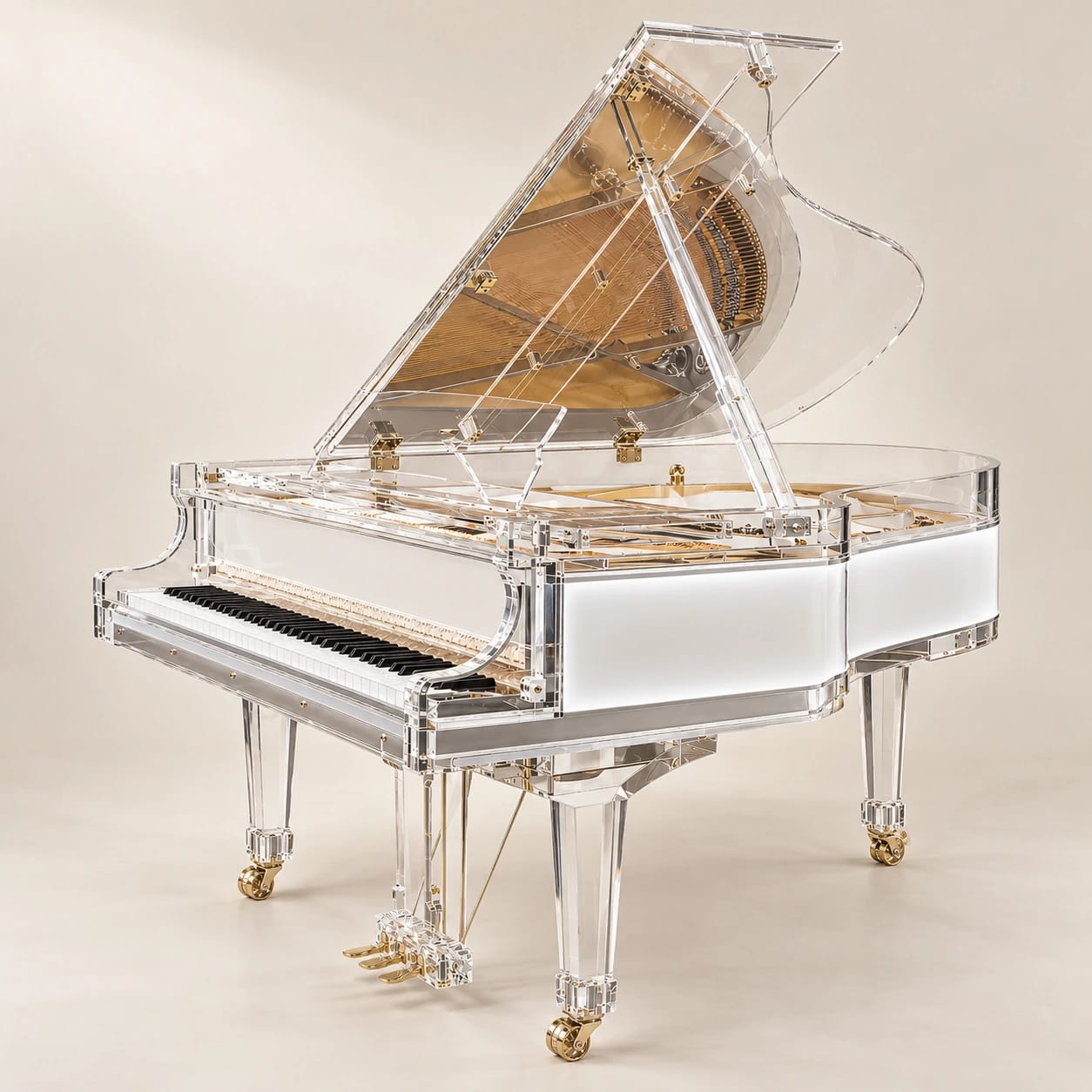
Studio visualisations. Date availability and venue arrangements are confirmed separately.
Good to know
Your questions, answered.
Can I book more than thirty nights online?
The standard duration choices run through thirty nights. Longer or special hires are individually quoted. Send the proposed use, dates and location so the business can assess the request. Do not split a continuous project into separate bookings to assume an extension or bypass discussion of the whole period.
Is long-term hire a rent-to-own arrangement?
No rent-to-own or purchase-finance offer is established by this guide. It describes enquiries for a temporary grand piano hire with a proposed period and agreed responsibilities. If you are considering ownership, assess that separately with the relevant seller rather than assuming hire payments create a purchase entitlement.
Can the booking continue automatically each month?
Do not assume automatic renewal. Any extension needs to be requested and confirmed, with availability and the revised arrangements considered. Ask how the request should be made and keep the original collection plan in place until a change has been accepted.
Does a longer stay include regular tuning visits?
On-site tuning is optional and needs to be discussed for the intended programme. A longer period does not establish a standard visit schedule or a named technician. Explain when the instrument will be played and ask for the relevant services to be set out in the quote.
Can I use this option for home practice or a teaching studio?
Those uses are not advertised as available by this page. Explain the actual proposal to the business and ask whether it can be considered. A general statement that longer hires are quoted individually should not be read as confirmation of every residential, teaching or commercial rental use.
Let’s talk about your hire
Tell us what you’re imagining.
Tell us the occasion, the piano and the details you know. We can help work through the rest.