Hire or purchase
Hiring or buying a grand piano for a display: compare the commitment
Compare the commitment behind hiring or buying a grand piano for a display. Consider the planned duration, responsibilities and future use, then speak with us about the hire option.
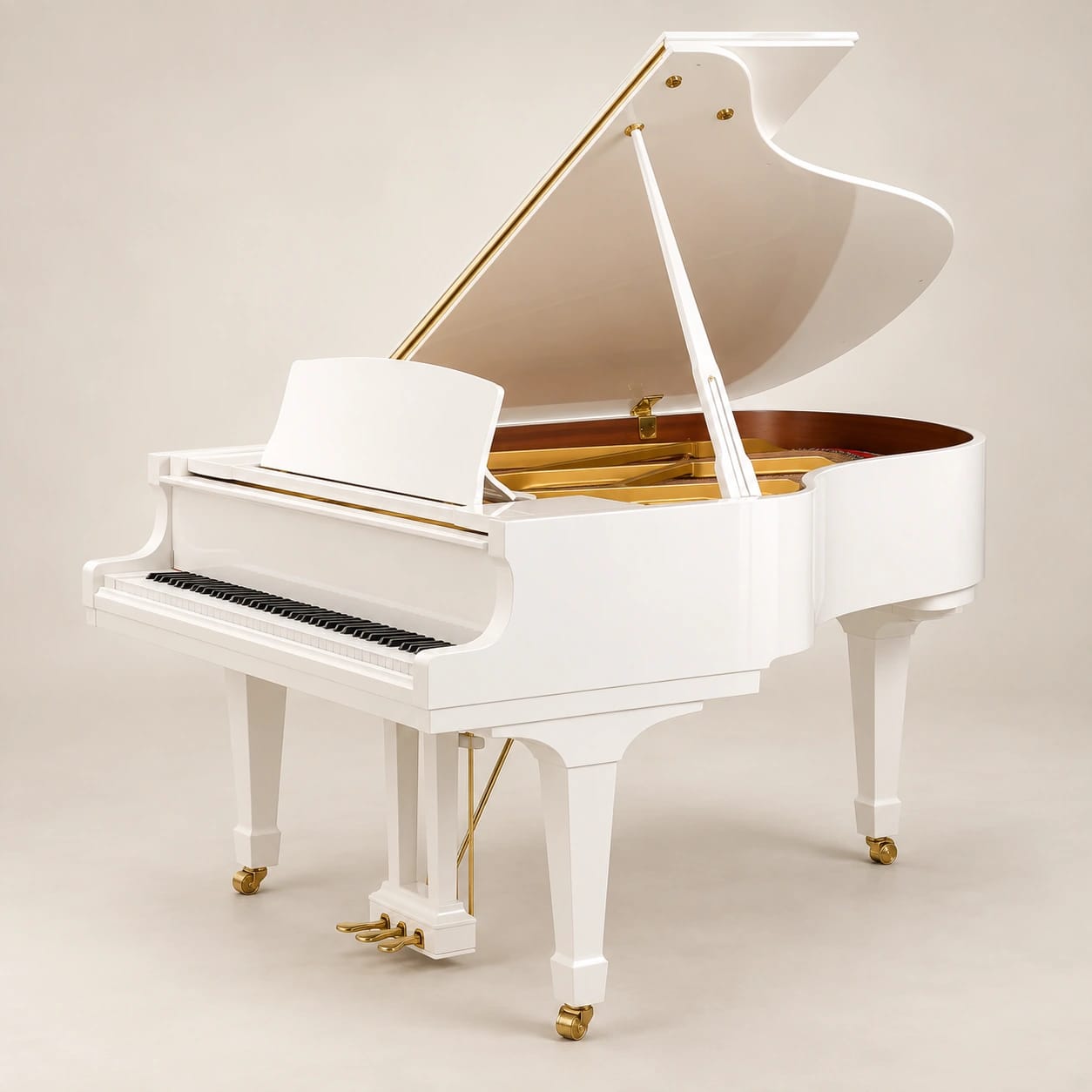
Black, white and clear grand pianos. We confirm availability and arrangements for each booking.
At a glance
What matters for your hire.
Compare the complete commitments: the intended instrument and use, the project period, transport and placement arrangements, ongoing responsibilities, changes of location and the plan after the display ends. Use current quotes from the relevant providers. Do not assume hire is always cheaper, ownership guarantees resale value or either choice improves campaign results.
The collection
Find your grand piano.
Explore the instrument as well as its finish. We can talk through the right option for your plans and dates.
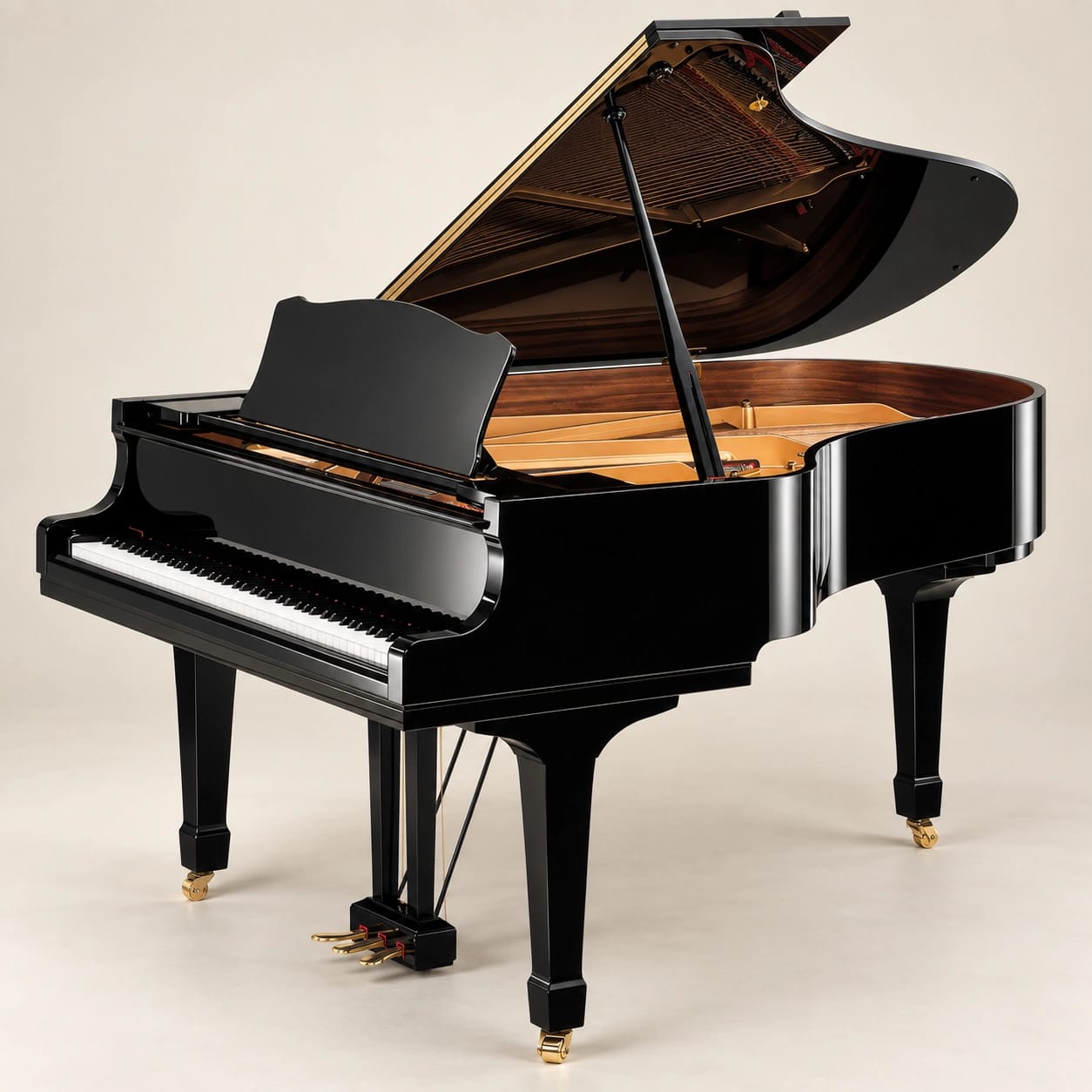
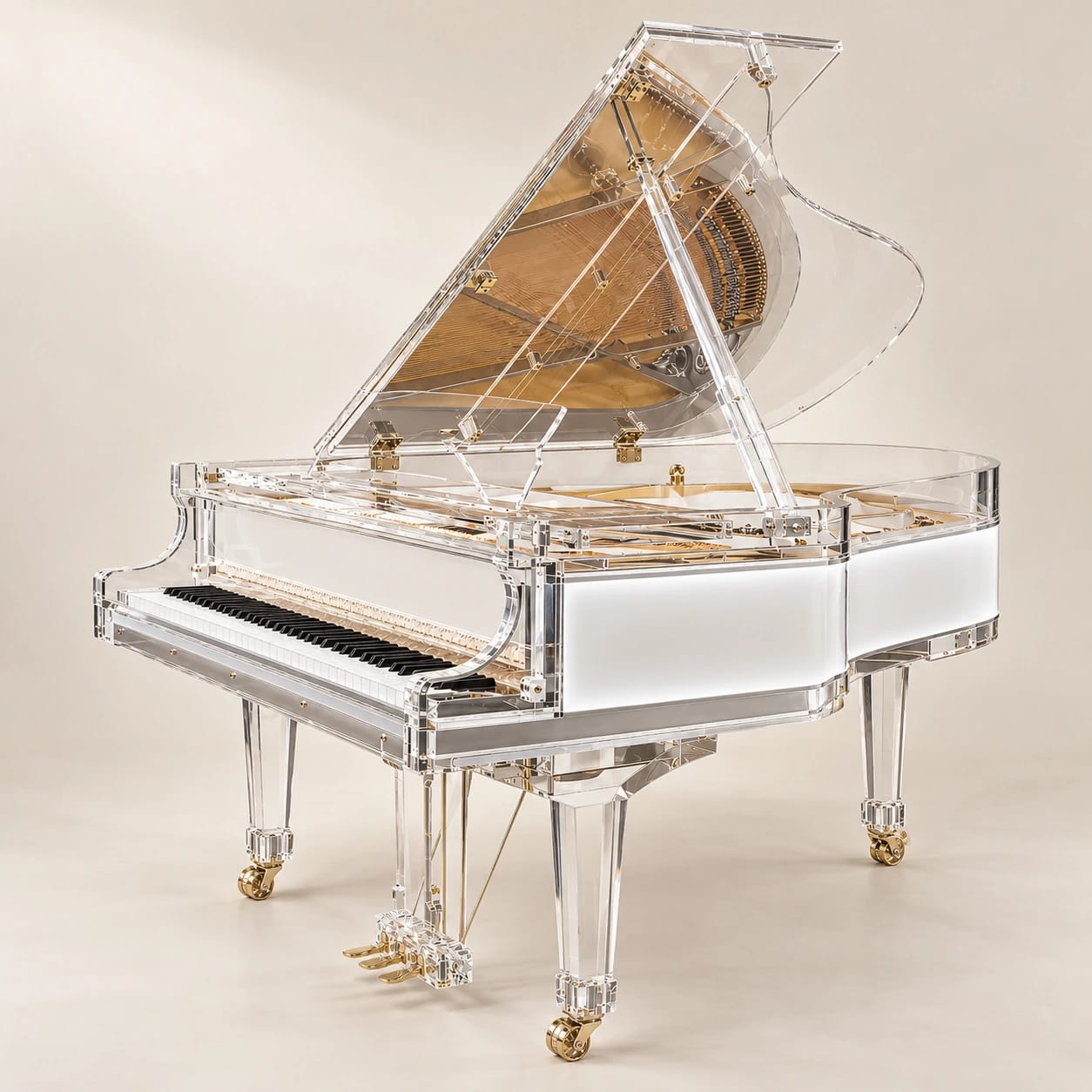
Studio visualisations. Date availability and venue arrangements are confirmed separately.
At a glance
Compare the whole commitment
Define the display requirement
Identify the actual instrument and intended use.
Map the full period
Include setup, photography, occupation and the ending.
Compare current offers
Separate included items, external costs and unknowns.
Plan ongoing responsibility
Check changes, care questions and the next destination.
Record and confirm
Explain the choice using verified information and accepted arrangements.
Let’s talk about your hire
Have a date or venue in mind?
Tell us the occasion, the piano and the details you know. We can help work through the rest.
The practical details
Plan your hire with confidence.
Explore the parts that matter to your plans. If you’re unsure, we can talk them through with you.
A little more about this hire
A grand piano can be a substantial part of a display, so the hire-or-buy decision deserves more than a comparison between a quoted hire total and a purchase price. The useful question is what commitment fits the actual project: a defined period with agreed collection, or ownership that continues after the campaign or display ends.
This guide is a decision worksheet for a temporary visual project. It does not predict resale value, promise a return from a display or offer financial, tax or purchase advice. Piano Hire Australia’s current offer is hire. If you are considering buying, obtain current information from the relevant seller and appropriate advisers for that separate transaction.
Start with the purpose, the period and what happens afterwards. Those three answers often reveal which facts are missing from the comparison. If the project itself is uncertain, keep that uncertainty visible rather than making either option appear more precise than it is.
Explore the topics on this page
Decide what the display actually requires
Describe the role of the piano in the setting. Is it a visual focal point, an instrument that will also be played or part of a photographed composition? The answer affects what you need to compare. A non-playing shell, digital keyboard and acoustic grand are different products and should not be treated as interchangeable simply because each can appear in a display.
Read the detail about Decide what the display actually requires
The current Piano Hire Australia collection includes the white Stenberg 152, black Yamaha C3 and clear Teschendorf M170. Use the actual model and proposed use when requesting a hire quote. If the purchase alternative is a different instrument, make the differences explicit instead of comparing the prices as though the products and arrangements are identical.
Separate essential requirements from preferences. A particular finish may be central to the design, while another detail may be flexible. If playing is planned, ask the relevant performer about genuine requirements. Do not assume the visual choice alone settles suitability. A well-defined requirement helps both the hire enquiry and a separate purchase enquiry remain focused on the same project.
Define the period and its uncertain edges
Write down when the piano must be ready, when the display finishes and when the space needs to be clear. Those dates may differ from the public campaign dates. Photography, installation and handover can add time at either end, so include them in the proposed period rather than comparing an incomplete hire request with an open-ended ownership option.
Read the detail about Define the period and its uncertain edges
If the end date could change, explain why and identify when the decision is likely to be made. A campaign extension, site delay or changing programme should appear as a question in the comparison. It should not become an assumed free extension or a reason to treat ownership as automatically preferable. Ask each relevant provider how the uncertainty affects its actual offer.
Hires beyond thirty nights and other special arrangements need individual quotes. Do not construct a long-term figure by multiplying a short-term rate or assuming a monthly package exists. Equally, a purchase price does not explain all the arrangements needed before the instrument is ready in the display. Compare both options against the same complete period and project requirements.
List what each quote actually includes
Build two columns using the providers’ current written information. Include the instrument, delivery and collection or onward transport, placement arrangements, requested services and any conditions. Where an item is not included or its position is unclear, leave it as a question to resolve. A blank should not silently become a zero cost or an assumed service.
Read the detail about List what each quote actually includes
For the hire option, use the current booking or individual quote rather than an old rate found in correspondence. For a purchase option, ask the seller what is supplied and which arrangements are separate. This guide does not state what any seller includes. Keeping the providers’ offers separate prevents a feature of one proposal from being accidentally attributed to the other.
Also identify costs or responsibilities belonging to the venue and your own project team. Access staffing, room occupation and changes to other installations may sit outside both instrument quotes. The objective is not to manufacture a precise total from guesses. It is to make the comparison complete enough that important unknowns can be checked before a decision is made.
Consider who takes responsibility after installation
During a hire, the current terms and accepted booking set the relevant responsibilities. Read them alongside the venue agreement and ask about anything unclear. Do not infer the arrangement from the word hire alone or from a previous booking with another business. The particular period, intended use and location should be reflected in the accepted proposal.
Read the detail about Consider who takes responsibility after installation
Ownership creates a different continuing question: who will organise the instrument’s care, location and future handling after the project ends? Ask the seller and relevant specialists for current guidance about the instrument being considered. Do not assume the venue or styling team will take over simply because it already manages other furniture or decorative objects.
For either option, identify a responsible role during the display. The person approving the design may not remain involved throughout the campaign. A handover should explain the intended use, who can request changes and how a concern is reported. Keep those practical responsibilities in the comparison so the decision is about a manageable arrangement rather than only an acquisition cost.
Make the end-of-project plan concrete
The end plan is one of the clearest differences to investigate. For hire, the proposed collection date, access route and handover need agreement. For ownership, ask what the project will do with the instrument afterwards: retain it at the same site, move it elsewhere or explore a sale. Each is a separate plan that needs current information.
Read the detail about Make the end-of-project plan concrete
Do not count an assumed resale figure as a confirmed offset. This guide cannot predict whether an instrument will sell, how long that might take or what price it would achieve. If resale is central to the decision, seek appropriate current advice and allow for uncertainty. The same caution applies to assuming a future project will definitely use an owned piano.
Check the practical consequences of each ending. A room may need to be cleared by a fixed date, while a future location may not yet be available. Ask who would arrange the transition and what needs assessing. A decision made with a defined ending is easier to manage than one that leaves an instrument’s next destination to be resolved after the display closes.
Compare flexibility without assuming unlimited change
Flexibility is useful only when you know what can actually change. For a hire, ask how requests to extend, shorten or alter the location are reviewed. The published FAQs describe changes as case-by-case matters. Do not assume a longer period, another site or a different position will be accepted because the instrument is already on hire.
Read the detail about Compare flexibility without assuming unlimited change
For a purchase, ownership does not make every room or delivery route suitable. Any proposed move still needs the appropriate permission and specialist assessment. If your project involves several locations, describe that schedule to the relevant providers and ask what arrangements would be needed. A single instrument should not be treated like an ordinary movable styling accessory.
Keep a list of the changes that are genuinely foreseeable: a campaign extension, a revised photography date or a planned transfer to another display. Discuss them before accepting the preferred option. Do not pay for imagined flexibility that the project does not need, and do not rely on flexibility that no provider has confirmed. The useful comparison is specific to the real uncertainty.
Think about repeated projects as separate requirements
If you expect to use a grand piano across several projects, list the actual known dates, locations and intended uses. Distinguish confirmed work from possibilities. This gives you a more useful basis for discussing arrangements than a general statement that the instrument will be used frequently, which can conceal gaps or incompatible requirements.
Read the detail about Think about repeated projects as separate requirements
Consider whether those projects need the same instrument and finish. A piano selected for one visual brief may not suit another brief’s preferences or playing requirements. Do not assume that ownership of a single model satisfies every future commission. Equally, hiring for separate projects still depends on the current collection and availability rather than a guarantee that any desired style will always be supplied.
Ask how the relevant arrangements would work in practice, including assessment of each site and responsibility between projects. Avoid claiming a repeat-booking discount, standing reservation or guaranteed replacement unless it is specifically agreed. The point of mapping repeat uses is to identify the questions that matter, not to turn tentative future demand into a certainty in the comparison.
Use a decision record rather than a universal rule
Write the reason for the preferred option in terms of the project. Perhaps it provides a defined ending, matches an established ongoing use or avoids a particular unresolved commitment. Keep the reason alongside the evidence that supports it and the questions still outstanding. This is more useful to a client or colleague than a broad statement that hiring or buying is always better.
Read the detail about Use a decision record rather than a universal rule
Separate verified information from assumptions in the record. Mark a current provider quote as such, a provisional project date as provisional and a possible future use as unconfirmed. If the decision depends on a fact you do not have, identify who will check it. This makes it easier to revisit the choice if the campaign or location changes.
Do not treat the presence of a piano as a promise of higher property value, quicker sales, more enquiries or stronger event results. The display is a design and project decision. Any business evaluation belongs to the people responsible for the campaign using their own evidence. This comparison is about the instrument arrangement and its practical commitments, not an unsupported return forecast.
A useful internal comparison can be one page with a small evidence column beside each commitment. For example, mark the proposed hire period as supported by a current quote, the purchase alternative as awaiting a seller response and the future location as not yet identified. This is more transparent than filling every cell with an estimated amount or a confident yes. Ask a colleague who was not part of the discussion to read it. They should be able to tell which option you prefer, why you prefer it and what would change the decision. Keep the record neutral enough that new information can update the choice without needing to defend an earlier assumption.
Confirm the chosen arrangement before committing the wider project
Once the preferred approach is clear, obtain the relevant confirmations before issuing instructions to the rest of the project team. For a hire, make sure the accepted instrument, dates, use and access arrangements match the comparison you relied on. For a purchase, review the seller’s actual offer and obtain any separate advice or arrangements the transaction requires.
Read the detail about Confirm the chosen arrangement before committing the wider project
Keep the current documents together. If a detail changes, update the comparison and identify whether the reason for the decision still holds. A different finish, later opening or revised site may affect more than one part of the plan. Avoid treating the original decision as settled if the assumptions supporting it are no longer true.
Share the practical outcome with the people delivering the project: the agreed position, relevant dates, responsibility and next actions. Do not circulate unsupported price calculations or provisional arrangements as confirmed instructions. The comparison has served its purpose when the chosen option can be explained clearly and the remaining commitments have an identifiable owner.
Want to organise your notes first?
Your enquiry
Build a hire-or-buy comparison brief
Record the facts and questions for your project. This tool does not estimate costs, resale values or financial returns.
Your notes stay in this page. Nothing is sent or saved automatically.
0 / 4,000 enquiry-note characters. Only answered fields and selected checks are included.
Read or select your brief
Display instrument commitment comparison

Display requirement: To confirm
Known project period: To confirm
Hire offer information: To confirm
Purchase offer information: To confirm
After the display: To confirm
Decision uncertainty: To confirm

Planning checklist
[ ] Compare the actual products rather than only their appearance.
[ ] Use current offers from each provider.
[ ] Include the complete period of occupation.
[ ] Identify separate venue and project commitments.
[ ] Do not treat resale estimates as confirmed amounts.
[ ] Describe foreseeable location or date changes.
[ ] Assign responsibility during and after the display.
[ ] Confirm the chosen arrangement before issuing instructions.

Planning notes only. Piano availability, access and arrangements need confirmation before booking.
Good to know
Your questions, answered.
Is hiring always cheaper for a temporary display?
There is no universal answer in this guide. Compare current complete offers for the actual instrument, period, site and services, including what happens afterwards. Avoid using a short-term rate to invent a long-term total or treating an unknown purchase-related cost as zero.
Can hire payments be put towards buying the piano?
No rent-to-own or purchase-credit arrangement is established here. Piano Hire Australia’s described offer is hire. If you want to explore buying an instrument, make a separate enquiry with the relevant seller and do not assume that hire payments create ownership rights.
Should a predicted resale price be included in the comparison?
Keep any resale expectation clearly marked as uncertain and seek appropriate current advice if it is important to the decision. This guide cannot establish a future buyer, sale timing or value. Do not present a guessed resale amount as a confirmed reduction in the project’s commitment.
What if we expect to use a piano across future campaigns?
List the actual known projects and distinguish them from possible work. Consider the dates, locations, finish and intended use for each. Discuss arrangements with the relevant providers without assuming standing availability, automatic discounts or that one instrument suits every future brief.
Does the guide recommend buying for home practice?
No. Its scope is a piano used in a proposed temporary display or campaign. It does not recommend a consumer purchase or advertise a home-practice rental offer. A different intended use needs its own enquiry, evidence and consideration rather than being inferred from this comparison.
Let’s talk about your hire
Tell us what you’re imagining.
Tell us the occasion, the piano and the details you know. We can help work through the rest.