Funeral services
Piano hire for funerals
Arrange a grand piano for the music that matters to your family. We can talk through the instrument, service date and venue with you or the person coordinating the funeral.
Black, white and clear grand pianos. We confirm availability and arrangements for each booking.

At a glance
What matters for your hire.
Tell the team the service date, venue and intended piano use, then identify the person coordinating arrangements. The venue must consider outside-instrument permission and access, and the musician should approve the proposed model. Plan delivery and any requested tuning before the service, with collection separately agreed. An urgent enquiry is not a confirmed reservation or a promise of immediate delivery.
The collection
Find your grand piano.
Explore the instrument as well as its finish. We can talk through the right option for your plans and dates.
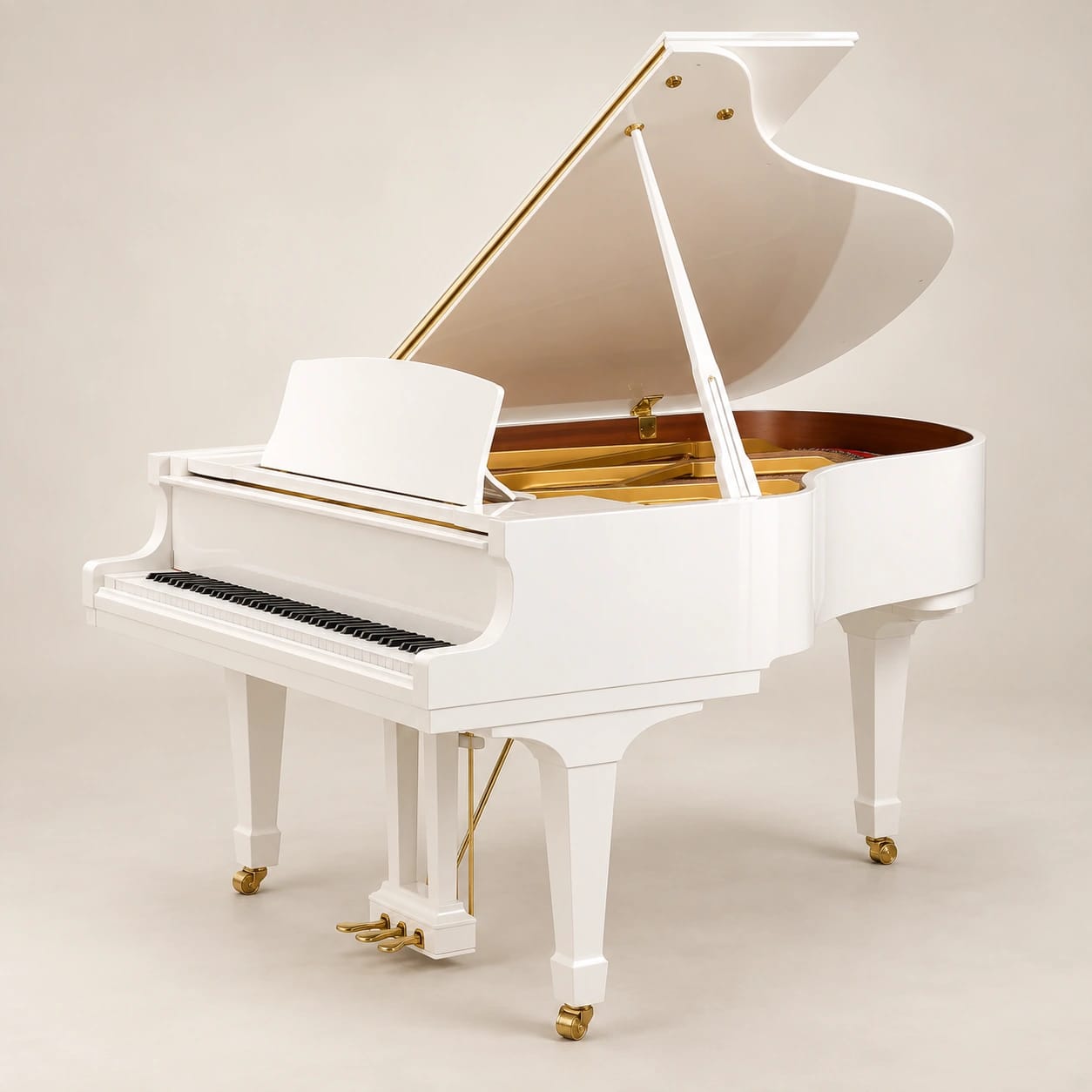
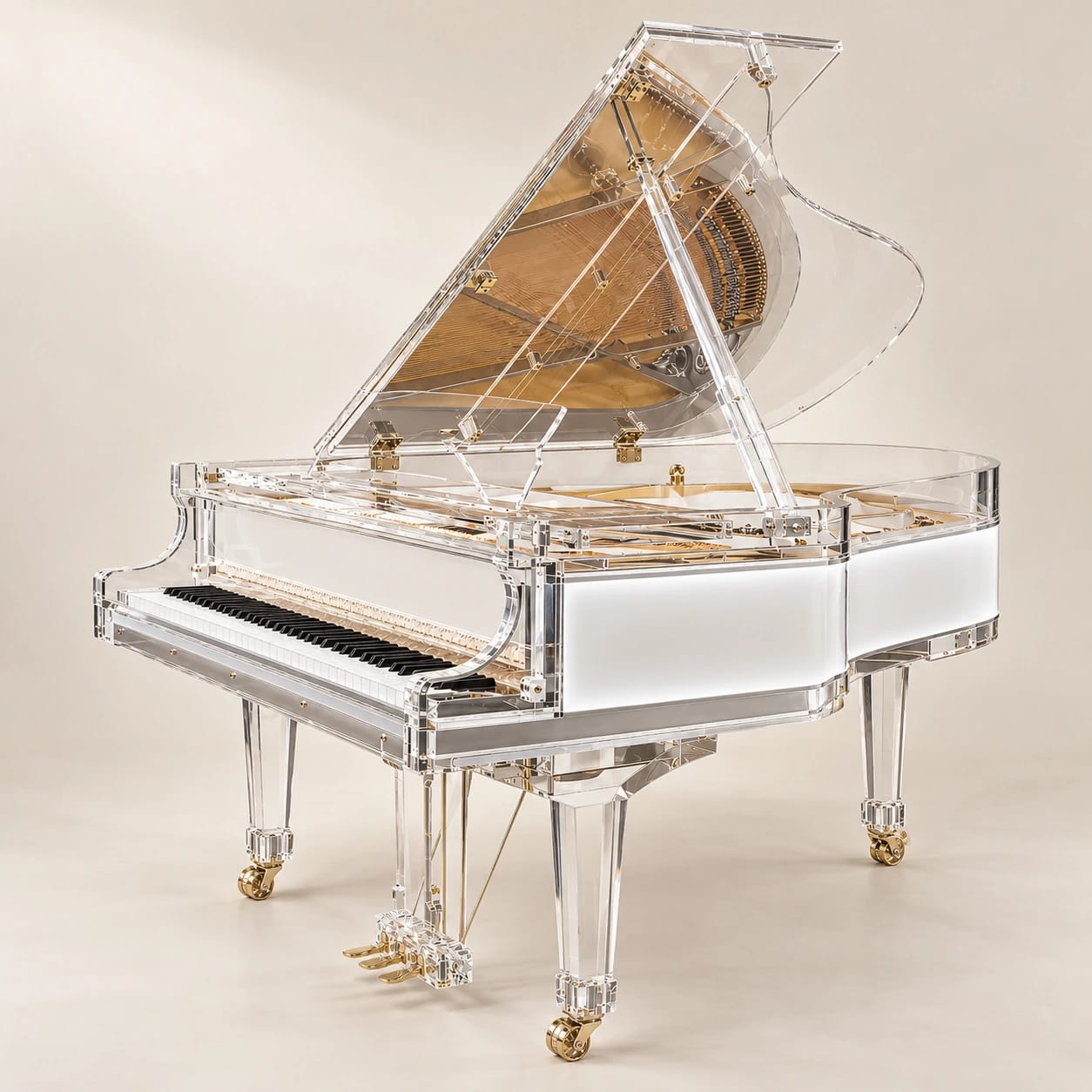
Studio visualisations. Date availability and venue arrangements are confirmed separately.
At a glance
Arrange the instrument around the service
Record the musical wish
Identify how the piano will be used during the service.
Check the venue
Confirm the proposed room and outside-instrument requirements.
Agree the model
Discuss the instrument with the musician and family decision-maker.
Set the preparation plan
Coordinate delivery and any requested tuning before the room is needed.
Assign collection coordination
Make the departure arrangement clear to the responsible venue role.
Let’s talk about your hire
Have a date or venue in mind?
Tell us the occasion, the piano and the details you know. We can help work through the rest.
The practical details
Plan your hire with confidence.
Explore the parts that matter to your plans. If you’re unsure, we can talk them through with you.
A little more about this hire
Music can be an important part of a funeral, and a family may wish to have it performed on a grand piano. The practical arrangements should support that wish without leaving the family to manage transport details during the service. Begin with the intended musical role and the venue, then let the relevant people work through the instrument requirements together.
This page explains how to enquire about a piano for a scheduled funeral service. It is designed to help a family member or organiser understand the decisions that need to be made and which ones can be coordinated by a funeral director or venue representative. Availability, timing and physical arrangements must be confirmed for the particular booking.
Explore the topics on this page
Begin with the family’s musical intention
The first conversation does not need to be technical. Establish whether the piano is wanted for a specific piece, to accompany a singer, to support several parts of the service or simply to be present in the setting. If those choices are still being discussed, say so. A clear account of what the family hopes to include helps the organiser ask the right practical questions.
Read the detail about Begin with the family’s musical intention
The performer or musical coordinator should advise on the music and their own requirements. Instrument hire does not book a pianist, singer or sound system. If a funeral director is helping arrange those services, keep the instrument request visible as its own item. This allows the people responsible to connect the music plan with a specific piano and preparation schedule.
Avoid asking the family to resolve details that belong to the venue or specialist team. They can express their preference for the role and appearance of the piano while the coordinator collects access and timing information. If a particular model or finish is important, record that preference respectfully and check it through the booking process rather than implying it has already been secured.
Ask the venue about an outside hired instrument
A service venue may have its own arrangements for music and outside suppliers. Ask whether it can consider a hired grand piano for the proposed service and which room or position would be used. The venue’s permission is a separate question from the piano’s availability. One does not establish the other, so both should be checked before the plan is treated as confirmed.
Read the detail about Ask the venue about an outside hired instrument
If the venue already has an instrument, ask about that option with the person organising the music. This is not a reason to assume it meets the family’s or performer’s requirements, but it is useful information before arranging another piano. A hired instrument should answer a real need in the service plan rather than arrive because the existing arrangements were never discussed.
The venue should identify any restrictions on outside delivery, setup and removal. A room may be used for another service before or afterwards, leaving specific periods in which suppliers can work. Share those constraints early. The piano team needs the actual permitted arrangement, not only the ceremony time, to assess whether the request can be accommodated.
Choose the piano with the musician and family in mind
The current collection comprises the white Stenberg 152, black Yamaha C3 and clear Teschendorf M170. If the piano will be played, ask the musician to consider the proposed model. The family’s preference for the appearance can sit alongside that discussion. Neither a photograph nor a finish name establishes the musical result in the service room.
Read the detail about Choose the piano with the musician and family in mind
Where there is flexibility, state it clearly. The family may prefer a particular finish but be open to another suitable model, or the musician may have a specific requirement that needs to guide the choice. Knowing which decision is fixed helps the team respond to the enquiry without making assumptions on the family’s behalf. Availability still needs to be checked for the service date.
Do not describe an instrument as reserved until the booking has been confirmed. If there is a change to the proposed model, pass it back through the appropriate approval route before relying on it. Keeping one current instrument choice in the plan helps the musician, venue and organiser understand what has actually been agreed and avoids unnecessary questions close to the service.
Protect the service schedule from unresolved setup questions
Work backwards from the time the room must be ready for the family and guests. Include the musician’s preparation and any requested tuning, then identify the venue’s available period for delivery and placement. The piano should be considered within the whole preparation sequence, not as a separate delivery that can occur whenever the building happens to be open.
Read the detail about Protect the service schedule from unresolved setup questions
A delivery window is not an exact arrival appointment unless a particular arrangement has been confirmed. If the venue has a narrow opportunity between services, explain that limitation directly. The team can assess the request and discuss what is possible. Do not interpret the earliest point in a standard window as a promise that the instrument will be ready at that moment.
If time is short, make the fixed facts easy to identify: service date, venue, room, required-ready time and the available access period. Mark anything still unknown. This helps an urgent enquiry remain clear without creating a false sense that an immediate response or delivery is guaranteed. The normal online process requires advance notice, and unusual timing should be discussed through the enquiry route.
Where the venue hosts more than one service, ask which parts of the preparation period are genuinely available for outside suppliers. A room can be empty while access is still restricted by activity elsewhere in the building. The venue representative can explain that distinction. Record the permitted period in the brief so the piano enquiry reflects the venue’s actual operating arrangement, rather than an assumption based on the service timetable alone.
Arrange a quiet preparation opportunity where requested
On-site tuning is optional. Discuss it with the musician and the piano team rather than assuming it is included in every hire. If a visit is requested, the venue needs to provide an appropriate preparation opportunity. The published guidance asks for time and a quiet environment, so consider the other activities taking place in the room before the service.
Read the detail about Arrange a quiet preparation opportunity where requested
Flower placement, sound preparation and other supplier work may share the same setup period. The coordinator can help those activities fit together without asking the family to manage each detail. The purpose is to create a workable sequence for the agreed services. It is not necessary to promise a particular tuner or a fixed sequence before the booking arrangements have been confirmed.
If the performer has additional preparation requirements, include them in the initial discussion. A musical request should not be discovered only when the performer arrives. Keep the requested instrument service separate from the performer’s rehearsal and any sound arrangements, while ensuring the times connect. Each party should be able to recognise their own responsibilities in the final plan.
Give the specialist team accurate access information
Ask the venue for the permitted unloading point and the route to the final position. Include relevant changes of level, steps, lifts and any restrictions on when those facilities can be used. A description such as easy access or ground floor may leave out an important feature of the actual route. Specific facts are more helpful than a general assurance.
Read the detail about Give the specialist team accurate access information
Photographs and the venue’s current information can support the enquiry through the agreed process. The family or organiser is not expected to certify that a piano will fit, calculate handling requirements or choose a moving method. The specialist team assesses the complete movement and placement. If part of the route is uncertain, identify the question rather than guessing an answer.
Do not arrange for guests, venue staff or other suppliers to move the instrument. If its position needs to change for another part of the gathering, tell the team before booking so the proposed movement can be assessed. A new position is a practical change even when it remains within the same room or building. Keep that decision away from the time of the service wherever possible.
Make collection somebody’s clear responsibility
The piano’s departure needs an agreed plan that does not rely on the family remaining at the venue to organise it. Ask when the room must be available again and what collection access is permitted. The end of the service may not be the same as the permitted removal time, particularly if the venue has another booking or a gathering continues afterwards.
Read the detail about Make collection somebody’s clear responsibility
Identify the role responsible for coordinating access at collection. This may be a venue representative or the person managing suppliers, depending on the arrangement. The point is to make sure the agreed requirements reach whoever will be present. Do not assume that the person who receives the instrument will still be available when it leaves.
If collection is arranged for a later period, keep the agreed position and venue responsibilities clear until then. The instrument should not be relocated informally to clear the room. Any proposed change needs discussion with the team. The current booking confirmation and applicable terms remain the reference for the hire rather than an improvised plan made after the service.
Keep costs and decisions simple to understand
Use the current booking total or individual quote for the actual cost. This page does not publish fixed hire, transport or deposit amounts. Check that the proposal identifies the requested model, dates, access arrangements and any optional services. If another person is approving the cost on the family’s behalf, give them the scope with the total so they understand what is being agreed.
Read the detail about Keep costs and decisions simple to understand
Separate the instrument booking from the performer’s fee, venue charges and any other service. This avoids uncertainty about whether a pianist or sound equipment has been arranged. If the booking includes a security deposit, check that specific arrangement in the current confirmation and terms. Do not assume that all hires have an identical payment structure.
Choose a clear route for any later changes. A different venue, revised service time or altered hire period can affect the arrangements and should be discussed with the team. Retain the current confirmation until a revised plan is agreed. Keeping the information concise and current is often more useful than circulating a long chain of earlier messages with several different versions of the service plan.
Prepare one brief for the people arranging the service
The planning tool on this page brings the essential instrument information into a short summary. Use roles rather than personal names, and leave contact details and payment information for the proper booking process. The tool works in the browser and does not submit an enquiry or reserve a piano. Its purpose is to reduce the number of separate questions that need to be passed between people.
Read the detail about Prepare one brief for the people arranging the service
Check the outline with the venue and musician before sending the enquiry, where time allows. The venue should recognise the proposed room and access period, while the musician should recognise the requested instrument and preparation plan. Any unanswered item can remain labelled as a question. It is better to present a clear uncertainty than to imply an approval that has not been given.
Once the booking is confirmed, the coordinator can keep the current arrangement with the service programme. This lets the family focus on the service while the relevant people know what to prepare and when. If the gathering is instead a later memorial or celebration of life with a different format, the memorial-services page offers a planning route for that more flexible sequence.
Want to organise your notes first?
Your enquiry
Build a funeral-service piano brief
Create a practical summary without personal or sensitive family details. Nothing is submitted by this tool.
Your notes stay in this page. Nothing is sent or saved automatically.
0 / 4,000 enquiry-note characters. Only answered fields and selected checks are included.
Read or select your brief
Your funeral-service instrument brief

Musical role: To confirm
Instrument preference: To confirm
Service timing: To confirm
Venue arrangement: To confirm
Preparation needs: To confirm
Collection coordination: To confirm

Planning checklist
[ ] The family’s intended musical role is understood.
[ ] A musician is arranged separately where needed.
[ ] The venue has been asked about outside-instrument permission.
[ ] The model and any alternatives need clear approval.
[ ] The room’s preparation deadline is recorded.
[ ] Access questions are passed to the specialist team.
[ ] Collection does not depend on an unplanned family handover.

Planning notes only. Piano availability, access and arrangements need confirmation before booking.
Good to know
Your questions, answered.
Can a piano be arranged at short notice for a funeral?
Send the service date, venue and required-ready time through the enquiry process and explain the urgency. The team can assess availability and the practical requirements. A short-notice enquiry does not guarantee an instrument or immediate delivery, and venue permission and access still need to be confirmed.
Do we need to choose the exact model ourselves?
The family can state an appearance preference while the musician considers the instrument requirement. Share both with the team. If you are open to alternatives, make that clear. The final model should be agreed before the booking is treated as settled, rather than left as an assumption based on a photograph.
Can the funeral director organise the hire for us?
A funeral director can help coordinate the information and discussion if that is part of the arrangement you make with them. The instrument request should still identify the venue, timing, model approval and any preparation requirements. The funeral-director guide provides a separate workflow for those professional handovers.
Does hiring the piano include someone to play it?
No performer is implied by the instrument hire. Arrange the musician separately, either directly or through the person coordinating the service. Ask them to approve the proposed instrument and explain their preparation needs, then connect those requirements to the venue and the confirmed piano booking.
Let’s talk about your hire
Tell us what you’re imagining.
Tell us the occasion, the piano and the details you know. We can help work through the rest.