For funeral directors
Piano hire for funeral directors
Coordinate a grand piano for a family’s funeral or memorial service. Share the date, venue and musical requirements so we can work through the hire alongside your existing service arrangements.
Black, white and clear grand pianos. We confirm availability and arrangements for each booking.

At a glance
What matters for your hire.
Create one instrument brief that separates the family’s preference, the musician’s approval, the venue’s requirements and the piano team’s assessment. Obtain a current proposal for the defined scope, identify who approves it and keep the final version with the service plan. An urgent request remains an enquiry until availability and the practical arrangement are confirmed.
The collection
Find your grand piano.
Explore the instrument as well as its finish. We can talk through the right option for your plans and dates.
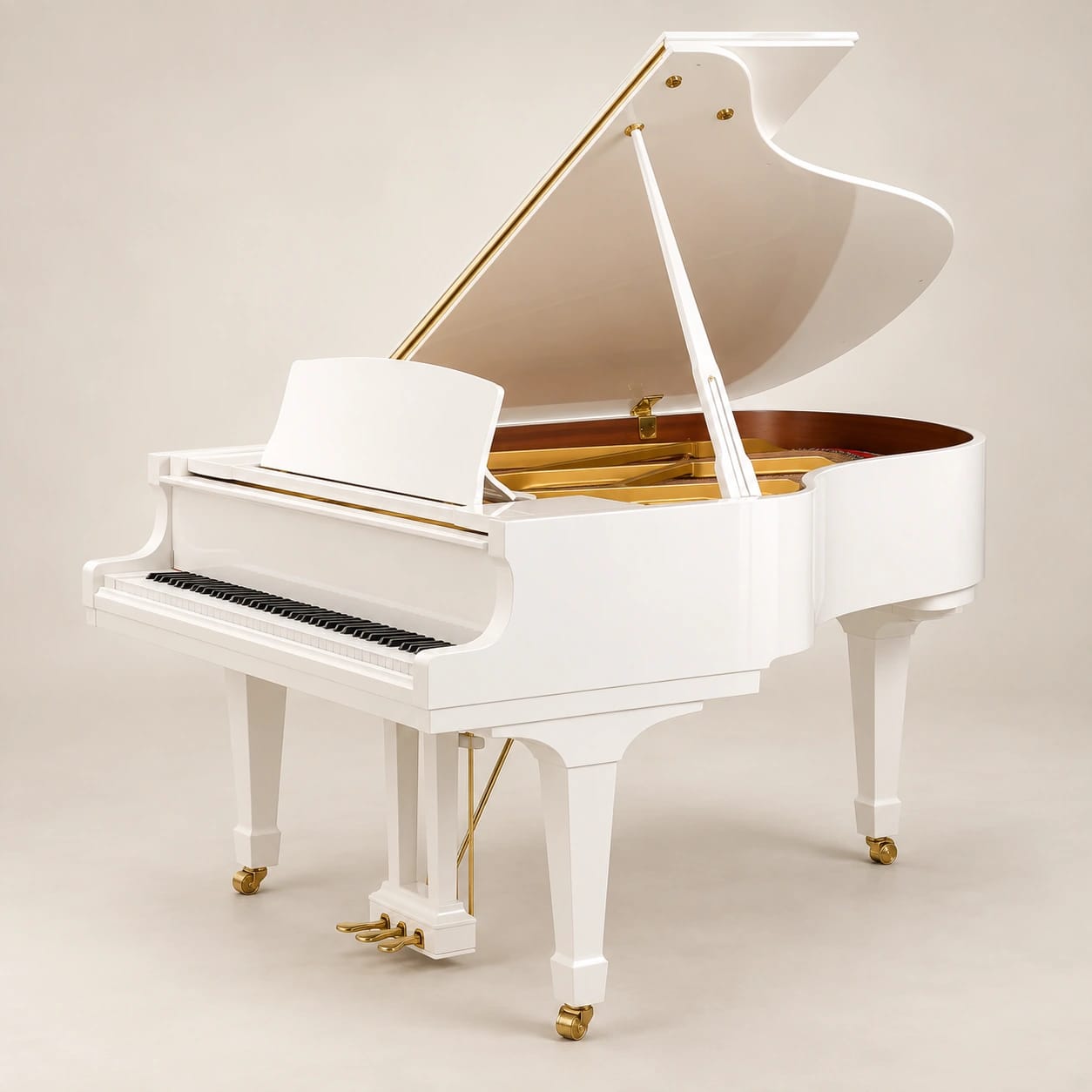
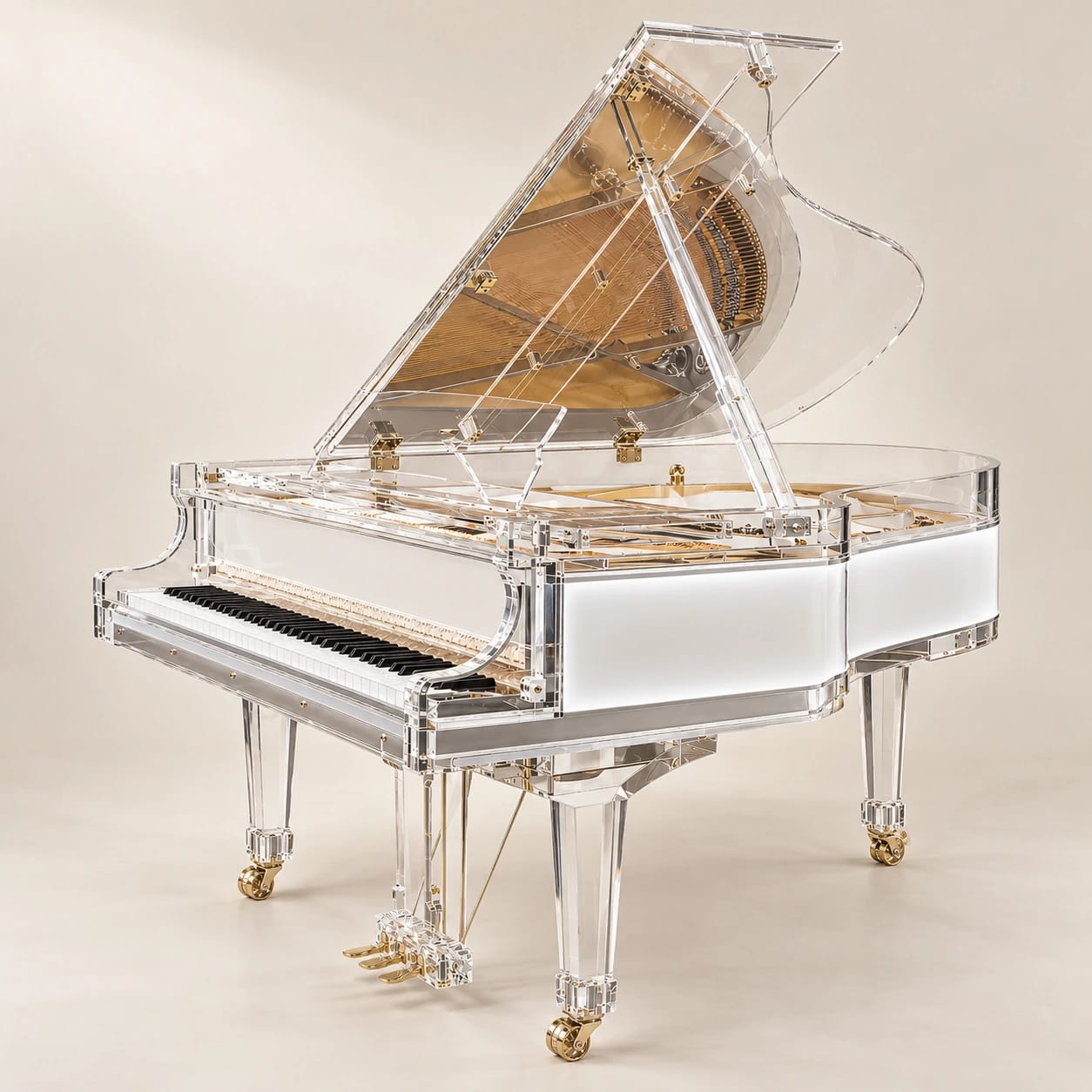
Studio visualisations. Date availability and venue arrangements are confirmed separately.
At a glance
Coordinate the four approvals
Clarify the family request
Record the practical wish and authorised decision route.
Obtain musician input
Identify the proposed model and any accepted alternative.
Collect venue facts
Confirm permission, room, route and available periods.
Confirm the supplier scope
Resolve the quote, preparation and booking status.
Hand over the current plan
Assign arrival and collection coordination and track changes.
Let’s talk about your hire
Have a date or venue in mind?
Tell us the occasion, the piano and the details you know. We can help work through the rest.
The practical details
Plan your hire with confidence.
Explore the parts that matter to your plans. If you’re unsure, we can talk them through with you.
A little more about this hire
When a family asks for a grand piano, the funeral director can help turn that preference into a manageable supplier arrangement. The task is to collect the right information, keep decisions with the people authorised to make them and give the venue and musician a clear plan. It should not require the family to become the transport coordinator or leave the director making technical approvals outside their role.
This guide follows the professional coordination process, from the first request to the final collection handover. It complements the family-facing funeral and memorial pages. It does not create a standard supplier package or replace the terms that apply to a particular hire. The actual instrument, date and practical arrangements must be confirmed.
Explore the topics on this page
Clarify the request without collecting unnecessary personal detail
Ask what the family wants the piano to contribute to the service. The answer may be a particular musical moment, an accompaniment or a visual preference within the setting. Record the practical intention in neutral language. The instrument enquiry usually needs the use, date, venue and relevant requirements, not private family history or sensitive details unrelated to the booking.
Read the detail about Clarify the request without collecting unnecessary personal detail
Distinguish a firm request from an idea the family is still considering. If they are exploring options, say so when contacting the supplier. This helps avoid treating a tentative preference as a commitment. Where a particular finish or model matters, record that clearly, but do not suggest it is available until the booking process has confirmed the actual instrument.
Establish who may make the final decision on the family’s behalf. The director can coordinate the enquiry, while the authorised person approves the relevant preference and expenditure. Keep that decision route clear within your own process. The planning tool on this page uses roles only and should not contain personal contact details, payment information or sensitive information about the family.
Separate the four approval questions
A piano request typically involves several different decisions. The family decides whether the proposed arrangement reflects its wishes. The musician considers the instrument for the intended performance. The venue confirms its permission and operating requirements. The piano team assesses the proposed hire, including availability and the practical instrument arrangements. These decisions are connected, but none should be assumed to answer all the others.
Read the detail about Separate the four approval questions
Track each question in the brief as confirmed, pending or not required for the particular use. This can be done in a short note rather than a complex form. The useful outcome is that the director can see what remains unresolved and ask the right person, instead of repeating the whole enquiry or giving a general assurance that the piano is sorted.
Be careful with statements passed between parties. A venue saying that outside instruments can be considered is not an approval of a particular route, and a musician liking a model is not a reservation for the service date. Preserve the scope of each response so a limited answer does not grow into a broader promise as it moves through the coordination chain.
Obtain an instrument proposal the musician can assess
Identify the proposed model using the current collection: the white Stenberg 152, black Yamaha C3 or clear Teschendorf M170. Ask the musician what information they need and whether any alternative is acceptable. The director should not have to decide that two instruments are musically equivalent without the performer’s input. An explicit model request makes the supplier discussion more precise.
Read the detail about Obtain an instrument proposal the musician can assess
If the family has an appearance preference, pass it alongside the musical requirement. The two can be considered together without assuming one automatically overrides the other. If a change is proposed, send it back through the relevant approval route before communicating a final choice to the venue. A clear instrument decision is particularly valuable when several people are helping arrange the service.
The hire does not itself provide the pianist, singer or sound equipment. Keep those bookings distinct within the service plan. Where the director coordinates them, make the responsibility and status of each visible. This prevents a gap being hidden behind a broad description such as live music arranged when the instrument and performer are actually at different stages of confirmation.
Request venue information in one focused exchange
Ask the venue for the exact room, proposed position and permitted delivery and collection periods. Then collect the relevant access information: unloading arrangement, route, level changes, lifts and any supplier requirements. A focused request helps the venue provide the facts needed for assessment without requiring the family to interpret a technical pack or make route decisions.
Read the detail about Request venue information in one focused exchange
Confirm whether the venue has its own instrument and whether that is relevant to the family’s request. This is useful context, not a substitute for the musician’s decision. If an outside hire is still wanted, ask about the venue’s permission process. Do not imply a supplier relationship or previous successful hire at the venue unless there is direct evidence and permission to make that claim.
Pass current information to the piano team through the agreed channel. Photographs and documents can support the enquiry, but the director does not certify that the instrument will fit. If a feature is unknown, state that clearly. The specialist team can identify what further information is required, while the venue remains responsible for confirming its own conditions and permissions.
Build the service-day sequence around the required-ready time
The most useful deadline is when the piano and room need to be ready for the musician, family and guests. Work backwards from that point with the venue, rather than supplying only the service start time. Include any performer preparation and requested on-site tuning. The available supplier access period may be constrained by another service or by the venue’s operating arrangements.
Read the detail about Build the service-day sequence around the required-ready time
A standard transport window should not be communicated to the family as an exact arrival appointment. If a narrow period is essential, explain it to the piano team and ask what can be agreed. The director’s role is to make the constraint clear, not to resolve it by assuming the earliest minute of a window will apply. Record the actual confirmed arrangement in the final plan.
For urgent enquiries, collect the fixed facts before chasing a general availability answer. The date, venue, model request and access period allow a more meaningful assessment. Normal online booking requires advance notice, and a short-notice request is not a guarantee of immediate delivery. Keep the family informed using the actual status of the enquiry rather than an optimistic interpretation of an initial response.
Make optional services and costs visible
On-site tuning is optional. Ask the musician whether it should be requested and discuss the timing with the piano team and venue. Where agreed, a suitable quiet preparation opportunity is needed. Do not include a named tuner or a particular crew arrangement in the family’s plan unless those details have been confirmed for the actual booking.
Read the detail about Make optional services and costs visible
Obtain current pricing through the live booking system or an individual quote for the defined scope. The proposal should correspond to the model, dates, access and optional services that have been discussed. Keep the instrument cost separate from the performer, venue and other services. This makes the approval clearer and avoids implying that a single piano figure covers the complete music arrangement.
Review the applicable terms and clarify any unfamiliar item before passing the proposal for approval. If a security deposit is included, identify that specific arrangement rather than assuming it applies universally. The director should communicate the current proposal accurately, including any unresolved condition, without creating additional promises about refunds, cancellation or changes beyond the agreement.
Maintain one current instruction for the suppliers
Once the relevant approvals are obtained, prepare a short current instrument instruction. It should identify the model, use, venue, dates, required-ready point, agreed preparation and collection arrangements. Keep it with the service programme so the people coordinating the day can find it without searching through several earlier conversations. The purpose is a clear working reference, not another long document.
Read the detail about Maintain one current instruction for the suppliers
If a detail changes, state what changed and which parties need to confirm it. A new service time may affect preparation, while a different room may affect the route. Do not update the internal programme and assume every supplier has accepted the consequence. Ask for the revised arrangement, then circulate the current version once the relevant decisions are settled.
Use roles and necessary operational information in the supplier brief. Private family details should remain within the appropriate professional systems and conversations. A practical instrument handover can usually be clear without repeating sensitive context. This also makes the document easier for venue staff to use, because the facts they need are not buried among information outside their responsibility.
Arrange the venue handover for arrival and departure
Identify who at the venue can receive the specialist team and coordinate the agreed access. The person responsible for arrival may differ from the person available at collection. Make that distinction in the operational plan, using the proper booking channel for any contact information. Do not assume that the family or director will remain at the site for the entire hire period.
Read the detail about Arrange the venue handover for arrival and departure
Ensure the venue understands the proposed final position and that any movement requires an agreed arrangement. Staff should not relocate the piano to prepare for another service, clear a room or accommodate a later request without consulting the responsible team. If a relocation is part of the original plan, it should already have been assessed and recorded before the instrument arrives.
Keep collection in the service-day planning discussion. Ask when the space must be available again and what access applies after the gathering. The end of the formal service may not be the collection opportunity. Confirming the departure arrangement early avoids leaving a practical task for the family to resolve at a time when they have other priorities.
Handle changes through the agreed decision chain
A service arrangement may change after the instrument has been requested. The venue, date, programme or family preference can all affect the hire. Record the actual change and contact the team promptly with the booking reference where one exists. Do not assume that a nearby replacement venue or a small time shift leaves the original arrangement unchanged.
Read the detail about Handle changes through the agreed decision chain
Ask which approvals need to be revisited. A model change belongs with the musician and family decision-maker as relevant; a room change needs venue and access consideration; a revised period may affect availability and terms. The director can coordinate the sequence without taking over decisions outside their role. A clear change request is easier to assess than a general instruction to keep everything the same at a new location.
Retain the current confirmation until an amendment is agreed. Then make sure the venue and the person coordinating the service have the updated version. If a request cannot yet be confirmed, communicate that status plainly. The professional value is in keeping the information accurate and the handovers calm, rather than making an assurance that the evidence does not support.
Use the coordination checklist to close open items
The tool on this page creates a copyable coordination brief covering the family’s practical request, approval status, venue information and timing. It runs in the browser and does not send an enquiry. Keep names, phone numbers, payment details and sensitive family information out of it. Use the normal professional and booking systems for the information that needs to be shared securely with the relevant parties.
Read the detail about Use the coordination checklist to close open items
Before finalising the arrangement, review the open items with the people responsible. The brief should make it possible to answer four straightforward questions: what instrument is requested, who has accepted it, what the venue permits and what the supplier has confirmed. If one answer is still pending, retain that status rather than marking the whole arrangement complete.
The family-facing funeral page can help explain the hire choices in accessible language, while the memorial page addresses a different gathering format. This professional checklist supports the work around those choices. It gives the director a structured way to coordinate a specific instrument booking without inventing a standard package, assuming availability or asking the family to manage specialist logistics.
Want to organise your notes first?
Your enquiry
Build a funeral-director coordination brief
Create a non-personal operational outline. Do not include sensitive family information or contact details.
Your notes stay in this page. Nothing is sent or saved automatically.
0 / 4,000 enquiry-note characters. Only answered fields and selected checks are included.
Read or select your brief
Your instrument coordination brief

Family’s practical request: To confirm
Approval status: To confirm
Venue information: To confirm
Service milestones: To confirm
Optional services: To confirm
Handover roles: To confirm

Planning checklist
[ ] The family’s preference is recorded without unnecessary sensitive detail.
[ ] The authorised decision route is clear.
[ ] Musician approval is separate from availability.
[ ] Venue permission is separate from specialist access assessment.
[ ] The current proposal matches the actual scope.
[ ] Optional services and other suppliers are identified.
[ ] Arrival and collection roles are assigned.
[ ] Only the current confirmed instruction is used for the service.

Planning notes only. Piano availability, access and arrangements need confirmation before booking.
Good to know
Your questions, answered.
Can a funeral director make the enquiry on the family’s behalf?
A director can coordinate the practical information and supplier discussion where that is the arrangement with the family. Keep the authorised approval route clear and share only information relevant to the hire. The actual model, venue requirements, cost and booking status still need the appropriate confirmations.
What is the minimum useful information for an urgent request?
Provide the service date, venue and room, required-ready time, intended use, proposed model or flexibility, and known access constraints. Mark missing information as pending. These details allow a meaningful assessment; urgency alone does not establish availability or guarantee immediate delivery.
Should the director approve the access route?
No specialist route approval is implied by the coordination role. Obtain current facts from the venue and pass them to the piano team for assessment. The director can track the question and arrange the information exchange, while the relevant specialists and venue representatives make decisions within their responsibilities.
How should a revised service time be communicated?
State the old and proposed requirement clearly through the agreed booking channel, then ask what arrangements need to change. Update the operational brief once the revision is confirmed. Adding a time to the service programme does not by itself confirm a changed delivery, preparation or collection appointment.
Let’s talk about your hire
Tell us what you’re imagining.
Tell us the occasion, the piano and the details you know. We can help work through the rest.