Plan a funeral or memorial
Arranging a piano for a funeral or memorial
Bring the piano, musician and venue arrangements into one calm plan for the service. Use the checklist with your coordinator, then talk with us about the instrument and practical details.
Black, white and clear grand pianos. We confirm availability and arrangements for each booking.

At a glance
What matters for your hire.
Confirm the service date and venue, decide whether a real grand piano is required, and ask the musician to consider the proposed instrument. Have one coordinator send the address, room, access details, requested preparation and delivery or collection constraints. Online booking needs at least two days’ notice; urgent requests should be enquiries, not assumed bookings. Keep the family’s musical choices separate from venue and transport decisions, and only treat the arrangements as settled once the relevant confirmations are received.
At a glance
A calm sequence for the piano arrangements
Name the coordinator
Choose one role to hold the current practical information.
Describe the service
Record date, venue, musical role and decisions still open.
Check the proposal
Ask about model availability, venue access and preparation.
Confirm the shared plan
Give the musician and venue the same agreed arrangements.
Arrange the handover
Assign delivery and collection coordination away from the service itself.
Let’s talk about your hire
Have a date or venue in mind?
Tell us the occasion, the piano and the details you know. We can help work through the rest.
Your enquiry
Funeral or memorial piano planning note
Keep the practical questions in one place without entering personal or sensitive family details. This tool does not make a booking.
Your notes stay in this page. Nothing is sent or saved automatically.
0 / 4,000 enquiry-note characters. Only answered fields and selected checks are included.
Read or select your brief
Service piano arrangements note

Service date and room: To confirm
Role of the piano: To confirm
Instrument decision: To confirm
Venue access questions: To confirm
Preparation and first use: To confirm
Coordination roles: To confirm

Planning checklist
[ ] One practical coordinator identified
[ ] Date and venue status clearly stated
[ ] Musician engaged separately or still marked as needed
[ ] Proposed instrument considered by the musical decision-maker
[ ] Venue permission and route information requested
[ ] Preparation and first use separated in the schedule
[ ] Collection responsibility assigned
[ ] Unconfirmed arrangements remain visible

Planning notes only. Piano availability, access and arrangements need confirmation before booking.
The practical details
Plan your hire with confidence.
Explore the parts that matter to your plans. If you’re unsure, we can talk them through with you.
A little more about this hire
Arranging music for a funeral or memorial can involve several people while the family is already making many decisions. A piano plan should reduce that work. Start with what the service needs, ask one person to coordinate the practical details, and keep unanswered questions separate from confirmed arrangements.
This guide is for families, celebrants and funeral providers preparing a particular service. It explains what to gather before an enquiry and how to join the instrument, venue and musician plans together. There is no need to know piano terminology before asking for help. A clear description of the service and the decisions still to be made is a useful starting point.
Explore the topics on this page
Choose one person to hold the practical plan
A family member, funeral director, celebrant or other organiser can coordinate the piano enquiry. The important point is that everyone knows who holds the current information. This person does not have to make every musical or personal choice; they collect those choices and communicate the practical requirements to the people who can act on them.
Read the detail about Choose one person to hold the practical plan
Begin with the details already known: the date, venue, room and approximate service sequence. Mark anything provisional. If the venue is still being selected, say so rather than giving access details for a place that may change. A supplier can explain what information is needed without the family having to present a completed production plan on the first contact.
Agree who can approve the instrument and hire arrangements. The family may choose the music while a professional organiser handles the booking. Keep that division clear so an unanswered technical question does not return to several relatives at once. Where possible, combine questions into a short list for the next decision rather than sending repeated separate messages.
Use a simple written note that distinguishes requests, responses and confirmations. This is not paperwork for its own sake. It helps a person stepping in later understand what has been arranged and which small decisions still need attention, without requiring the family to repeat the story.
Consider how questions will be presented to the family. The coordinator can first gather the technical answers from the venue, musician and hire team, then bring back only the choices that genuinely need a personal decision. This reduces the chance that a family member is asked to compare access arrangements or interpret an instrument specification while making service decisions. Keep any personal dedication, music notes or family information in the appropriate private service documents. The hire planning note can remain focused on practical facts, with a clear record of which role is following up each unanswered question.
Decide how the piano will be used in the service
Describe the role of the music in ordinary terms. It may accompany a singer, support congregational singing, provide an instrumental reflection or be played before and after the formal service. The musician or musical coordinator can translate those intentions into the instrument and preparation questions that matter.
Read the detail about Decide how the piano will be used in the service
Identify whether the venue already has an instrument and whether it is available for the service. If the plan is to bring in a grand piano, ask the venue about permission and the proposed position. Do not assume an outside instrument is allowed simply because music is part of the service. The venue's own arrangements may influence what is practical.
Piano Hire Australia's current collection contains three grand pianos: the white Stenberg 152, black Yamaha C3 and clear Teschendorf M170. Ask the musician to consider the proposed model if they will be playing. A visual preference can be discussed alongside that musical decision, but the family does not need to decide suitability from a photograph alone.
The hire should not be assumed to include a pianist, singer, sound system or music rights advice. Confirm those responsibilities separately with the relevant people. Keeping the instrument booking distinct makes it easier to see whether the service has both a piano and someone engaged to perform on it.
Check the date before making dependent commitments
Give the actual service date and the first time the piano would be needed. A musician may need to check the instrument before guests arrive, so the service start is not always the first use. Include any rehearsal or separate preparation day in the enquiry rather than assuming it is covered by the ceremony booking.
Read the detail about Check the date before making dependent commitments
Online booking requires at least two days' notice. If the service is sooner or the arrangements are changing quickly, contact the team with a concise enquiry. Explain the date, venue and decision deadline, and wait for a response about what can be arranged. Urgency is understandable, but it is not a promise of availability or immediate delivery.
If the date is still provisional, ask what information is needed before a booking can be confirmed. Avoid telling the musician or venue that a particular instrument is secured when it is only being considered. A simple phrase such as “we have asked about this piano” accurately describes the planning stage without creating a commitment that has not been made.
Have a practical conversation with the service organiser about alternatives if the requested arrangement cannot be confirmed. That might mean reviewing the music plan with the musician or using a different venue arrangement. The guide does not prescribe the personal choice; it encourages the coordinator to keep the service workable without leaving that discussion until the last moment.
Ask the venue about the complete arrival and departure
The venue should identify where a delivery vehicle would arrive, how the instrument would reach the room and where it would be placed. Ask for current access information and photographs for the hire team's assessment. Include changes of level, stairs, lifts or stages, even when the venue is familiar to the family or organiser.
Read the detail about Ask the venue about the complete arrival and departure
Do not interpret a wide entrance or a room photograph as approval for delivery. The complete route and final position need assessment by the responsible people. This guide does not establish doorway clearance, floor capacity or suitability for a particular building. The family should not be expected to work out a moving method or arrange helpers to lift the instrument.
Discuss the venue's other activities on the day. Ask which periods are available for delivery, preparation and collection, and whether another service or event affects the route. These are questions for the actual venue, not assumptions about how funeral locations operate. Record any restrictions and pass them to the supplier before the timing is agreed.
Plan departure with the same care as arrival. The piano may need to remain after the formal service until an agreed collection is possible. Identify who can provide access and stay responsible for the handover. Do not make the family responsible by default if a funeral provider or venue role can coordinate it.
Make placement support the service rather than interrupt it
Discuss the proposed position with the service organiser, venue and musician. Consider where the music is needed, how the performer will follow cues and which sightlines matter to the family. The position should be part of the service plan before delivery, not chosen casually while people are arriving.
Read the detail about Make placement support the service rather than interrupt it
Use a simple room sketch to communicate the proposal. Mark the piano area, performer position, main movement routes and any other equipment. Ask the venue to review the layout within its own responsibilities and the hire team to assess the instrument arrangements. A sketch helps people discuss the same location; it does not certify that the piano fits or that a route is safe.
If the service moves between spaces, explain that in the enquiry. Do not assume the piano can be rolled from a ceremony room to a gathering area by venue staff. Any movement needs to be discussed and agreed with the hire team. Sometimes the music plan can be arranged around one position, but that is a decision for the service team.
For an outdoor or partly open setting, request an individual assessment and avoid treating weather forecasts or temporary coverings as approval. Keep the plan provisional until the supplier and venue have answered the relevant questions. The aim is a calm, settled arrangement that supports the service without adding a rushed physical changeover.
Coordinate the musician and optional preparation
Ask the musician what they need to know about the instrument and when they need access to it. Share the exact model under consideration and the intended performance role. If there are particular preparation requirements, send them to the hire team early rather than relying on a message relayed during delivery.
Read the detail about Coordinate the musician and optional preparation
Optional on-site tuning can be requested through the booking process. Discuss whether it is needed for the planned use and how it fits around the venue's schedule. Confirm the actual arrangement rather than repeating a historic contractor name or assuming a fixed preparation time will be available. The musician and venue should work from the same confirmed plan.
Keep any sound-system decisions with the person responsible for audio. A piano hire does not automatically include microphones or reinforcement. If a singer or speaker is involved, the organiser should check how those needs join the music plan without expecting the piano supplier to infer the whole service setup.
Write a short cue note for the musician: the parts of the service where music is wanted, who gives a cue and any changes that have been agreed. Musical choices remain with the family and their advisers. The logistical brief simply makes sure the instrument, performer and venue have the information needed to support those choices.
Keep the booking details understandable
Use the live booking or current quote for the cost and inclusions. The piano, hire dates, address, access, requested services and collection arrangements should describe the same plan the venue and musician have seen. Do not rely on a remembered price from another event or a rate copied from an older message.
Read the detail about Keep the booking details understandable
Read the current hire terms and ask about anything unclear before confirming. If the date, venue or duration changes, contact the team for the revised arrangements. A personal reason for a change should be treated respectfully, but the coordinator still needs to check what can be agreed rather than assuming the original booking updates itself.
Keep the confirmation somewhere the practical coordinator can access. The family need not circulate payment or personal information to every person involved in the service. A separate operational note can give the venue and musician the useful details without exposing unnecessary booking information.
Before the day, review a short list: exact instrument, confirmed dates, proposed position, preparation, first use and collection contact role. If one point is unresolved, mark it and ask the appropriate person. Clear questions are easier to answer than a reassuring statement that everything is arranged when a necessary detail is still pending.
Make the day’s handover gentle and explicit
Arrange for one practical contact to coordinate the delivery and collection so the family is not managing those conversations during the service. That role should know the venue access arrangements, agreed position and the person to contact if the plan changes. It can be described by role in the planning brief; personal contact details belong in the actual booking communication.
Read the detail about Make the day’s handover gentle and explicit
Keep the agreed route clear and let the specialist team carry out movement and placement. If the venue asks for a different position on the day, pause and obtain the necessary reassessment. Avoid asking relatives or general venue staff to improvise a solution. A clear escalation path is kinder than leaving someone to guess under time pressure.
After the music and service are complete, the coordinator can release the instrument according to the agreed collection plan. If the gathering continues, let the venue and supplier know which areas remain in use. Do not assume that the end of the ceremony means immediate removal or that an extended gathering automatically extends the hire.
The checklist on this page can be used in stages. Complete what is known, leave open questions visible and return to them with the organiser. It is a planning aid only; it does not submit details, reserve a piano or replace the confirmation from the hire team.
The collection
Find your grand piano.
Explore the instrument as well as its finish. We can talk through the right option for your plans and dates.
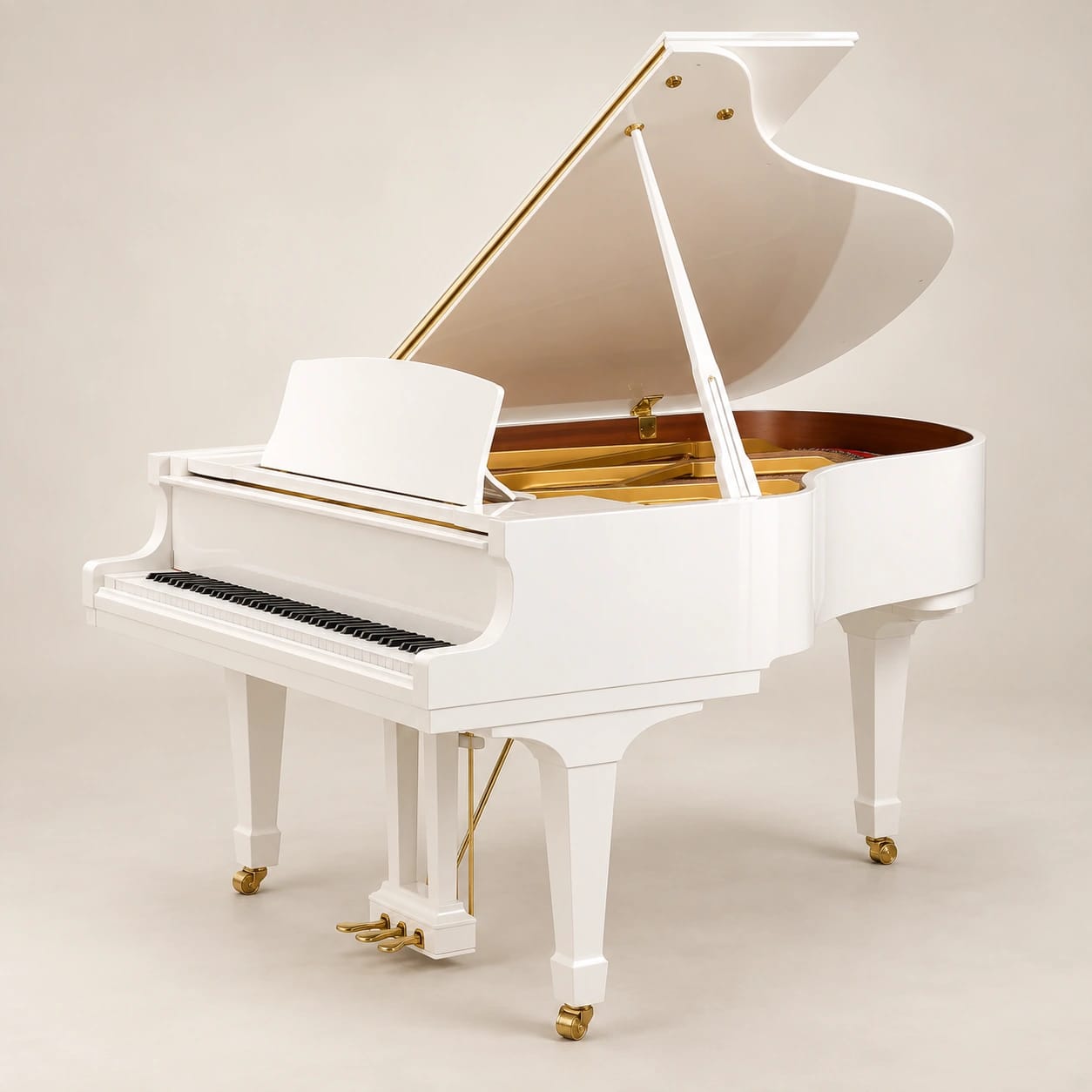
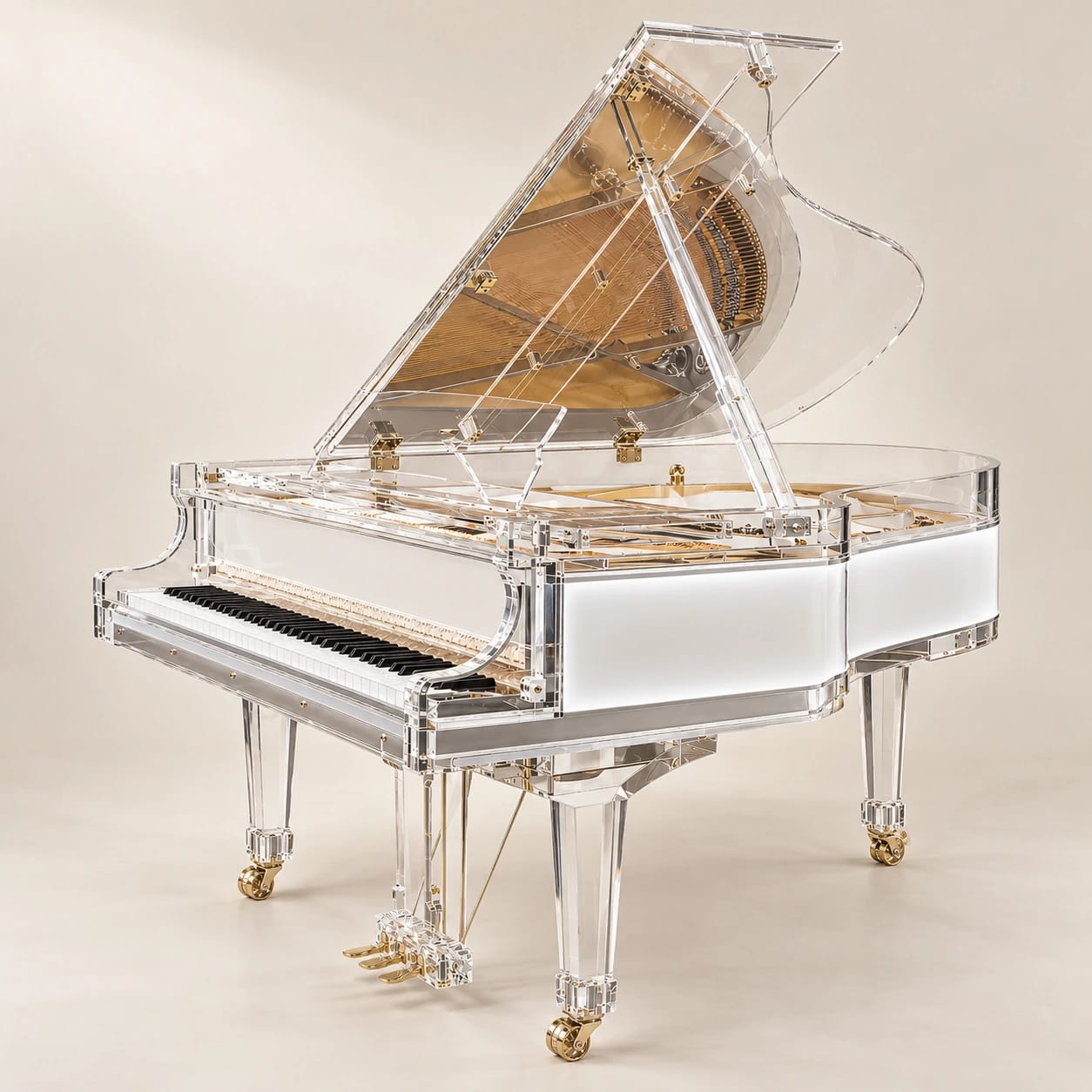
Studio visualisations. Date availability and venue arrangements are confirmed separately.
Good to know
Your questions, answered.
We do not know which grand piano to choose. Can we still enquire?
Yes. Describe the service, venue, date and how the piano will be used, and say that the model choice is still open. If a musician is engaged, ask them to consider the proposed instrument. The collection identifies the current models, but you do not need to make a musical suitability decision from pictures alone. Keep the choice provisional until the relevant people have responded.
Can an urgent funeral booking be guaranteed?
No availability or urgent delivery guarantee is made here. Online booking needs at least two days’ notice. For a more urgent service, send a direct enquiry with the date, location, requirement and decision deadline. Wait for confirmation before telling the venue or musician that an instrument is secured. The service organiser can help consider alternatives if the requested arrangement cannot be made.
Does the piano hire include someone to play?
Do not assume a pianist, singer or audio service is included. Confirm who is arranging the musician and share the proposed piano details with them. The hire enquiry should explain the performance role and any preparation request, while the service organiser coordinates the music and cues. This keeps a missing performer or sound requirement from being hidden inside a general “piano arranged” note.
Who should handle collection after the service?
Nominate a practical coordinator, such as an agreed venue or funeral-provider role, who can provide access for the confirmed collection. The family should not be left with that task by assumption. Give the coordinator the current arrangements and a route for questions. If the gathering or venue schedule changes, ask the hire team about the revised plan rather than treating the original collection as automatically changed.
Let’s talk about your hire
Tell us what you’re imagining.
Tell us the occasion, the piano and the details you know. We can help work through the rest.