Recording sessions
Piano hire for recording
Explore our grand pianos for your recording project. Share the player’s requirements, studio details and session dates so we can discuss the proposed instrument, optional tuning and practical hire arrangements.
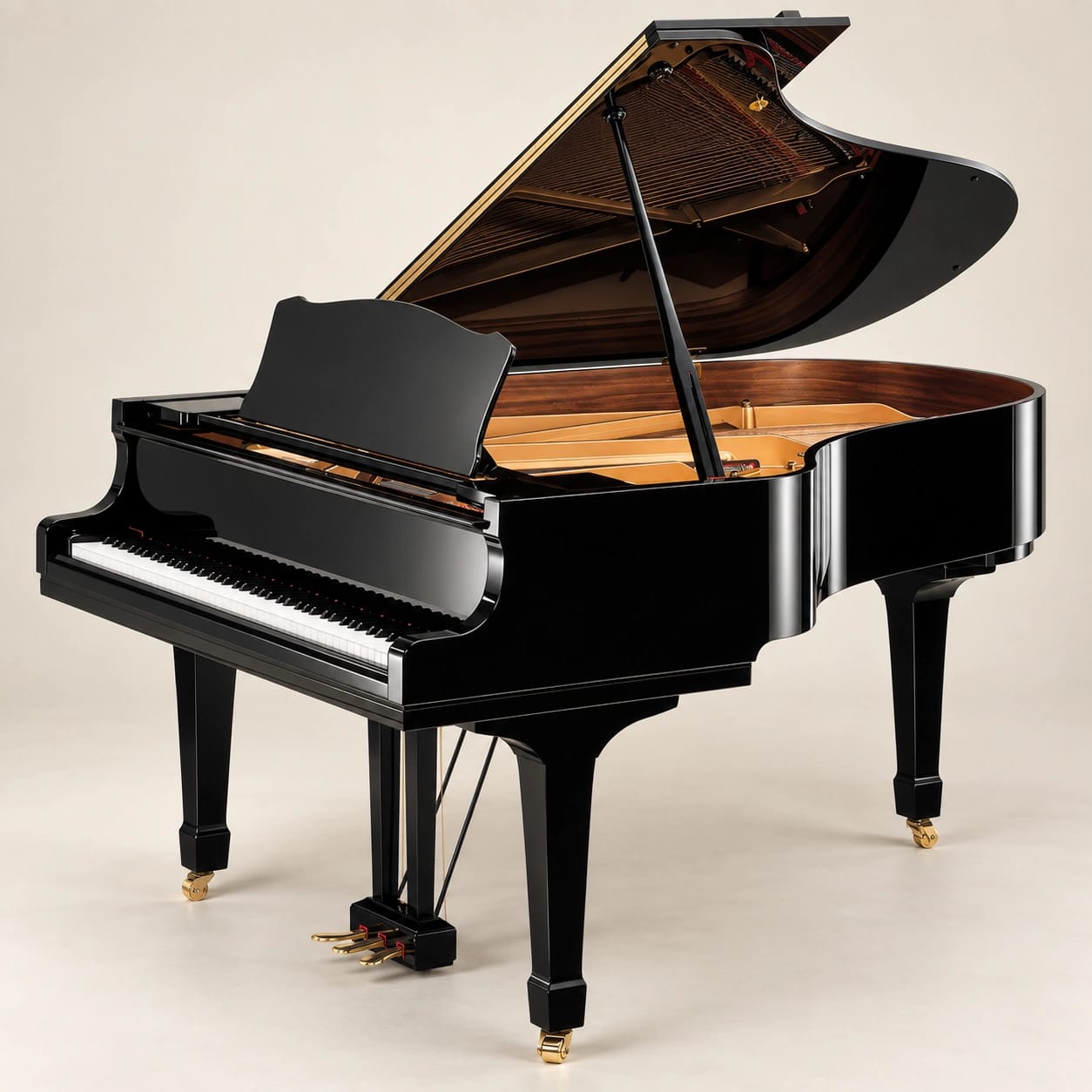
Black, white and clear grand pianos. We confirm availability and arrangements for each booking.
At a glance
What matters for your hire.
Share the producer’s and pianist’s requirements before choosing the instrument. Confirm the actual model, location, placement, preparation period and any requested tuning. Keep recording equipment and engineering separate from the hire. Access and availability need assessment, and no piano or room combination should be treated as approved for a recording outcome solely because it appears in the collection.
The collection
Find your grand piano.
Explore the instrument as well as its finish. We can talk through the right option for your plans and dates.
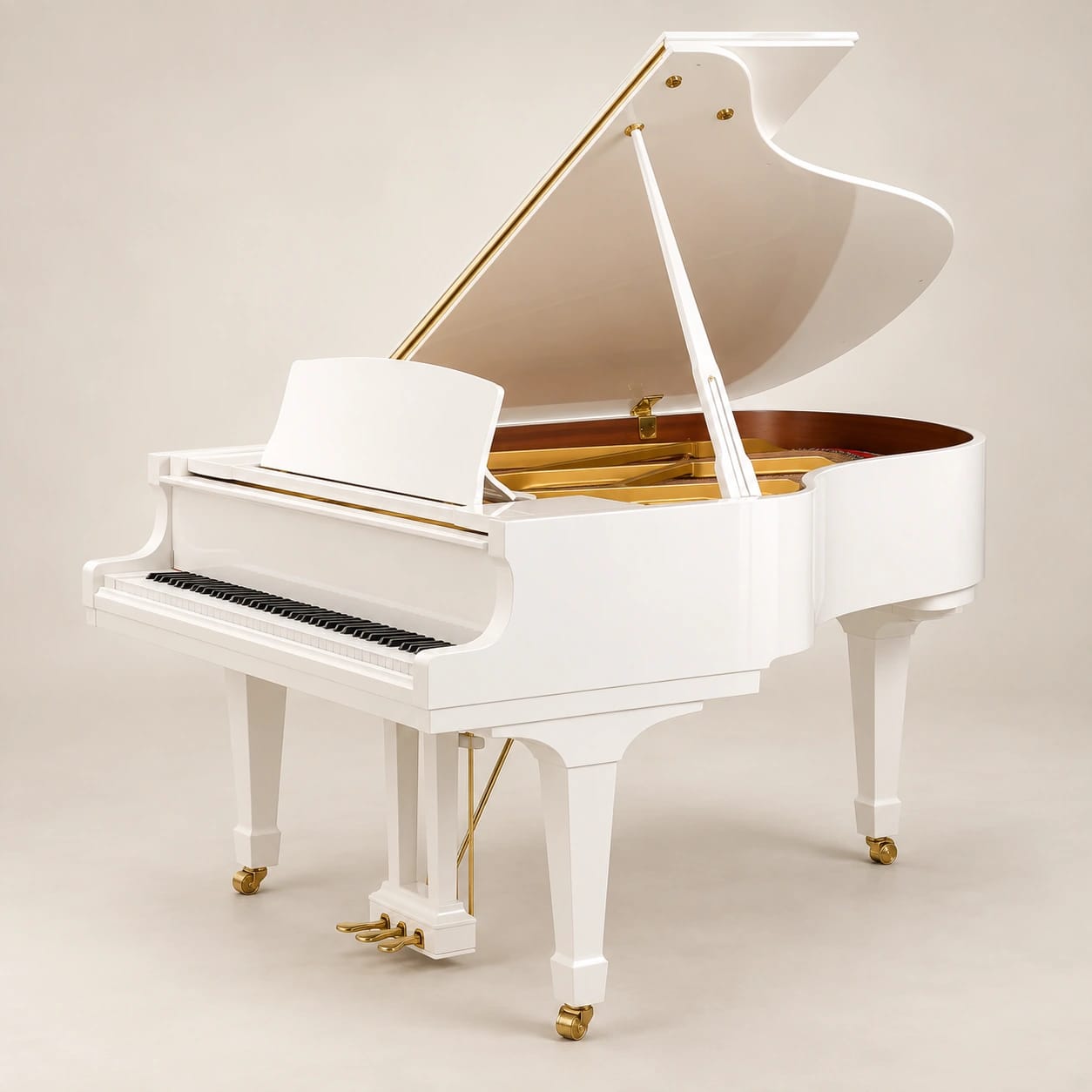
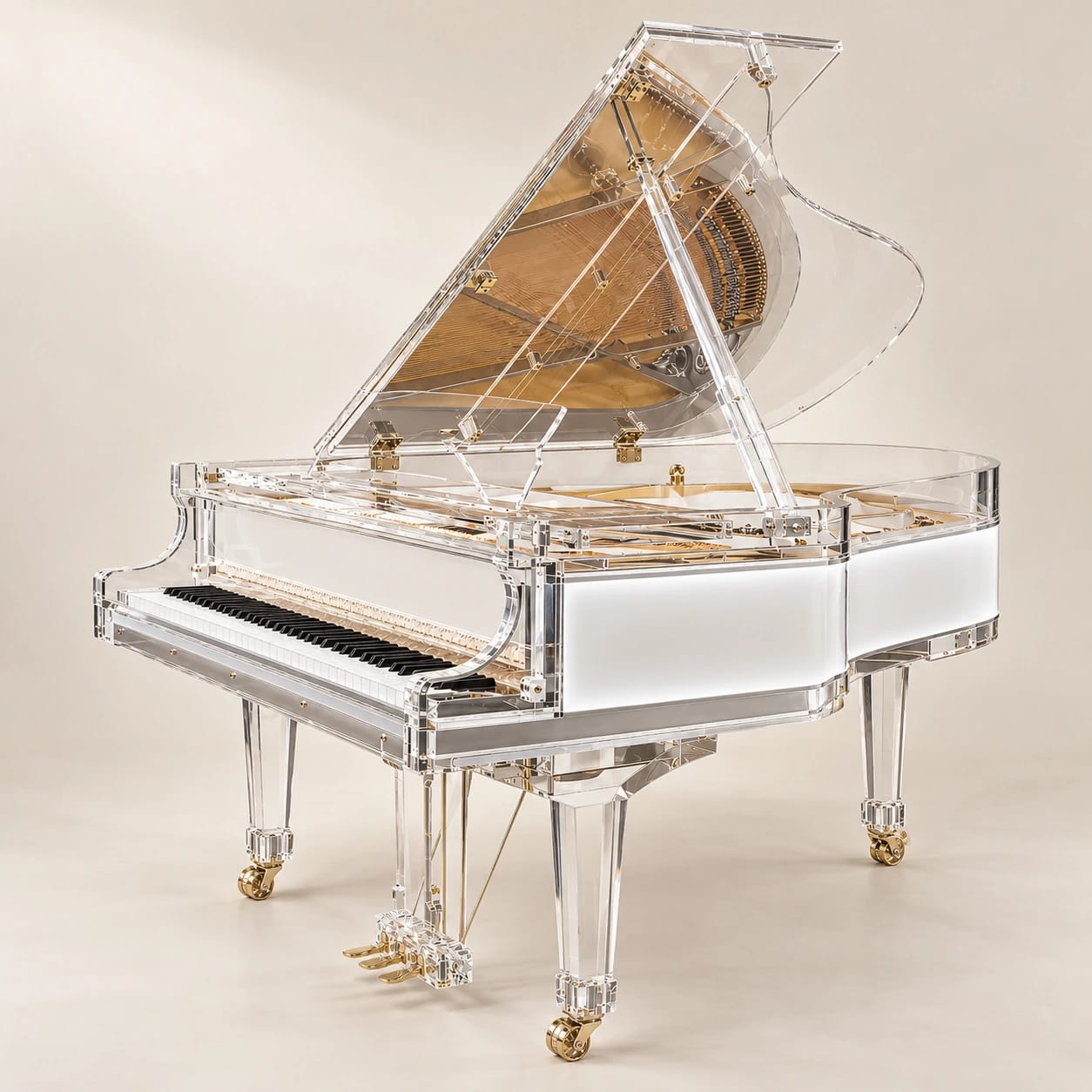
Studio visualisations. Date availability and venue arrangements are confirmed separately.
At a glance
From recording brief to confirmed instrument
Define the musical requirement
Collect the pianist’s and producer’s current request.
Consider the actual model
Discuss the proposed collection instrument and any alternatives.
Assess the studio arrangement
Confirm room, route and placement requirements.
Sequence preparation
Plan requested tuning and musician access before recording.
Confirm the session period
Reconcile dates, collection and the final approval record.
Let’s talk about your hire
Have a date or venue in mind?
Tell us the occasion, the piano and the details you know. We can help work through the rest.
The practical details
Plan your hire with confidence.
Explore the parts that matter to your plans. If you’re unsure, we can talk them through with you.
A little more about this hire
A recording session needs an instrument decision that the pianist and producer can stand behind. A model name or a photograph is not enough to establish that a piano will deliver the result they want in a particular room. Begin with the musical brief, the proposed location and the time available to assess and prepare the instrument before recording starts.
This page helps organise the hire around those decisions. It does not promise a recording-ready sound, certify a model for a project or provide a recording-engineering recipe. The producer, musician and relevant specialists make those judgements. The aim is to give them a clear instrument proposal and a practical arrangement to evaluate.
Explore the topics on this page
Describe the recording project in terms the team can use
Start with the role of the piano in the project. It may be the principal instrument, part of an ensemble or an element in a filmed performance. Explain what the musician and producer consider essential about the instrument and which decisions remain open. A concise project description is more useful than a broad request for the best piano for recording, which leaves the important preferences undefined.
Read the detail about Describe the recording project in terms the team can use
Ask the producer and pianist to identify the actual requirements they want discussed. These might concern the proposed model, the preparation sequence or the opportunity to assess the instrument in the room. Do not turn a preference into a supplier promise without agreement. The piano team needs to understand the request, while the musical and recording professionals retain responsibility for accepting the instrument for their project.
If the session includes photography, video or a public performance as well as recording, include those uses. They can affect the room plan and the periods when the instrument is needed. A recording brief should describe the complete intended use rather than treating the additional activities as incidental. This helps prevent a later creative decision from unexpectedly changing the hire arrangement.
Discuss the actual collection instrument
The current collection comprises the Yamaha C3, Stenberg 152 and Teschendorf M170. Identify the model being considered and share the relevant collection information with the pianist and producer. The existence of a model in the collection does not establish that it meets a particular tonal, action or production requirement. Those questions need direct discussion and the appropriate professional judgement.
Read the detail about Discuss the actual collection instrument
If a specific model is essential, say so before dates are treated as settled. If the project can consider an alternative, ask the authorised decision-maker to state what alternatives are acceptable. This avoids a booking coordinator having to infer whether a different instrument would meet the artistic brief. Availability is checked for the actual hire period, not assumed from a general description on a website.
Keep appearance in the discussion where it matters for filmed or photographed work, but do not let it replace the musical decision. A clear or white finish might be part of the visual concept, while the pianist has separate requirements. The final proposal should make both visible so the team can consider the real project rather than discovering a conflict after the instrument has been selected.
Assess the location as a recording site and a delivery site
A room can be chosen for creative reasons while still requiring practical checks for a hired piano. Confirm the exact location and the person authorised to approve outside-instrument access. The studio or venue should identify its requirements, including the permitted unloading arrangement, route and final position. A booking for recording time does not automatically answer the separate questions about moving a grand piano into the space.
Read the detail about Assess the location as a recording site and a delivery site
Provide current route information and relevant photographs through the agreed enquiry process. Steps, turns, lifts and changes of level should be described without trying to certify clearance yourself. The specialist team assesses the complete movement. The project’s producer should separately assess whether the room serves the recording plan; physical access approval is not a statement about acoustic suitability.
If the project is considering several locations, keep them clearly separated in the enquiry. Do not combine the easy access of one studio with the desired room of another as though they describe a single plan. The actual model, room and route need to form one assessed arrangement before the production schedule relies on the hire.
Reserve preparation time before the recording clock matters
Work backwards from the point at which the producer expects the piano to be ready for the session. Include the agreed delivery and placement period, any requested tuning and the musician’s preparation opportunity. Recording time booked at a studio may be expensive or tightly scheduled, but that does not turn an ordinary delivery window into an exact appointment. Explain the constraint and ask what can be agreed.
Read the detail about Reserve preparation time before the recording clock matters
The artist’s first opportunity to encounter the instrument should be considered deliberately. If the pianist or producer needs time to assess the proposed setup, raise that during planning. Do not assume every requirement can be resolved in the minutes before the first take. This is a question about the project’s preparation needs, not a guarantee that any requested adjustment will be available.
Coordinate the instrument schedule with the studio’s other work. Room preparation, equipment setup and other sessions may affect access or the availability of a quiet period. The producer or session coordinator should bring those requirements together. A single coherent timeline gives the relevant people a better basis for assessing the booking than several separate deadlines that have never been compared.
Make on-site tuning a specific request
On-site tuning is optional. Ask the pianist and producer what they want considered for the session, then discuss the requested service and timing with the piano team. Do not describe every hire as including a tuning visit or assume that choosing a particular model creates a preparation package. The confirmation should state the arrangement that has actually been agreed.
Read the detail about Make on-site tuning a specific request
Where tuning is requested, plan an appropriate quiet opportunity. The published process asks for time and a quiet environment, so consider the studio’s other activities and any setup noise. A preparation slot is more useful when the people using the room understand it than when it appears only in the booking coordinator’s private calendar. Confirm the final sequence for the actual session.
If the project extends across several days, explain the schedule and any further request rather than assuming repeated visits are included. The team can discuss the proposed arrangement, while the producer and pianist consider what they need for their work. This page does not promise a particular sonic result or name a tuner who has not been confirmed for the booking.
Keep engineering decisions with the recording team
The hire does not include microphones, recording equipment, an engineer or a complete studio service. The producer and recording team should decide how to capture the performance and coordinate their equipment with the venue. The piano supplier’s role in the booking should remain clear, so nobody assumes the instrument arrangement also resolves the rest of the recording setup.
Read the detail about Keep engineering decisions with the recording team
If the production plan involves unusual attachments, treatments or interactions with the instrument, raise them in advance. Do not assume every creative technique is permitted because it is part of a recording concept. Discuss care and handling requirements with the team and keep any unconfirmed use out of the final session plan. The relevant specialists can then consider the proposal before the recording period begins.
A technical brief can identify the questions that need answering without pretending to answer them all. For example, the producer can state that a particular visual setup or performer requirement needs discussion. That is more useful than an unsupported assertion that the piano will be ideal for the room. A careful enquiry preserves the artistic ambition while keeping approval and responsibility with the right people.
Keep the instrument’s position stable unless a move is agreed
A recording team may want to consider different room positions or camera compositions. If the project requires the piano to move, describe each proposed position and the sequence before booking. Moving an instrument within a studio is still a handling requirement. It should not be assumed to fall within the ordinary work of engineers, assistants or musicians.
Read the detail about Keep the instrument’s position stable unless a move is agreed
The piano team needs to assess any proposed relocation and its timing. A revised position can also affect access, the set layout and the preparation plan. If the recording concept can work from one agreed position, identify that in the brief so other suppliers can plan around it. The goal is to avoid discovering a movement dependency after the session has started.
Do not use a floor-plan diagram as a clearance approval. It can help explain the desired arrangement, but it does not establish that the instrument can take a particular route or fit a proposed position safely. Current physical details and the complete movement need specialist consideration. Keep the producer’s creative layout and the assessed handling plan connected without confusing one for the other.
Define the session period and any contingency clearly
A recording project may need the instrument for preparation before the main session or for a period between recording days. State the occupied period and the proposed collection opportunity. The quote should reflect the actual arrangement rather than only the hours when recording takes place. Current amounts come from the live booking system or an individual proposal, not from a static rate in this guide.
Read the detail about Define the session period and any contingency clearly
If additional recording days are possible, distinguish them from dates that are already committed. An overrun does not automatically extend availability. Discuss the process for requesting a change and check the applicable terms. The project coordinator should know when a decision is needed, so a possible extra session does not become an unannounced assumption that the piano will remain.
Collection should be coordinated with the studio’s next use and the available route. Equipment and other materials left after the session may affect access, so the relevant people need to understand the agreed departure plan. Do not move the piano to clear the studio for another booking without an assessed arrangement. The hire remains governed by its current confirmation until a change is agreed.
Build a session brief with a clear approval record
The recording brief builder on this page gathers the artistic request, proposed instrument, location and preparation milestones into a short outline. It works locally in the browser and does not submit an enquiry or reserve a piano. Use roles rather than personal details in the planning fields. The final contact and payment information belongs in the normal booking process.
Read the detail about Build a session brief with a clear approval record
Ask the pianist, producer and studio representative to check the parts of the outline they own. The pianist and producer should recognise the instrument request and any acceptance still pending. The studio should recognise the room and access constraints. The piano team can then discuss the proposed hire from a consistent set of facts rather than trying to reconcile different versions of the project.
When the arrangement is confirmed, carry that information into the session schedule and retain the relevant terms. If the model, room, use or dates change, reopen the affected decision and obtain agreement. This creates a practical record of what has been assessed without suggesting the booking itself guarantees an artistic outcome. The recording team can then focus its expertise on the session it has actually planned.
Want to organise your notes first?
Your enquiry
Build a recording-session piano brief
Prepare an instrument enquiry without claiming a recording result. This tool does not send or reserve anything.
Your notes stay in this page. Nothing is sent or saved automatically.
0 / 4,000 enquiry-note characters. Only answered fields and selected checks are included.
Read or select your brief
Your recording-session instrument brief

Project role: To confirm
Instrument requirement: To confirm
Approval status: To confirm
Location and route: To confirm
Preparation schedule: To confirm
Session period: To confirm

Planning checklist
[ ] The pianist and producer have stated their requirements.
[ ] The actual model is identified.
[ ] No recording result is assumed from the model name.
[ ] Studio permission and physical access are checked separately.
[ ] Optional tuning is explicitly requested or declined.
[ ] Any proposed relocation or unusual use is declared.
[ ] Collection and possible extra days have a clear decision process.

Planning notes only. Piano availability, access and arrangements need confirmation before booking.
Good to know
Your questions, answered.
Is the Yamaha C3 automatically suitable for our recording project?
The producer and pianist should consider the actual instrument and their requirements. A model appearing in the collection is not a guarantee of a particular recording result. Share the project brief and discuss what information or preparation opportunity is needed before treating the model decision as approved.
Can we record video and audio during the same hire?
Include both uses in the enquiry, along with the proposed room setup and any interaction or movement requirements. The hire does not itself provide recording equipment, engineering or performers. The relevant production team should coordinate those services and approve the instrument for the intended work.
Can we add another recording day if the session runs over?
Request an amendment as soon as the possibility becomes clear. Additional dates depend on agreement and availability; they are not automatically included because the project is unfinished. Keep the current collection arrangement until a revised booking has been confirmed and consult the applicable terms.
What should the studio tell us about delivery?
Ask for the permitted unloading arrangement, the route to the exact room, any lift or access reservations and the available periods for delivery and collection. Pass the current information to the piano team for assessment. The studio’s suitability for recording and the instrument’s physical access are separate checks.
Let’s talk about your hire
Tell us what you’re imagining.
Tell us the occasion, the piano and the details you know. We can help work through the rest.