Photography
Piano hire for photo shoots
Choose a grand piano for the images you want to create. Explore the finishes and tell us about your shoot, location and dates so we can discuss the proposed setup.
Black, white and clear grand pianos. We confirm availability and arrangements for each booking.
At a glance
What matters for your hire.
Describe the intended images, choose a model or finish and identify the actual location and final position. Include preparation, photography and collection in the hire schedule. Declare any planned instrument movement or playing. The piano team assesses access and placement; a shoot booking does not give the production crew permission to move the instrument or guarantee an outdoor setup.
The collection
Find your grand piano.
Explore the instrument as well as its finish. We can talk through the right option for your plans and dates.
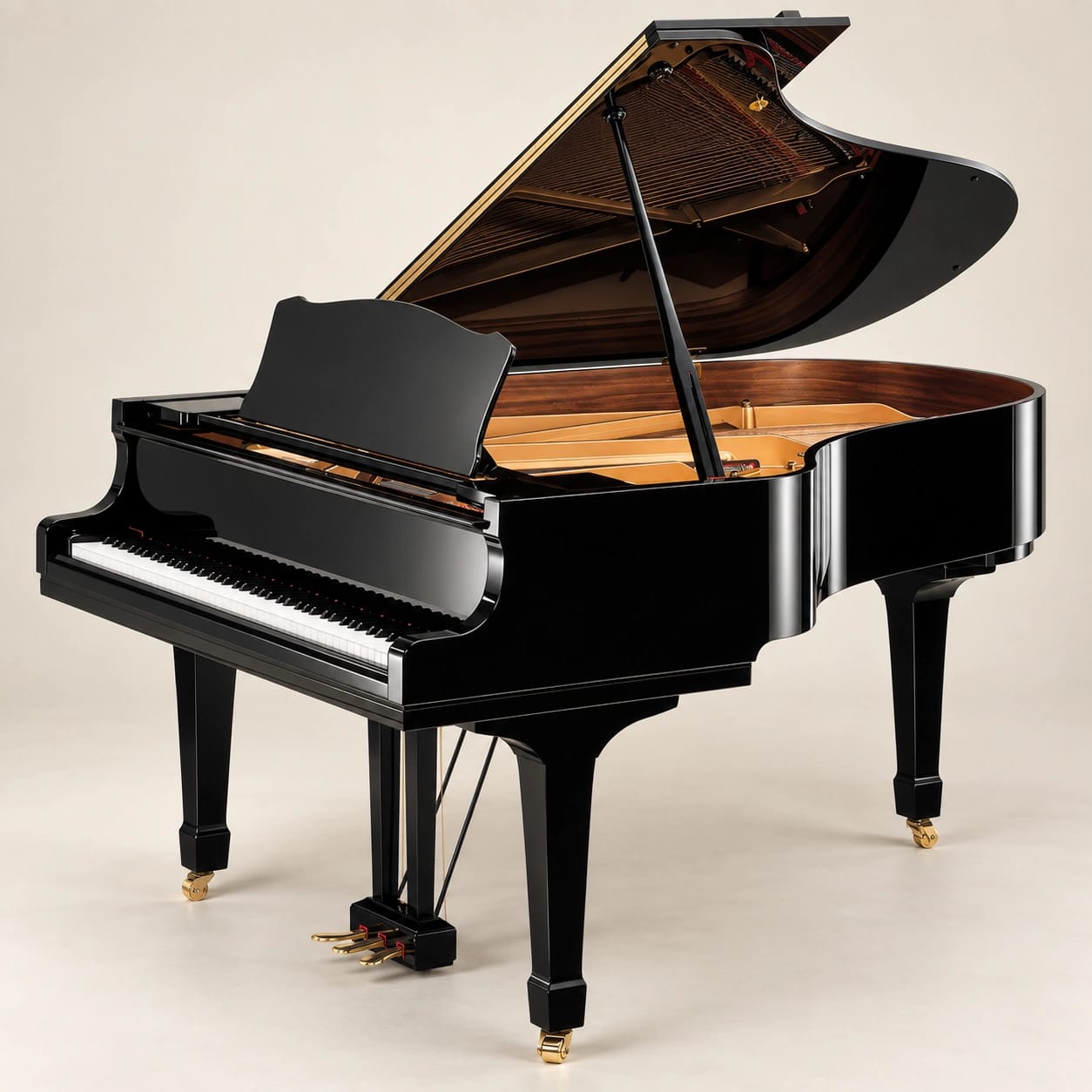
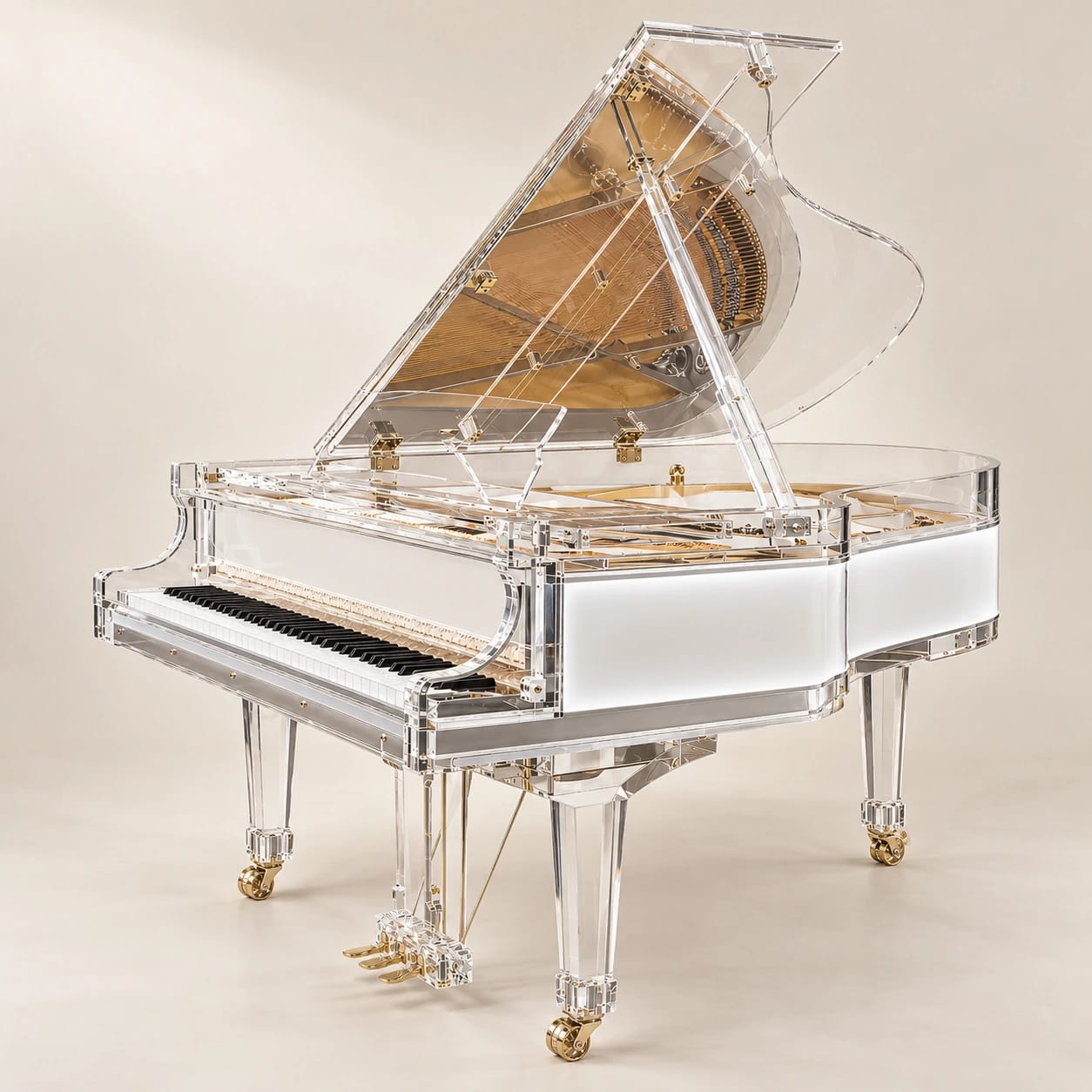
Studio visualisations. Date availability and venue arrangements are confirmed separately.
At a glance
Turn the visual concept into a hire brief
Describe the image
Explain the piano’s role and essential views.
Choose the model
Record the requested finish and any acceptable alternative.
Assess the real location
Confirm permission, route and proposed final position.
Sequence the shoot
Include preparation, declared moves and collection.
Reconcile the call sheet
Carry the confirmed arrangement into the production plan.
Let’s talk about your hire
Have a date or venue in mind?
Tell us the occasion, the piano and the details you know. We can help work through the rest.
The practical details
Plan your hire with confidence.
Explore the parts that matter to your plans. If you’re unsure, we can talk them through with you.
A little more about this hire
A piano in a photo shoot is a real instrument with a place in the production plan. It may be the main subject, part of an interior composition or an object that connects a person to the scene. Before choosing a hire period, establish what the camera needs to capture and which decisions about the instrument are essential to that idea.
This page helps turn a photographic concept into a clear hire request. It focuses on the scope of the shoot, the proposed instrument and the practical booking. For a detailed location and shot-planning workflow, use the photo-shoot planning guide as well. Neither a reference image nor an attractive empty room confirms that a proposed piano setup has been approved.
Explore the topics on this page
Explain the piano’s role in the image
Begin with what the image needs to communicate. A portrait with a musician, a styled residential interior and a product campaign can each use a piano differently. State whether it is the central subject, an environmental detail or a visual counterpoint to another element. That description helps the booking discussion focus on the instrument rather than on a broad label such as editorial shoot.
Read the detail about Explain the piano’s role in the image
Identify the views that matter most. You may need a complete room composition, a portrait beside the instrument or a closer view of the player’s interaction. These are creative requirements for the photographer to develop. They are not instructions for the piano team to approve an artistic outcome, but they can reveal practical needs such as a particular finish or a position that must remain consistent.
Treat reference images as explanations of intent. They do not prove that the same location, handling or styling treatment is available for your shoot. If the concept depends on something unusual, name it in the enquiry. A direct description of the proposed use is more useful than expecting the team to infer every requirement from an image with no production context.
Choose a finish without assuming it solves the lighting
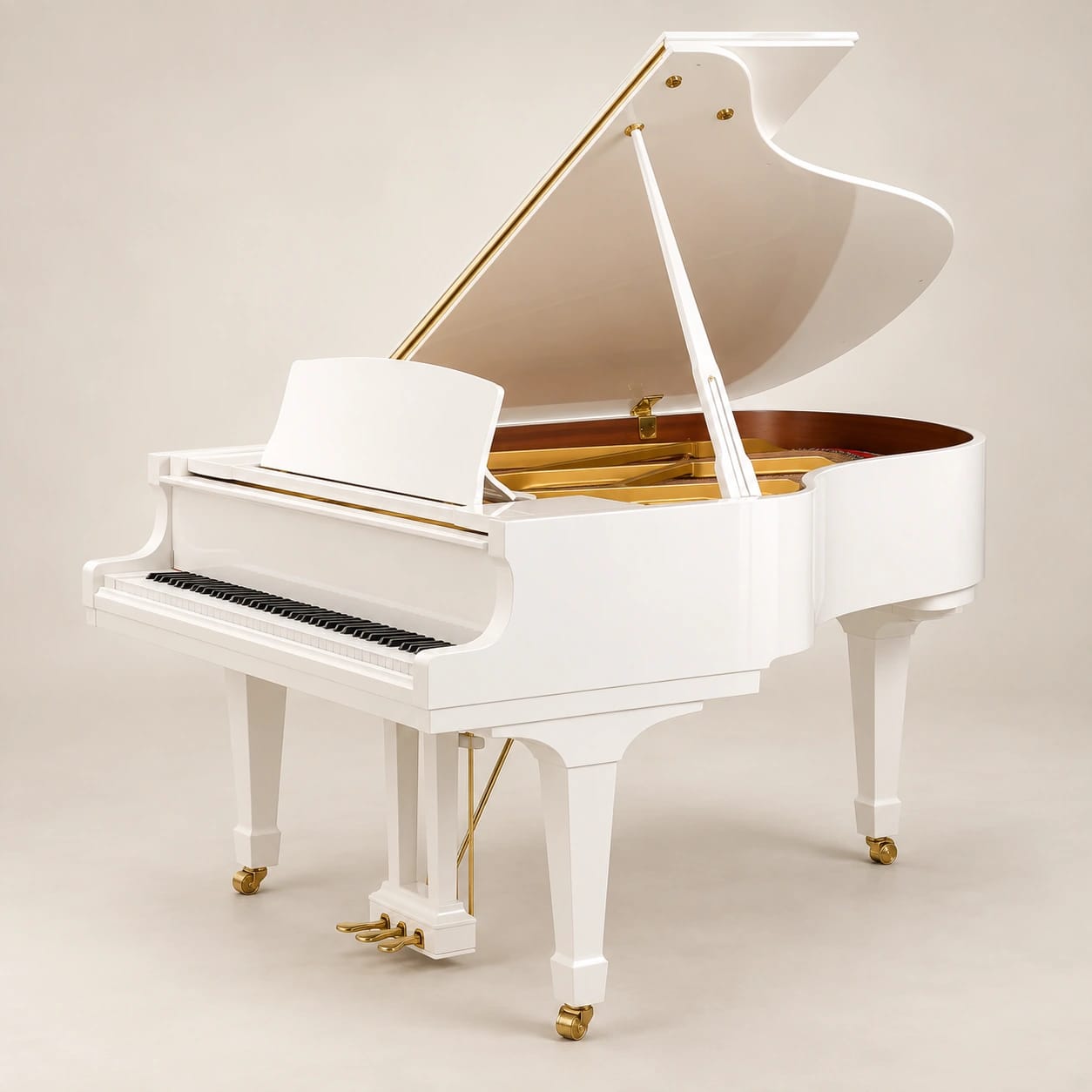
The collection includes the white Stenberg 152, black Yamaha C3 and clear Teschendorf M170. Compare their appearance within the intended scene and discuss the choice with the photographer or art director. The finish can be important to the creative concept, but this page does not promise a particular reflection, exposure or visual result under your lighting conditions.
Read the detail about Choose a finish without assuming it solves the lighting
Ask which part of the choice is essential. If the campaign depends on a clear piano, say so. If a black or white instrument would both work with the set, record that flexibility. The model still needs to be checked for the requested dates. A creative preference shown in a treatment document should not be presented to the wider crew as a confirmed reservation until the booking is agreed.
If the person in the image will actually play, include that use. A visually driven choice may still need the musician’s input and an explicit discussion about preparation. Conversely, do not assume that an instrument used as a visual element is an empty prop shell. The current offer is for grand pianos, and the handling and care arrangements remain relevant whether or not sound is being recorded.
Check the real location before fixing the shot plan
A studio, private residence and hired event space can each have different requirements for outside suppliers. Ask the location representative about permission for the proposed instrument and identify the exact room. A general permission to conduct a photo shoot does not necessarily answer the separate questions about piano delivery, placement and collection. Bring those questions into the location discussion early.
Read the detail about Check the real location before fixing the shot plan
Describe the route from the permitted unloading point to the set. Include known steps, changes of level, lifts and restricted entries. Photographs can help show the route through the agreed enquiry process, but the production team should not certify that the instrument will fit from a single measurement. The specialist team needs to assess the complete movement and final arrangement.
If the location is not yet confirmed, state that clearly and ask what information will be needed. Avoid building an unchangeable shot list around a room whose access has not been considered. The useful sequence is to establish the creative requirement, identify a real location and have the practical arrangement assessed before the final shoot plan depends on it.
Distinguish camera changes from piano relocations
A photographer can create different compositions by changing viewpoint, framing and the surrounding scene. That is different from relocating the piano. If the planned images require the instrument in several positions, list each position and the intended sequence before booking. A move across one room is still a movement that requires an agreed handling arrangement.
Read the detail about Distinguish camera changes from piano relocations
Do not assume that the photographer, assistants, stylist or location staff can adjust the instrument’s position as part of ordinary set work. The piano should not be treated like a lightweight backdrop or a chair. Ask the team to consider any proposed relocation, including when it would occur and what other activity would be happening around it. The final agreement should reflect the actual requirement.
This distinction can also help refine a creative brief. The photographer may be able to work from one assessed position, or the production may decide that a particular additional scene is essential and needs further discussion. Either outcome is clearer than discovering the dependency during the shoot. The point is to make the movement decision deliberately while there is time to assess it.
Book the occupied period rather than only camera time
A shoot’s camera schedule rarely describes the whole time the instrument needs to be on site. The room may require set preparation after placement, the photographer may need a lighting period and the production may not finish clearing the agreed route immediately after the last frame. Record the relevant preparation and departure milestones before deciding on hire dates.
Read the detail about Book the occupied period rather than only camera time
Work with the location’s permitted delivery and collection arrangements. A narrow access slot needs to be raised as a requirement, not assumed from the earliest point in a standard transport window. If the shoot depends on a precise arrival or removal time, ask what can be agreed. Same-day hire refers to delivery and collection on the same booked date; it is not a promise of immediate delivery today.
If the production may run longer, explain that uncertainty during planning. Additional time is not automatically available simply because the shoot is still in progress. The current booking and terms govern the arrangement, and any amendment needs discussion. A realistic occupied period gives the creative team a better basis for scheduling than an optimistic estimate of the time spent pressing the shutter.
Describe styling treatments and interaction openly
A creative treatment may involve people beside the instrument, performance, decorative elements or other objects in the scene. Explain the intended interaction before booking, particularly where it goes beyond ordinary use. Do not assume that a hired piano can be used as an unrestricted prop surface or that every visual idea is permitted because it appears in a reference photograph.
Read the detail about Describe styling treatments and interaction openly
Ask the team about the relevant care and handling requirements for the proposed shoot. The photographer and stylist can then develop the composition around an agreed approach. If a planned treatment cannot be confirmed, keep it out of the final call sheet rather than expecting a decision to be made under pressure when the crew is ready to begin.
The production should also identify who will keep the set consistent with the agreed arrangement. That person does not need to take responsibility for specialist handling, but they can make sure a late creative request reaches the appropriate team. A clear communication route is particularly useful when the photographer, art director and client all contribute changes during the shoot.
Keep outdoor and unusual concepts as assessed requests
An outdoor location, beach setting, rooftop or other unusual scene may be part of a creative idea, but it needs individual assessment. This page does not promise weather protection, outdoor suitability, crane access or permission for a particular location. Describe the actual proposal and the constraints so the relevant people can consider it before the production relies on it.
Read the detail about Keep outdoor and unusual concepts as assessed requests
A backup location is another location to assess, not an automatic solution. If the shoot has an indoor alternative, provide its details and explain when the decision would be made. Changing the plan may affect access, transport and placement even if the general creative concept remains the same. Do not assume the piano can follow the rest of the crew to a new site without agreement.
Reference photographs should be used carefully in this conversation. They may be illustrative, show a different instrument or come from circumstances that do not apply to your production. A photograph is not a safety assessment or an operating permission. The useful question is what can be confirmed for this instrument, this site and this booked period.
Review the hire scope with the production budget
The live booking system or an individual quote provides current pricing for the actual selection. Check the requested model, dates, access and any optional services against the production brief. This page does not provide fixed shoot rates or promise an all-inclusive production package. The piano hire is one part of the shoot budget, with its own defined arrangements.
Read the detail about Review the hire scope with the production budget
Keep location hire, photography, styling, performers and other production services separate. If the piano will also be played or recorded, discuss any requested on-site tuning as an explicit choice. A visual-only enquiry should not quietly become a recording session without checking the new requirements. The relevant creative or musical professional should approve the instrument for their own intended use.
When the concept changes, update the brief and ask whether the hire arrangement needs to change too. A new date, location, model or relocation request can affect the proposal. Retain one current version for the producer and the booking team. This makes it easier to understand what has been agreed rather than relying on a treatment document that contains several superseded ideas.
Prepare the instrument part of the call sheet
The brief builder on this page collects the piano-specific information that a production can use before making an enquiry. Include the visual role, model preference, location status, key timings and any intended interaction or movement. It creates a copyable summary in the browser. It does not submit a request, reserve an instrument or approve the location, and it does not need personal contact details.
Read the detail about Prepare the instrument part of the call sheet
Check the summary with the photographer or art director and the person responsible for the location. The creative team should recognise the proposed use, while the location representative should recognise the room and access requirements. Keep any unresolved question clearly labelled. A concise list of open points is useful production information, not a flaw to conceal in a polished call sheet.
Once the booking is confirmed, transfer the relevant arrangements into the final production documents. The detailed photo-shoot planning guide can help develop the shot and location sequence further. Make sure later creative changes are considered against the actual hire. The aim is to give the photographer a dependable instrument arrangement to work with, while keeping specialist handling and approval decisions with the people responsible for them.
Want to organise your notes first?
Your enquiry
Build a photo-shoot piano brief
Create a copyable instrument outline for your production enquiry. The tool does not approve treatments or locations.
Your notes stay in this page. Nothing is sent or saved automatically.
0 / 4,000 enquiry-note characters. Only answered fields and selected checks are included.
Read or select your brief
Your photo-shoot piano brief

Visual concept: To confirm
Model preference: To confirm
Location status: To confirm
Shoot milestones: To confirm
Interaction and styling: To confirm
Movement requirements: To confirm

Planning checklist
[ ] The piano’s visual role is specific.
[ ] The model preference has been discussed with the creative lead.
[ ] Location permission is separate from shoot permission.
[ ] Every intended piano position is declared.
[ ] Unusual styling treatments are raised for discussion.
[ ] The occupied period includes preparation and collection.
[ ] The final call sheet will reflect the confirmed hire.

Planning notes only. Piano availability, access and arrangements need confirmation before booking.
Good to know
Your questions, answered.
Can we hire a piano for a short portrait session?
Describe the portrait concept and the actual preparation and collection requirements. A short period in front of the camera may still need a wider occupied period to fit the location and transport arrangements. The team can discuss the request once the model, location and timing constraints are clear.
Can our crew move the piano between shots?
Do not assume that the production crew can relocate the instrument. Declare every proposed position and the sequence before booking so the handling and timing can be assessed. If the photographer can achieve the required views around one agreed position, make that part of the shot plan.
Does a photography booking include permission to use any styling treatment?
No. Explain the intended interaction, decorative treatment and unusual use in the enquiry. A reference image does not establish permission for your shoot. Discuss care and handling requirements with the team and keep unconfirmed treatments out of the final production plan until the relevant arrangement has been agreed.
What if the location changes shortly before the shoot?
Contact the team with the revised location and proposed dates or times. A new site can change the route, placement and transport requirements. Do not assume an existing booking can simply be redirected. Wait for the revised arrangement to be confirmed and update the production documents so every supplier has the current plan.
Let’s talk about your hire
Tell us what you’re imagining.
Tell us the occasion, the piano and the details you know. We can help work through the rest.