Live performance
Piano hire for concerts and touring
Find a grand piano for your concert or touring programme. Share the performer’s requirements, proposed venue and dates so we can discuss the instrument, preparation and practical arrangements for your performance.
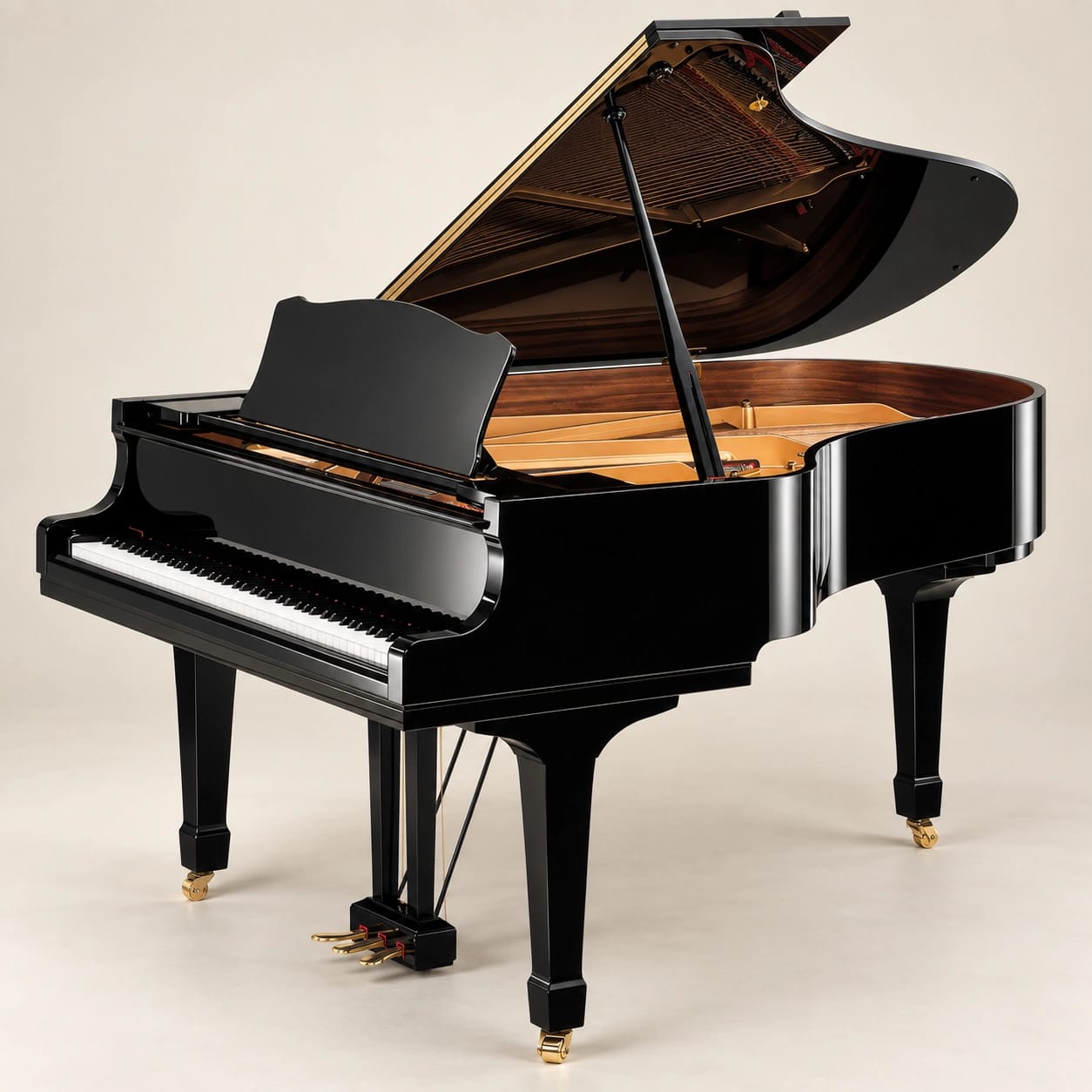
Black, white and clear grand pianos. We confirm availability and arrangements for each booking.
At a glance
What matters for your hire.
Obtain the performer’s instrument requirements first. Discuss the requested model, acceptable alternatives, venue position, preparation time and optional tuning with the piano team. Confirm access and collection with the venue. The hire supplies an instrument arrangement, not a performer, sound or staging package, and a listed model does not automatically satisfy a technical rider.
The collection
Find your grand piano.
Explore the instrument as well as its finish. We can talk through the right option for your plans and dates.
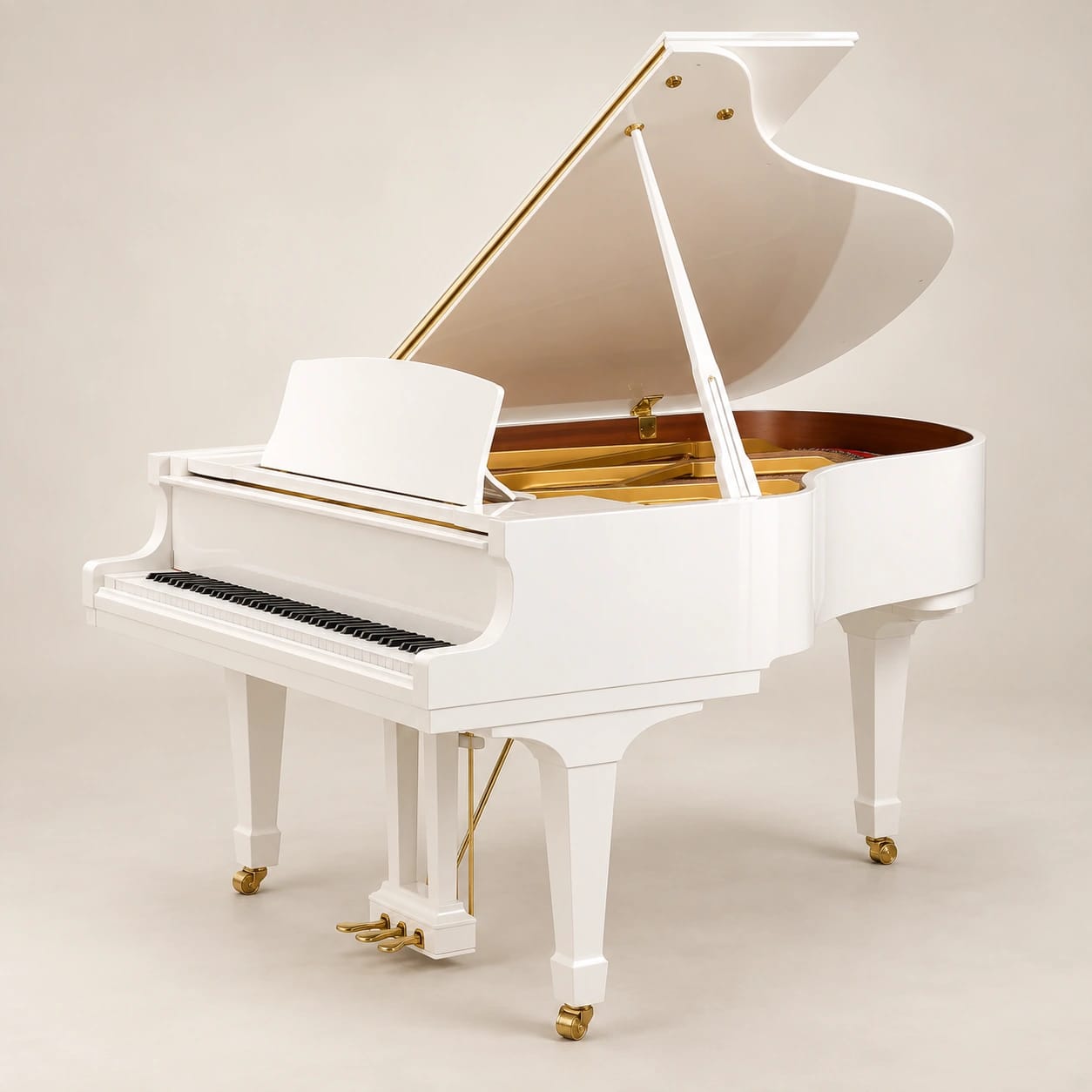
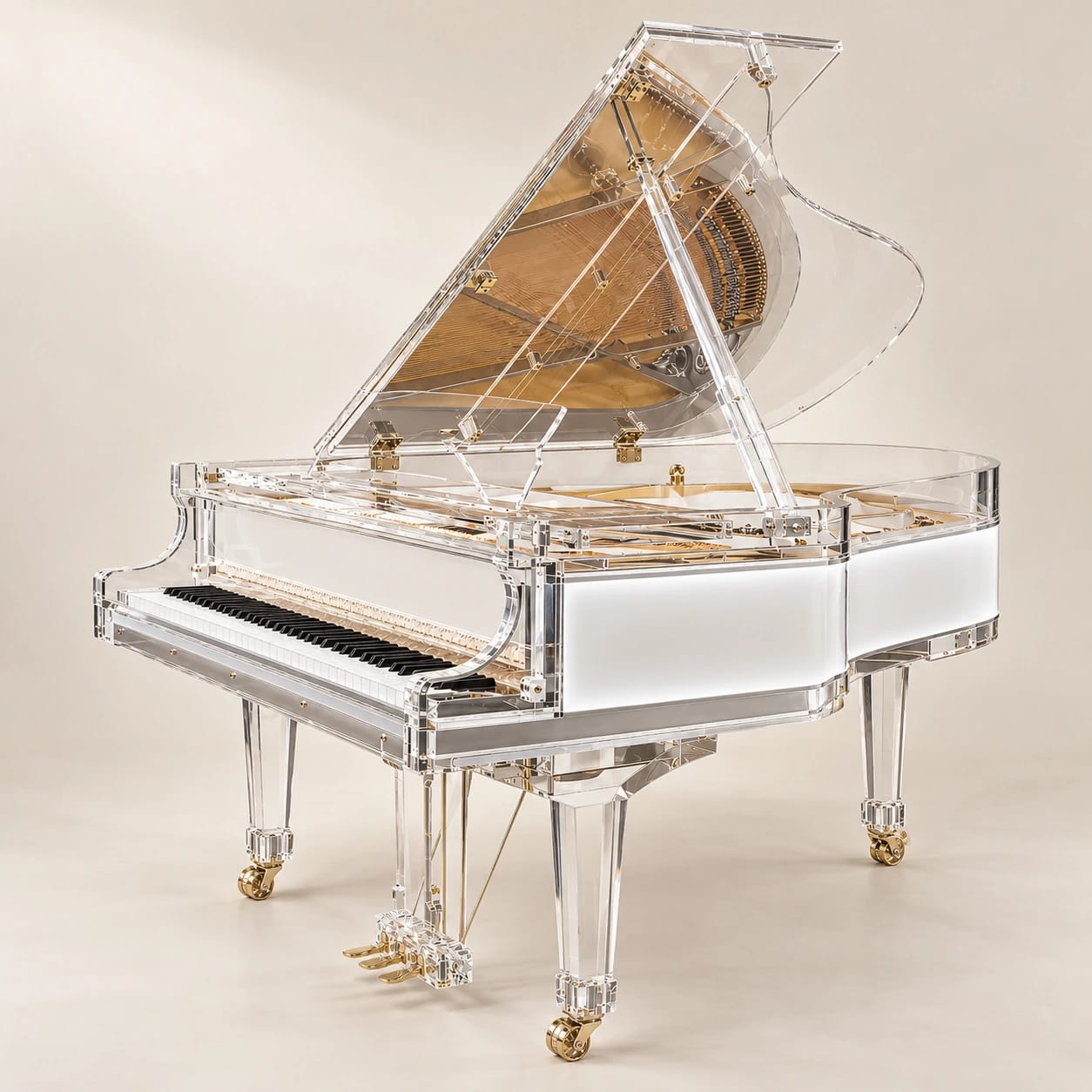
Studio visualisations. Date availability and venue arrangements are confirmed separately.
At a glance
From rider to local concert plan
Clarify the request
Obtain the current instrument requirement and acceptable alternatives.
Agree the proposed model
Have the artist consider the actual collection instrument.
Assess venue requirements
Confirm position, stage responsibilities and both access legs.
Sequence preparation
Coordinate placement, optional tuning and rehearsal access.
Confirm the final advance
Reconcile the instrument, programme and collection arrangements.
Let’s talk about your hire
Have a date or venue in mind?
Tell us the occasion, the piano and the details you know. We can help work through the rest.
The practical details
Plan your hire with confidence.
Explore the parts that matter to your plans. If you’re unsure, we can talk them through with you.
A little more about this hire
For a concert, the important question is not simply whether a grand piano is available. It is whether the proposed instrument and the preparation plan meet the needs of the performance. Start with the artist’s requirements, then connect them to the venue, rehearsal schedule and the actual booking. That creates a clear basis for deciding what can be arranged.
This page is for an organiser planning the instrument around a concert or a particular tour stop. It explains how to turn a musical requirement into a practical hire brief. It does not certify a piano against a rider or promise a particular performance result. Those decisions need the artist’s approval and the relevant specialists’ assessment.
Explore the topics on this page
Begin with the artist’s actual requirement
Ask for the current instrument requirement rather than relying on a description from an earlier show. It may identify a model, an acceptable range of instruments or a particular preparation concern. Where the wording is unclear, ask the artist or their representative to clarify what is essential and what is a preference. This is a useful first step even for an informal concert without a formal rider.
Read the detail about Begin with the artist’s actual requirement
Keep the original requirement and the proposed response together. If the available instrument differs from the request, the artist should accept that difference before the booking is treated as resolved. A promoter’s assumption that two grand pianos are equivalent is not a substitute for that approval. Record the actual model being discussed so the decision is about a specific instrument.
The current collection includes the Yamaha C3, Stenberg 152 and Teschendorf M170. Their availability is checked for the booking, and their presence in the collection does not guarantee suitability for every programme. Avoid using the phrase concert-ready as an independent certification. Describe the instrument and the preparation that can be agreed, then let the artist assess whether the proposal meets their performance needs.
Separate model selection from visual staging
Concert planning can involve both a musical decision and a visual production decision. A black instrument may be requested for a particular stage presentation, or a different finish may be central to the creative concept. Discuss those preferences alongside the performer’s requirements. A visual brief should not quietly replace the artist’s model choice, and an artist’s approval should not leave the production team unaware of the proposed appearance.
Read the detail about Separate model selection from visual staging
Use current collection information to identify the instrument clearly. Share the model name and relevant published information with the artist, and ask what further details they need. Do not infer mechanical condition, voicing, action preferences or the sound in a specific hall from a photograph or from the model name alone. Any such requirements should be raised for direct discussion.
Once a choice is agreed, carry it consistently into the production plan. If availability or another constraint requires reconsideration, treat that as a decision to reopen rather than silently substituting a different instrument. Keeping a clear approval trail makes it easier for the organiser, artist and local venue to understand what has been accepted and what still needs attention.
Confirm the stage and the complete access route
Ask the venue to identify the intended piano position and the route used by outside suppliers. The relevant venue or staging professional needs to address the stage and placement requirements. This page does not approve a platform, floor load, lift or doorway. Measurements and photographs can support the enquiry, but specialist assessment must consider the full movement rather than one isolated dimension.
Read the detail about Confirm the stage and the complete access route
Describe delivery and collection access separately. A loading facility may be available during the setup period but unavailable immediately after the show. A lift booking, staffed entrance or shared corridor may also have specific restrictions. The venue should confirm its current requirements, and the piano team should assess how those requirements affect the proposed instrument arrangement.
A stage plan can change when risers, lighting structures, seating or other equipment are installed. Make sure the final production layout is communicated before delivery. Do not assume that a route remains usable because it was clear at an early site visit. If the proposed position changes, ask for reassessment and keep the people responsible for the movement informed through the agreed coordination route.
Make rehearsal and acceptance visible in the schedule
The piano often needs to be ready before the audience-facing part of the event. Identify the rehearsal or artist-access point that matters, then work backwards through placement and any agreed preparation. Giving only the advertised concert time can leave the booking team without the most important deadline. State when the performer needs to encounter the instrument and what is planned immediately before that.
Read the detail about Make rehearsal and acceptance visible in the schedule
Leave the artist’s own acceptance process with the artist. If they need a particular opportunity to try the instrument or discuss adjustments, raise that before the hire is confirmed. A schedule that places their first access directly before doors open may leave little room to address concerns. This is a planning dependency to consider with the team, not a promise that any requested change will be possible on site.
Coordinate rehearsal with other stage activity. Set construction, amplified checks and other suppliers’ work may conflict with a useful preparation period. The promoter or production lead should bring the relevant schedules together so each supplier is not working from a different version. The aim is a realistic sequence, with responsibilities and unresolved questions apparent before the venue enters its final setup phase.
Treat tuning as an explicit service decision
On-site tuning is optional and should be discussed as part of the performance brief. Explain the artist’s requirements, when the instrument is expected to be used and what preparation opportunity the venue can provide. The team can then discuss the requested arrangement. Do not state that all hires include an on-site visit or assume that selecting an instrument automatically books a tuner.
Read the detail about Treat tuning as an explicit service decision
Where tuning is requested, the published process asks for a quiet environment and time for the work. A venue may have several competing uses for the stage during setup, so reserve the appropriate opportunity through the production schedule. A named period on a document is only useful if the people creating noise or occupying the space understand it too.
If the programme extends across rehearsals or multiple performances, describe the sequence and ask about the appropriate service request. Avoid deciding that a fixed number of visits guarantees a particular outcome. The artist’s expectations and the practical arrangements need to be discussed together. Current personnel and the agreed timing are confirmed for the actual booking rather than inferred from an older event or a previous supplier relationship.
Keep sound and other production responsibilities clear
Instrument hire does not include a pianist, a sound system, microphones, staging or a complete concert-production package. Identify who is responsible for those elements where they are needed. The sound team should discuss its requirements with the artist and venue, while the piano team addresses the instrument booking. Clear boundaries help the organiser find gaps before they become assumptions.
Read the detail about Keep sound and other production responsibilities clear
Do not use the piano’s model as a prediction of how the event will sound to the audience. The room, programme and production choices need their own professional consideration. If the performance will also be recorded or streamed, tell the relevant suppliers so those activities are included in their planning. A recording requirement should not arrive as an unexpected extra during the final sound check.
Share the practical intersections between suppliers: when the instrument will be placed, when a quiet preparation period is requested and when the performer needs access. These are coordination facts, not a request for another crew to move or work on the piano. Any proposed movement or specialist intervention should follow an agreed arrangement with the responsible team.
Account for a tour stop without assuming a touring package
For a tour stop, establish what is being hired locally and what the artist’s travelling team expects to provide. The fact that a piano is requested for a touring performer does not create a multi-city transport package or confirm arrangements at other stops. Describe the actual location, dates and responsibilities for this booking. Broader touring logistics need their own discussion.
Read the detail about Account for a tour stop without assuming a touring package
The local venue may receive information through a promoter while the artist communicates through a tour representative. Choose a clear route for instrument approval and schedule changes so the piano team is not left reconciling contradictory requests. A concise advance brief should identify the current model request, preparation milestones and venue constraints. Avoid passing on an entire outdated production document when only a few current requirements are relevant.
If the artist’s arrival or programme changes, check the effect on rehearsal and preparation before assuming the existing arrangement still works. The touring-artist page provides a more detailed advance workflow. Here, the organiser’s job is to connect that travelling-party information to the local concert plan, then obtain confirmation of any changes that affect the instrument booking.
Plan the end of the performance as carefully as the start
Collection should be part of the initial brief. Ask the venue when the instrument can leave, what access is available after the performance and whether the room has another use immediately afterwards. The advertised finish time is not necessarily the time when specialist collection can occur. Discuss the actual requirements rather than expecting an unspecified removal at the moment the concert ends.
Read the detail about Plan the end of the performance as carefully as the start
Where the piano remains overnight or between shows, clarify the agreed arrangement and who is responsible for the venue during that period. Do not improvise a storage location or relocate the instrument to clear a stage. If the schedule requires a different position, explain that before booking and ask the team to assess it. The agreed position and movement plan should remain visible to the venue staff working after the audience has departed.
Use the current terms and confirmation for obligations, changes and payment conditions. This guide does not create new cancellation or extension rights. If the performance schedule expands, request the change and wait for agreement before treating additional use as included. A clear collection plan closes the booking properly and reduces uncertainty for the people responsible at the end of the event.
Turn the requirements into an instrument advance
The brief builder collects the information most likely to connect the artistic request with the local arrangements. Use it to record the requested model, approval status, rehearsal deadline, placement and access questions. It produces copyable text in the browser and does not send a booking request. Keep private contact details and payment information out of the planning fields.
Read the detail about Turn the requirements into an instrument advance
Before sending the brief through the agreed enquiry process, ask the relevant people to check their part. The artist confirms the request and any accepted alternative; the venue confirms its current operating constraints; the production lead confirms the sequence. The piano team then has a coherent basis for discussing availability and the proposed hire. Unknown information should remain clearly labelled until it is resolved.
Once the arrangement is confirmed, make sure the final advance names the same instrument, dates and preparation requirements. If an older rider or run sheet remains in circulation, label it as superseded rather than expecting suppliers to guess which version controls. The strongest instrument plan is a specific, current agreement that the artist and venue can recognise, not a collection of broad assurances about a concert piano.
Want to organise your notes first?
Your enquiry
Build a concert instrument advance
Prepare a copyable instrument brief. It does not certify rider compliance or reserve a piano.
Your notes stay in this page. Nothing is sent or saved automatically.
0 / 4,000 enquiry-note characters. Only answered fields and selected checks are included.
Read or select your brief
Your concert instrument advance

Artist requirement: To confirm
Proposed instrument: To confirm
Preparation milestones: To confirm
Stage position: To confirm
Access and collection: To confirm
Tuning request: To confirm

Planning checklist
[ ] The current artist requirement has been obtained.
[ ] Any model difference is awaiting explicit artist acceptance.
[ ] The venue has been asked about the complete route.
[ ] Stage suitability is assigned to the appropriate professional.
[ ] Rehearsal time is separate from the advertised show time.
[ ] Optional tuning and production responsibilities are explicit.
[ ] Collection requirements are included in the advance.

Planning notes only. Piano availability, access and arrangements need confirmation before booking.
Good to know
Your questions, answered.
Can you confirm that a listed model meets our rider?
Provide the current rider requirement and discuss the proposed instrument with the team. The artist or their authorised representative needs to accept the actual model and any differences from the request. A model appearing in the collection is not by itself a certification that it satisfies every performance specification.
Is on-site tuning automatically included for concerts?
No. On-site tuning is an optional service decision. Describe the performance and preparation schedule, then discuss the requested arrangement. If a visit is agreed, coordinate a suitable quiet opportunity with the venue and production team. The final booking should state what has been arranged rather than leaving it assumed.
Can the piano be moved during a changeover?
Any proposed movement must be declared before booking and assessed with its handling and timing requirements. Do not assume stage crew can relocate the instrument because they are managing the rest of the changeover. Explain each planned position and obtain an agreed arrangement for any movement that is required.
What information helps with a touring performer’s enquiry?
Supply the current model request, acceptable alternatives if authorised, show and rehearsal dates, the required-ready time and the local venue’s access constraints. Identify which decisions still await the artist or venue. A concise current brief is more useful than a large advance document containing requirements that no longer apply.
Let’s talk about your hire
Tell us what you’re imagining.
Tell us the occasion, the piano and the details you know. We can help work through the rest.