For photographers
Piano hire for photographers: turn the image brief into a workable shoot
Build your piano shoot around the images you need. Explore the instruments and share the location, intended use and production dates so we can discuss the proposed setup with you.
Black, white and clear grand pianos. We confirm availability and arrangements for each booking.
At a glance
What matters for your hire.
Start with the commissioned image requirements, identify the actual piano model and plan the camera views around an assessed position. Align the client, stylist and location on the set plan and first readiness time. Flag any playing, recording or relocation proposal explicitly, and agree collection as part of the shoot schedule.
The collection
Find your grand piano.
Explore the instrument as well as its finish. We can talk through the right option for your plans and dates.
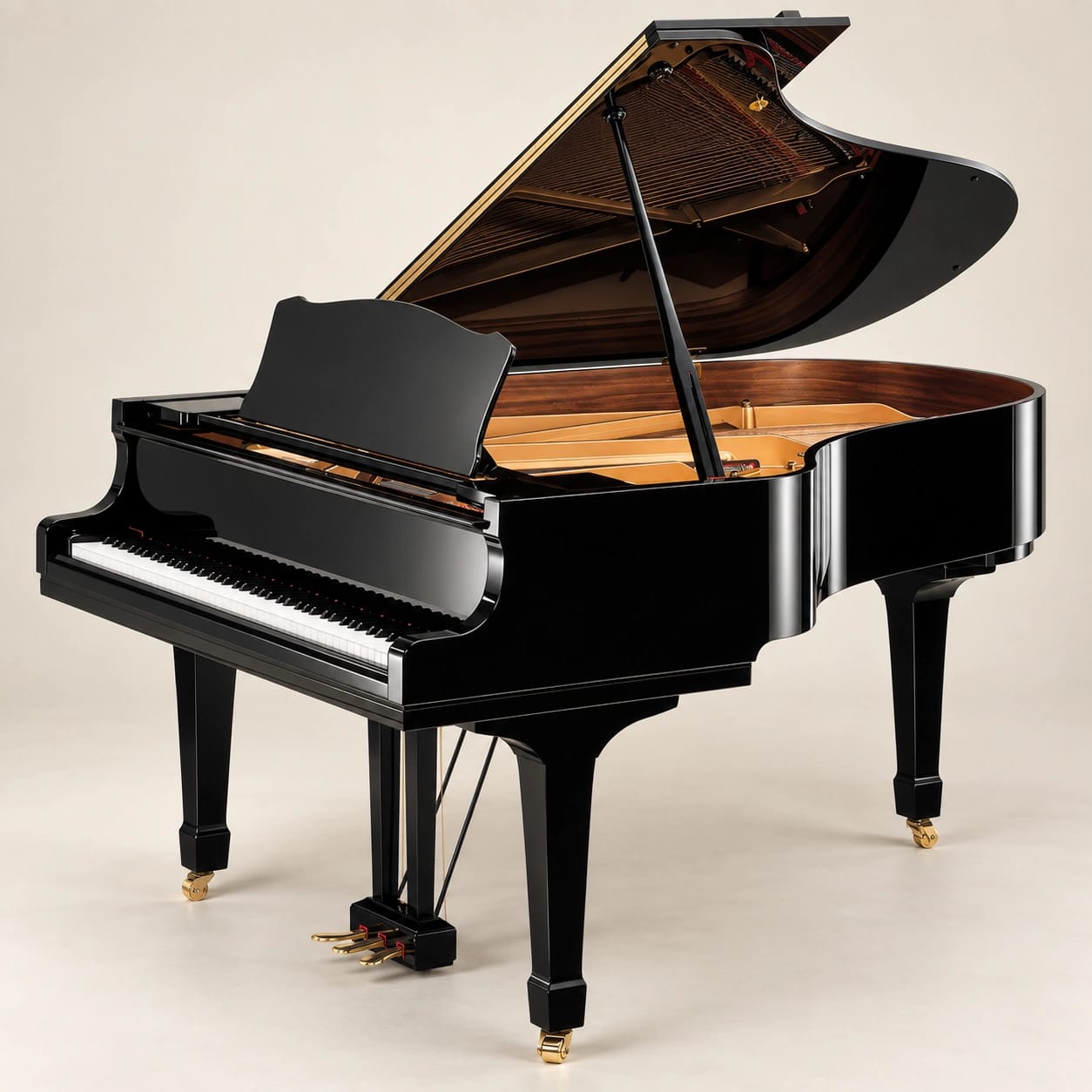
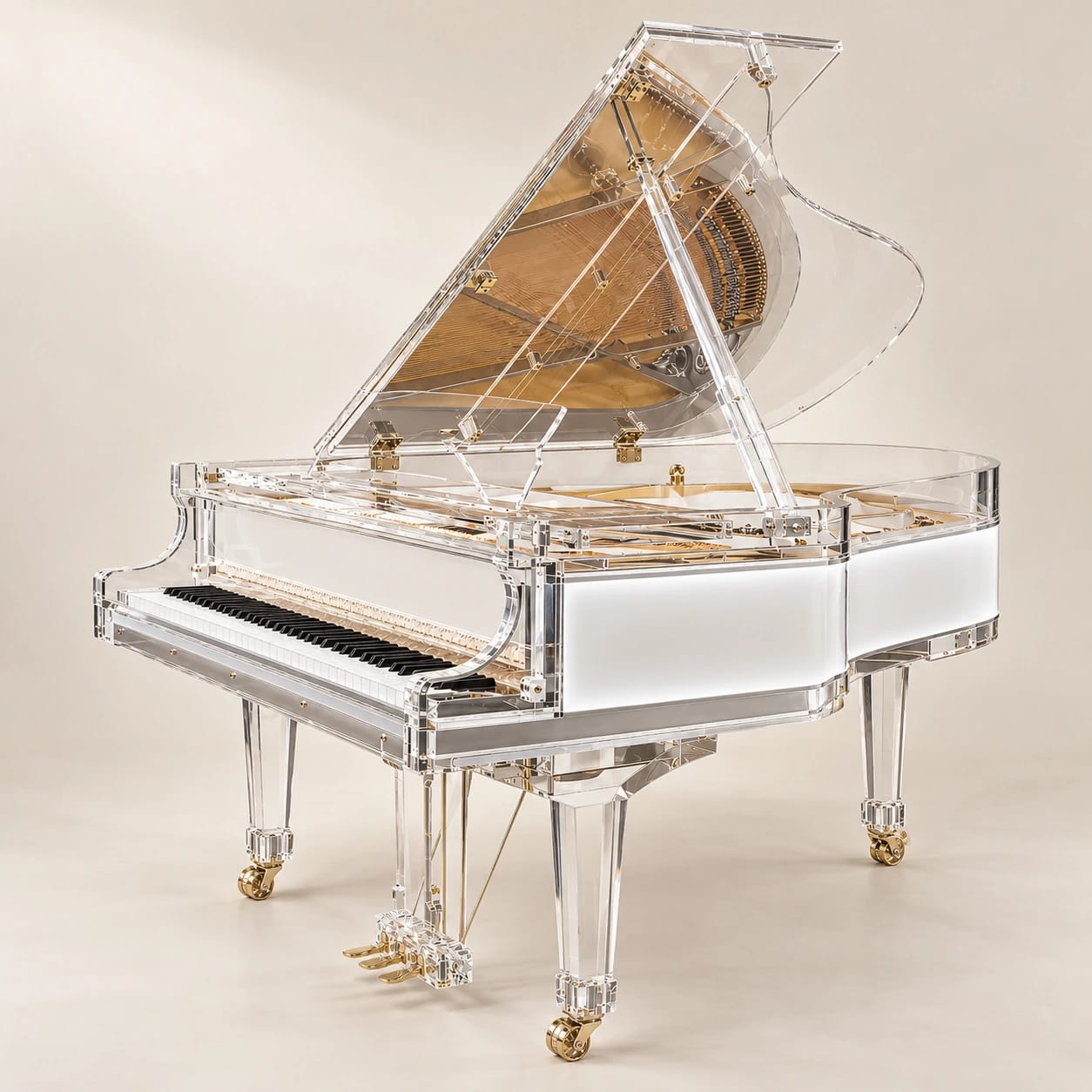
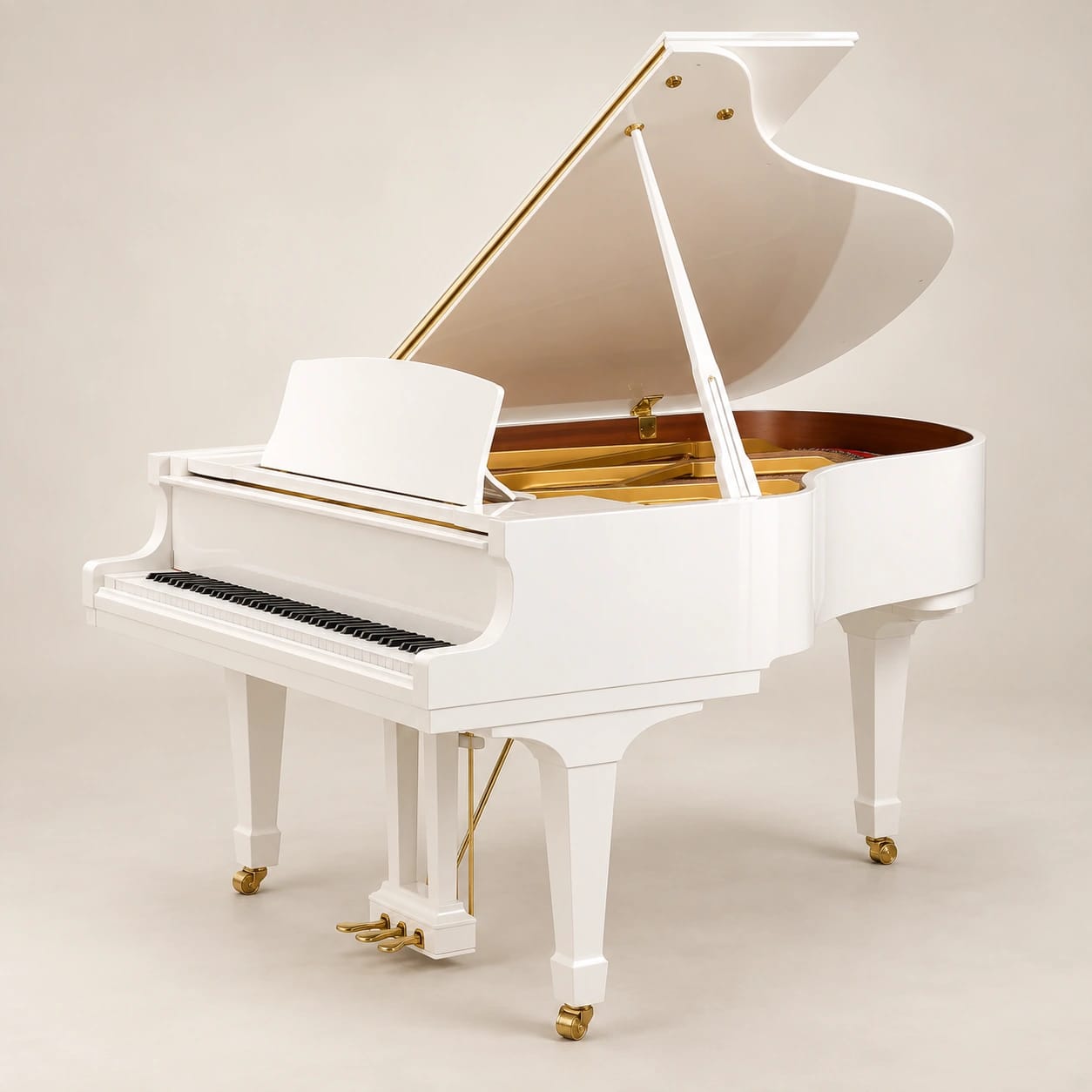
Studio visualisations. Date availability and venue arrangements are confirmed separately.
At a glance
Translate the image brief into an agreed shoot plan
Define the images
Explain the piano’s role and the required views.
Confirm the model proposal
Align client, stylist and any performer requirements.
Plan one assessed position
Map camera views and flag essential movement requests.
Align the call sheet
Include preparation, first readiness and pack-down.
Close the booking accurately
Maintain the collection route and truthful image context.
Let’s talk about your hire
Have a date or venue in mind?
Tell us the occasion, the piano and the details you know. We can help work through the rest.
The practical details
Plan your hire with confidence.
Explore the parts that matter to your plans. If you’re unsure, we can talk them through with you.
A little more about this hire
For a photographer, the piano hire brief should begin with the images being commissioned. The visual role of the instrument, the actual location and the range of views required are more useful than a request for a piano that simply looks right. They help the client, stylist and supplier understand the same shoot.
This guide focuses on the photographer’s coordination responsibilities. It connects the image brief to a selected instrument, an agreed position, a prepared set and a workable schedule. The separate photo-shoot planning guide can help organise the wider preparation; this page concentrates on translating creative requirements into clear supplier and client decisions.
The advice does not promise a particular photographic result or present visualisations as examples of past hires. Availability, access and any requested changes of position need assessment. The photographer can plan the composition, while the business and relevant specialists confirm the instrument arrangement.
Explore the topics on this page
Translate the commission into an instrument brief
Describe what the piano does in the image. It may be the main subject, a visual anchor in an interior or part of a portrait or campaign composition. State the intended role before choosing the model. A supplier can better understand the request when the brief explains the result being pursued rather than relying on an isolated reference photograph.
Read the detail about Translate the commission into an instrument brief
Identify the deliverables that affect the physical plan. A wide interior view, a close portrait and a detail sequence may all be possible around one position, but the actual requirements should be discussed. If the client expects substantially different settings, make that visible early rather than discovering on the day that the instrument would need to move.
Keep the creative objective separate from a guarantee. The piano booking does not promise a particular image, lighting effect or campaign outcome. The photographer and creative team remain responsible for developing the shot, while the instrument’s availability and practical arrangements need their own confirmation.
Choose the actual model with the client and stylist
The current collection includes the white Stenberg 152, black Yamaha C3 and clear Teschendorf M170. Use those model names when discussing the visual proposal. A reference showing another grand piano should be identified as a reference, not as a picture of the instrument being reserved.
Read the detail about Choose the actual model with the client and stylist
Ask the client which aspects of the appearance are essential. The stylist may have preferences about the relationship to the room, while the photographer may be considering framing and the visual complexity of the scene. Put those requirements into one brief so the chosen model is not approved in separate conversations for incompatible reasons.
Check availability before making the instrument a fixed assumption in the call sheet. If alternatives are acceptable, identify who can approve them and which shots would need reconsidering. A change of finish or model may be more than an administrative substitution. The final shoot documents should name the instrument actually agreed, with old options clearly removed from working instructions.
Distinguish reference imagery from location evidence
A mood board can communicate tone, composition or the relationship between the piano and the room. It cannot establish that the proposed location has the same dimensions, access or permission as the reference. Keep actual site photographs and plans alongside creative references so the practical proposal remains grounded in the place where the shoot will happen.
Read the detail about Distinguish reference imagery from location evidence
Label visualisations accurately. An imagined interior is not evidence that the supplier has worked at that venue or can reproduce the exact setting. If the client is responding to a particular reference, explain which part of the idea is being adapted and what depends on the real location and shoot conditions.
Use a small number of purposeful references rather than an unannotated folder. A note such as preferred camera direction or desired relationship to the seating can be more useful than several images with conflicting placements. This keeps the creative discussion precise without turning an inspiration image into a promise about the physical booking.
Plan camera views around an agreed piano position
List the planned views and mark them on the proposed room layout. Consider what the camera needs to see, where people or other objects will be positioned and which parts of the set must remain clear. This helps identify whether the brief can be achieved around one instrument position or whether a separate change request is essential.
Read the detail about Plan camera views around an agreed piano position
Discuss the piano’s orientation while the placement is being assessed. The photographic team should not expect to rotate or move it between shots as though it were an ordinary prop. If several positions are genuinely required, explain the sequence, timing and locations before booking so the business can assess the appropriate arrangements.
Keep the final plan clear for the location and styling teams. A photographer may explore angles during the session, but the agreed physical arrangement should not be replaced by informal instructions from whoever is near the instrument. When a new idea requires a position change, pause and seek the relevant confirmation rather than improvising handling.
Give the required views short identifiers and use them consistently between the shot list and the room plan. A client can then identify an essential image without describing a new position each time it is discussed. If a view is exploratory, label it as such. Review the list with the stylist before finalising the placement proposal, noting which changes belong to the surrounding set and which would affect the instrument itself. This keeps creative flexibility in the camera and styling plan while making any material change to the piano arrangement visible early enough to discuss properly.
Inspect the set for visual questions before the call time
Use a location visit or current photographs to consider the background, available camera positions and how the piano relates to other furnishings. Record the questions you need the creative team to resolve. The aim is to identify avoidable surprises while keeping physical access and placement decisions with the appropriate parties.
Read the detail about Inspect the set for visual questions before the call time
Different finishes can invite different compositional choices, but avoid promising a particular effect from a product image. Review the actual model references and discuss the desired treatment with the client. If reflections, background visibility or the relationship to windows are important to the brief, flag them as creative considerations to test and plan rather than guaranteed properties of the final image.
Coordinate the set dressing with the approved instrument position. Ask which items can be adjusted by the styling team and which arrangements need to remain fixed. Keep the piano out of ordinary prop-handling instructions. A clear distinction lets the photographic team refine the composition without making assumptions about moving or altering the hired instrument.
Explain whether the instrument is only photographed or also played
A still image, a portrait involving a performer and a recording session are different uses. Tell the business what is actually proposed, including any playing or audio capture. Do not assume a photography enquiry automatically establishes recording suitability or every preparation service associated with a performance.
Read the detail about Explain whether the instrument is only photographed or also played
If a performer is involved, ask them for genuine instrument requirements and include those in the brief. The photographer’s visual preference and the performer’s needs should be considered together before the model is confirmed. Keep performer and production services separate from instrument hire unless a specific arrangement has been agreed.
On-site tuning is optional. If it is wanted for the planned use, request it and discuss the timing rather than treating it as a standard part of a shoot. The actual service and schedule need confirmation. No particular technician, recording result or acoustic suitability is promised by this guide.
Build the call sheet around first readiness and the complete period
Identify when the instrument must be ready for the first planned setup. That may precede the main talent call or the client’s arrival. Share the relevant milestones with the person arranging the hire and the location team, distinguishing fixed requirements from preferred times. An internal call sheet should not turn a requested delivery period into a confirmed appointment.
Read the detail about Build the call sheet around first readiness and the complete period
Include the time the room is needed before and after the photographs. Set preparation, client review and pack-down can make the actual occupation longer than the shooting period. Explain those requirements in the enquiry so the proposed duration reflects the whole arrangement rather than only the time the camera is active.
If the shoot schedule depends on another decision, make it visible. A location approval or revised client brief may affect the dates. Communicate material changes to the business and wait for confirmation before relying on them. A change sent to the stylist or production assistant is not automatically a change accepted by the piano supplier.
Manage creative changes as explicit decisions
Creative development can continue during production, but distinguish an ordinary camera adjustment from a change to the instrument arrangement. A revised frame may be straightforward; another room, position, date or intended use may require assessment. Make that distinction clear to the team before the session so a new idea does not become an unauthorised physical instruction.
Read the detail about Manage creative changes as explicit decisions
Identify who can approve a creative change for the client and who will contact the business about its practical implications. Those are different decisions. A client’s approval of a new composition does not itself confirm that the piano can be relocated or the hire period extended.
Keep a short record of accepted revisions. If an idea cannot be confirmed, return to the agreed arrangement or discuss another option within it. The purpose is not to prevent creativity, but to ensure that creative choices remain connected to the real booking and the responsibilities of the people supplying and controlling the instrument.
Finish with collection and an accurate image handover
Before the shoot ends, confirm that the collection plan still matches the location conditions. Set equipment and packed props may affect the route. Coordinate the team around the agreed arrangement, and communicate changes to the business rather than moving the piano to make pack-down easier.
Read the detail about Finish with collection and an accurate image handover
Keep the instrument’s use and the final image presentation accurate. If a scene is constructed, visualised or materially different from a real event, do not present it as evidence of a supplier’s past job or venue relationship without a basis. Agree image delivery and intended usage with the client through the photographer’s own process rather than assuming the piano hire determines those arrangements.
Retain the useful shoot-planning information for future work, but refresh the actual model, location and dates for each enquiry. A previous shoot does not establish standing availability or approval of another route. The repeatable part is the briefing discipline: clear creative requirements, an assessed physical plan and a current schedule shared with the right people.
Want to organise your notes first?
Your enquiry
Build a photographer’s piano brief
Capture creative and coordination requirements without private addresses or personal details. This is not a booking or access approval.
Your notes stay in this page. Nothing is sent or saved automatically.
0 / 4,000 enquiry-note characters. Only answered fields and selected checks are included.
Read or select your brief
Photographer piano hire brief

Commissioned image purpose: To confirm
Model and visual priorities: To confirm
Planned camera views: To confirm
Playing or recording use: To confirm
First readiness and set sequence: To confirm
Changes requiring a decision: To confirm

Planning checklist
[ ] Describe the commissioned images before choosing the model.
[ ] Label creative references and visualisations accurately.
[ ] Confirm the actual current instrument.
[ ] Plan camera views around an assessed position.
[ ] Flag playing or recording explicitly.
[ ] Keep creative approval separate from relocation permission.
[ ] Align the call sheet with confirmed arrangements.
[ ] Maintain the collection route through pack-down.

Planning notes only. Piano availability, access and arrangements need confirmation before booking.
Good to know
Your questions, answered.
Can we hire a grand piano just for photographs?
Describe the photography-only purpose, location, preferred model and required period in the enquiry. The instrument, access and arrangements still need confirmation. If playing or recording is later added, explain that change rather than assuming it is covered by the original visual brief.
Can the piano be rotated between shots?
Do not assume that it can. Plan the desired camera views around the proposed position and raise any essential movement before booking. The business needs to assess the appropriate arrangements; the shoot team should not treat a grand piano as an ordinary movable prop.
Does a reference image show the exact piano we will receive?
Use the current product page and confirmed model to identify the instrument. Other reference images may communicate style or composition only. Visualisations are not proof of a previous location hire or a guarantee that the final scene can be reproduced.
Is tuning necessary for a photography booking?
Explain whether the instrument will be played or recorded and discuss any preparation required for that use. On-site tuning is optional and needs to be requested and confirmed. A photography booking should not be assumed to include a visit or establish recording suitability.
Can the client approve a last-minute move to another room?
The client can approve a creative idea, but the physical change still needs the relevant venue and supplier assessment. Explain the new room, route and timing before relying on it. Do not treat creative approval as authority for the photographic team to relocate the instrument.
Let’s talk about your hire
Tell us what you’re imagining.
Tell us the occasion, the piano and the details you know. We can help work through the rest.