Brand and social content
Piano hire for social and brand content
Choose a grand piano for your brand images or social content. Share the essential shots, sound requirements, location and dates so we can discuss the instrument and proposed use.
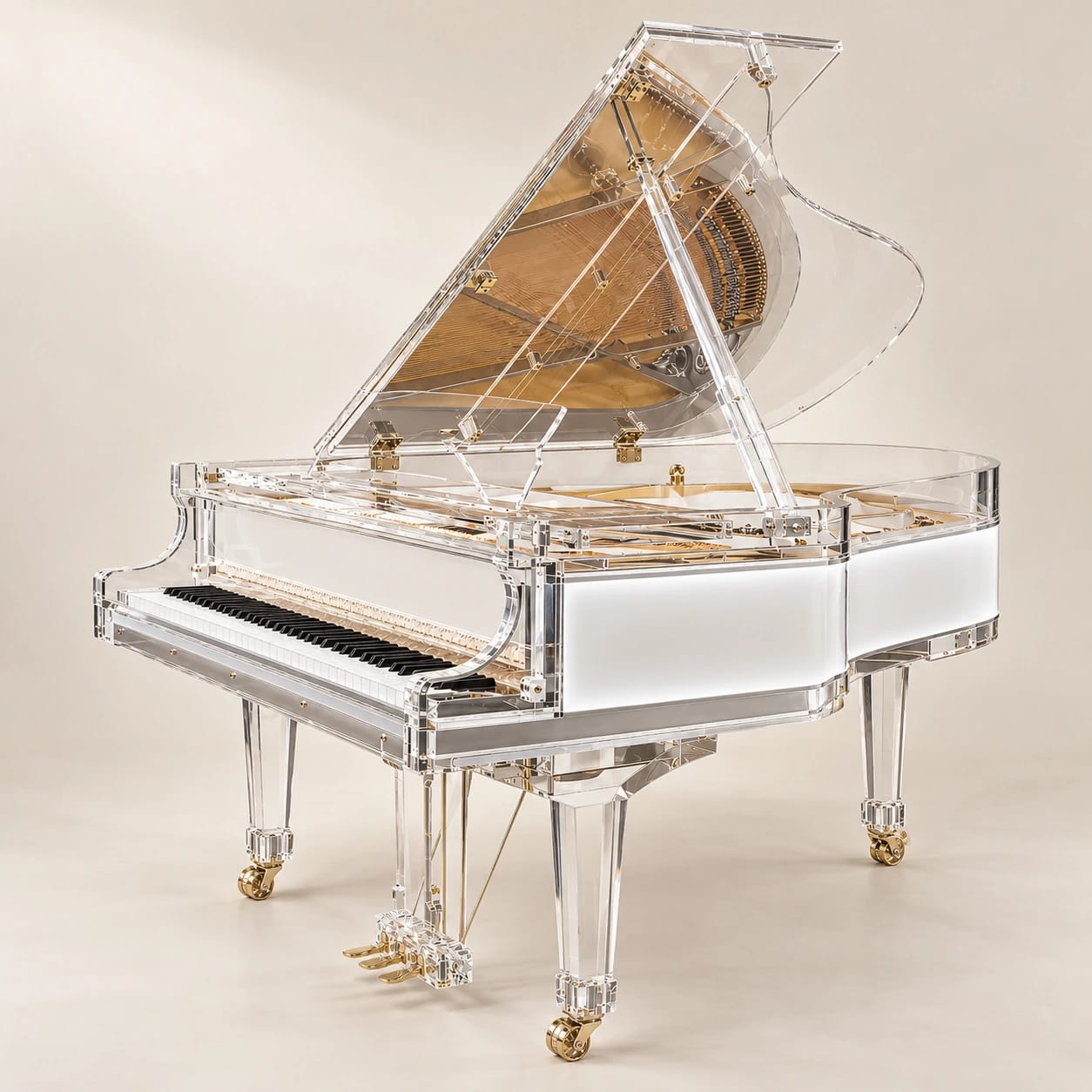
Black, white and clear grand pianos. We confirm availability and arrangements for each booking.
At a glance
What matters for your hire.
Define the essential content outputs and whether the piano will be heard as well as seen. Choose a named model, confirm the location’s permission and provide the complete route and proposed position for assessment. Plan the required camera views around that agreed position, raise props and unusual interactions in advance, and separate delivery, preparation, filming and collection. A short shoot still needs confirmed access and timing; the hire does not automatically include talent, audio production or permission for every creative action.
The collection
Find your grand piano.
Explore the instrument as well as its finish. We can talk through the right option for your plans and dates.
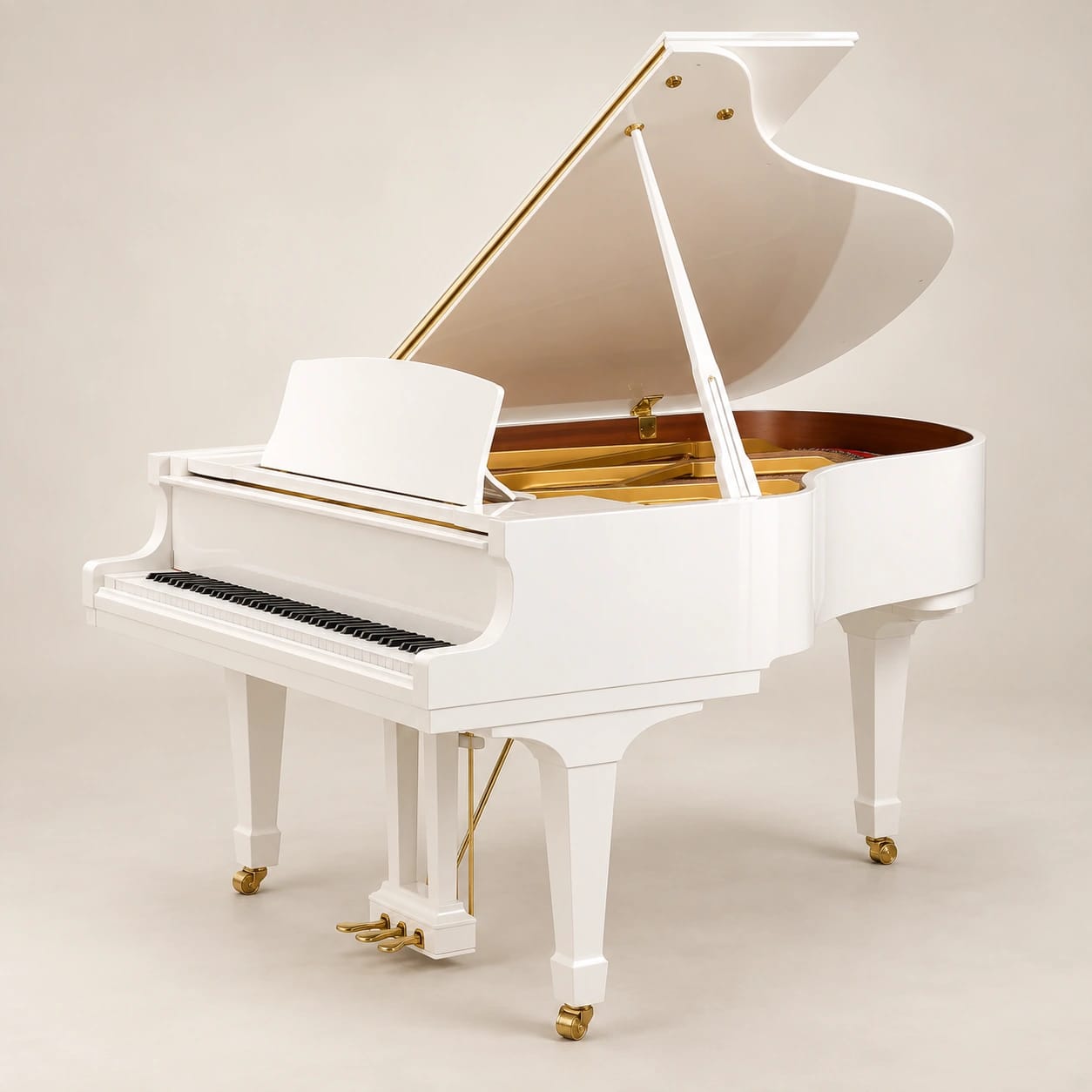
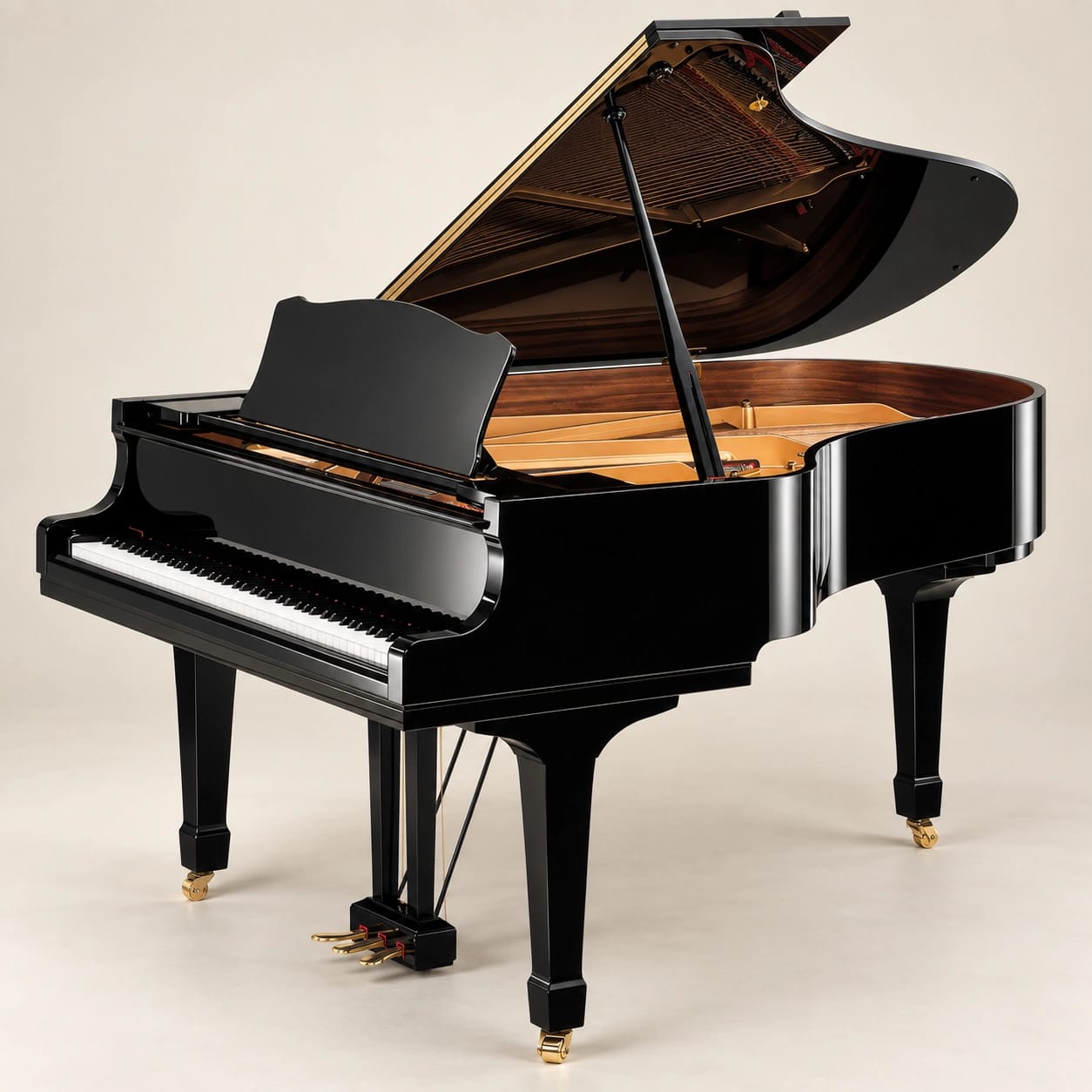
Studio visualisations. Date availability and venue arrangements are confirmed separately.
At a glance
From content deliverables to a confirmed set
Prioritise the outputs
List essential formats, views and piano interactions.
Resolve sound and model
Identify live audio needs and the exact proposed instrument.
Assess the location
Supply permission, route and placement information.
Approve the practical treatment
Confirm props, unusual actions and any proposed movements.
Schedule the shoot and release
Use accepted logistics and a clear end to optional filming.
Let’s talk about your hire
Have a date or venue in mind?
Tell us the occasion, the piano and the details you know. We can help work through the rest.
The practical details
Plan your hire with confidence.
Explore the parts that matter to your plans. If you’re unsure, we can talk them through with you.
A little more about this hire
A social or brand content shoot often needs several useful assets from one short production: a vertical clip, a wider image, a close-up and perhaps a filmed musical moment. A hired grand piano can be part of that concept, but the equipment and location plan should be settled before the team starts multiplying the shot list.
This page is for small content teams, brand producers and creators arranging the hire itself. It helps define what the piano must contribute, which model is being considered and what the location and schedule need to support. It makes no claim about audience growth, campaign performance or the result a particular instrument will produce on camera.
Explore the topics on this page
Build the hire brief around deliverables rather than vague inspiration
List the assets the production actually needs. Describe their formats, subject and intended piano interaction in practical language. A wide still, a vertical performance clip and a close detail may require different camera positions even when they use the same set. This list helps the producer decide what is essential before booking an instrument around a broad mood board.
Read the detail about Build the hire brief around deliverables rather than vague inspiration
Separate required assets from optional variations. If the client needs a particular hero frame, give that shot priority in the layout and schedule. Additional transitions or behind-the-scenes clips should not silently introduce new piano movements or unapproved actions. Mark them as optional until the production team has assessed their impact.
Explain the role of the piano in each key asset. Is someone playing it, standing beside it, using it as a visual backdrop or interacting with it in another way? A precise description gives the hire team a meaningful use brief and helps the creative team avoid treating the instrument as a generic prop.
Do not use the hire enquiry to promise content results. A piano can be part of the planned imagery, but this page does not predict reach, engagement, enquiries or sales. Keep the booking decision grounded in the assets and production requirements you can actually describe.
For each required asset, identify who can approve it on set. A small crew can lose time when the client, director and performer are each waiting for another person's decision. Agree which role confirms that the essential shot is complete and which requests are optional additions. This is a production decision, but it affects whether the team can release the piano at the agreed time.
If several versions are needed, group the shots by the approved setup rather than assuming every format requires a new instrument position. Ask the visual team to plan the order in which their own camera, lighting and subject adjustments will happen. Any change that affects the piano itself remains a separate request to the hire team.
Keep an explicit list of assets that cannot be attempted until a question is answered. That may be a live-sound requirement, a particular interaction or a proposed second location. The list helps the producer avoid promising those assets to the client as settled deliverables. Once the relevant response arrives, update the treatment and crew brief together. A compact production can still be rigorous about the boundary between a creative idea, a client approval and a confirmed permitted use of the hired instrument.
Decide whether the content needs live piano sound
State whether the production records live playing, uses playback or creates silent imagery. The answer affects the people and preparation needed. If live audio matters, the performer and sound team should assess the proposed instrument and location for their own purposes. A visually effective room is not automatically a suitable recording environment.
Read the detail about Decide whether the content needs live piano sound
Ask the player to consider the exact model. Piano Hire Australia's current collection includes the white Stenberg 152, Gordon; black Yamaha C3, Sebastian; and clear Teschendorf M170, Oscar. Identify the proposed choice in the brief instead of asking for a piano that merely resembles a reference image.
Optional on-site tuning can be requested through the booking process. Discuss it in relation to the intended playing and schedule. If there are particular preparation requirements, raise them early and obtain a specific response rather than assuming they are included in a general content-shoot hire.
Keep audio equipment, recording, playback and talent engagement assigned to the relevant production roles. The piano hire does not automatically provide a musician, microphone package or engineer. The content team should resolve those responsibilities before the call sheet treats the musical asset as ready to film.
Choose the finish for the actual frame and brand treatment
Review the proposed model against the real background, wardrobe, products and lighting concept. Ask the photographer or director which visual relationships matter in the final asset. A finish preference is useful when it answers the composition, but it should not become an unsupported claim that one piano always performs better on social platforms or in branded imagery.
Read the detail about Choose the finish for the actual frame and brand treatment
Use collection references accurately. They identify the offered instrument and can inform the visual discussion; they do not prove a previous brand campaign, venue partnership or guaranteed final look. If the treatment relies on a particular visible detail, ask for the current information needed to assess it.
Consider the different crops before the set is finalised. A vertical frame may include different surroundings from a wide still. Plan camera and subject positions around the agreed piano placement rather than assuming the crew can rotate or move the instrument for every output. Raise any essential movement during the enquiry.
If brand materials, signs or products are intended to touch or attach to the piano, describe that explicitly. Choosing a visually suitable instrument does not grant permission to use its surface as a product table or branding support. A separate prop or background element may be the appropriate production solution.
Treat a small location as a full access assessment
A home, compact studio or borrowed room still needs a complete delivery plan. Obtain permission from the person responsible for the location and provide the exact address, room and intended use. A casual arrangement to film at a friend's property does not establish that a grand piano can be brought in or placed where the shot requires it.
Read the detail about Treat a small location as a full access assessment
Ask for the actual loading point and route, including stairs, lifts, level changes and any stage or temporary structure. Provide current photographs or a plan for assessment where useful. Do not infer fit from the room looking spacious in a phone image or from an instrument outline placed on a mood board.
The moving specialists and responsible venue parties need to assess the physical proposal. This page supplies no clearance, floor-load or lift approval and no do-it-yourself handling method. The small size of the crew is not a reason to rely on general production assistants to move the piano.
If the treatment includes an outdoor or partly enclosed area, disclose it as an individual assessment request. A short filming duration does not make outdoor use automatically acceptable. Keep the concept provisional until the supplier has responded to the actual location and use.
Plan a compact set that avoids repeated instrument moves
Choose the essential piano position with the director, photographer and location lead. Map the main camera areas, subject marks and separate product or lighting supports around it. The layout should reflect the assets that matter most while leaving the agreed delivery and collection routes available.
Read the detail about Plan a compact set that avoids repeated instrument moves
Look for ways to vary the framing through camera and subject choices within the approved setup. This is a creative planning prompt, not an instruction about a particular shooting technique. If the concept truly requires the piano to move, describe the positions and timing to the hire team before booking and ask what can be arranged.
Keep equipment off the instrument unless a specific use has been approved. Stands, cables, monitors and product props should have their own planned positions. The crew should know that the piano is hired property with agreed care requirements, even when the shoot's visual style is informal.
Give the talent a clear description of permitted actions. A quick improvised gesture can become part of a content concept, but the director should not assume every physical interaction is acceptable. Refer new ideas that affect use or handling to the responsible coordinator and supplier rather than testing them on set.
Protect the shoot window with a realistic sequence
Write separate times for the requested delivery, placement, optional preparation, first essential asset, later variations and release for collection. A short content window can feel generous until equipment, styling and talent all need the same space. Make the dependencies visible before the team arrives.
Read the detail about Protect the shoot window with a realistic sequence
Use the confirmed supplier arrangements in the call sheet. Do not promise a precise arrival, immediate setup or late collection based on a previous project or an assumed travel time. If the shoot depends on a narrow location window, state the exact constraint in the enquiry and ask what can be accepted.
Online booking requires at least two days' notice. Same-day hire means delivery and collection on one booked future date, not that a piano can be arranged for immediate filming today. Urgent requests remain enquiries until availability and practical arrangements are confirmed.
Assign someone to decide when optional shots stop so the piano can be released as agreed. If the client adds a new asset or the shoot overruns, contact the hire team about any required change. The production's remaining shot list does not automatically extend the hire period or alter collection access.
Keep client approvals and instrument permissions separate
A brand or client may approve a creative treatment without having considered its effect on the hired instrument. Review the final treatment for props, attachments, unusual playing, movement or changes of location. Raise those items with the hire team before telling the crew that the whole concept is cleared.
Read the detail about Keep client approvals and instrument permissions separate
Make the distinction visible in the production notes: creative approval, location permission and supplier agreement are different statuses. A single “approved” label can hide the fact that only the client has responded. This is especially useful when a small team is working quickly through message threads rather than a formal production system.
Ask the production lead to manage any necessary rights or releases for people, music, branding and the location through the appropriate channels. This page does not provide legal permissions or rights advice. The practical point is that an instrument booking should not be mistaken for clearance of the entire content project.
When the brief changes, state the specific difference and the response needed. A new crop may leave the hire unchanged; a new room or a product attached to the piano may not. The coordinator should make that distinction before the revised idea reaches the set.
Send a content-shoot enquiry with a clear production scope
Provide the date, exact location, proposed model and essential use. Say whether live sound is required, who is arranging the performer and what preparation is requested. Add the access information and proposed position, with any outdoor element or movement described explicitly.
Read the detail about Send a content-shoot enquiry with a clear production scope
Explain the location window and requested collection arrangement. Mark timing requests as requests until confirmed. Use the live booking or written quote for the actual cost and inclusions, rather than assuming a short social shoot has a standard reduced package or that a small crew changes the physical requirements.
Before the day, give the location lead and crew a concise final note containing the accepted instrument, position, permitted use and schedule. Keep personal and payment details in the actual booking correspondence. The practical brief should be easy to read at setup without exposing information the wider crew does not need.
The tool on this page creates a copyable production note for your own planning. It does not reserve an instrument, submit a creative approval or certify access. Use it to find gaps in the brief before the shoot is committed, then replace provisional points with the confirmations you actually receive.
Want to organise your notes first?
Your enquiry
Brand and social shoot piano brief
Build a production note without client contacts or personal talent information. This does not grant creative permissions or make a reservation.
Your notes stay in this page. Nothing is sent or saved automatically.
0 / 4,000 enquiry-note characters. Only answered fields and selected checks are included.
Read or select your brief
Content shoot piano enquiry

Essential content outputs: To confirm
Piano interaction and sound: To confirm
Proposed model and visual context: To confirm
Location and access: To confirm
Props and movement requests: To confirm
Shoot window and release: To confirm

Planning checklist
[ ] Essential assets separated from optional variations
[ ] Live sound and performer needs identified
[ ] Exact model considered for the actual visual brief
[ ] Location permission and complete route supplied
[ ] Props and branding requests explicitly raised
[ ] Crew is not assigned unapproved piano movement
[ ] Creative approval separated from supplier permission
[ ] Schedule includes a clear release for collection

Planning notes only. Piano availability, access and arrangements need confirmation before booking.
Good to know
Your questions, answered.
Can we hire a grand piano for a short vertical-video shoot?
Describe the exact date, location, assets and intended use in the enquiry. A short final clip can still require delivery, assessed placement, preparation and collection over a longer period. Do not assume a brief shoot has instant availability or a fixed short-session package. Confirm the named model and practical arrangements, and plan the key frames around the agreed position unless movement is expressly arranged.
Do we need tuning if the video uses playback?
Explain the actual use to the hire team and discuss optional tuning in that context. A playback-only concept and a live recorded performance have different musical requirements. If someone will play or usable sound will be captured, involve the performer and sound team in the decision. Do not assume every content booking requires the same service, or that selecting tuning also supplies an engineer or audio equipment.
Can we put our product or logo on the piano?
Ask about the exact proposal before approving the treatment. The hire does not automatically permit products, signs, adhesives, attachments or equipment on the instrument. Explain where and how the item would be used and wait for a response. A separate stand, background or framing choice may meet the creative brief without using the piano as a support or branding surface.
Can a small crew handle moving the piano between shots?
Do not plan crew movement as part of the shoot unless the hire team has assessed and agreed the arrangements. Describe each required position and timing in advance. The number of people on the crew does not establish permission or suitability to handle the instrument. Where possible, plan the essential views around one confirmed placement and refer any proposed change through the responsible coordinator.
Let’s talk about your hire
Tell us what you’re imagining.
Tell us the occasion, the piano and the details you know. We can help work through the rest.