Venues and occasions
Piano hire for venues
Add a grand piano to an event at your venue. Explore the instruments and tell us about the room, programme and dates so we can work through placement and hire arrangements.
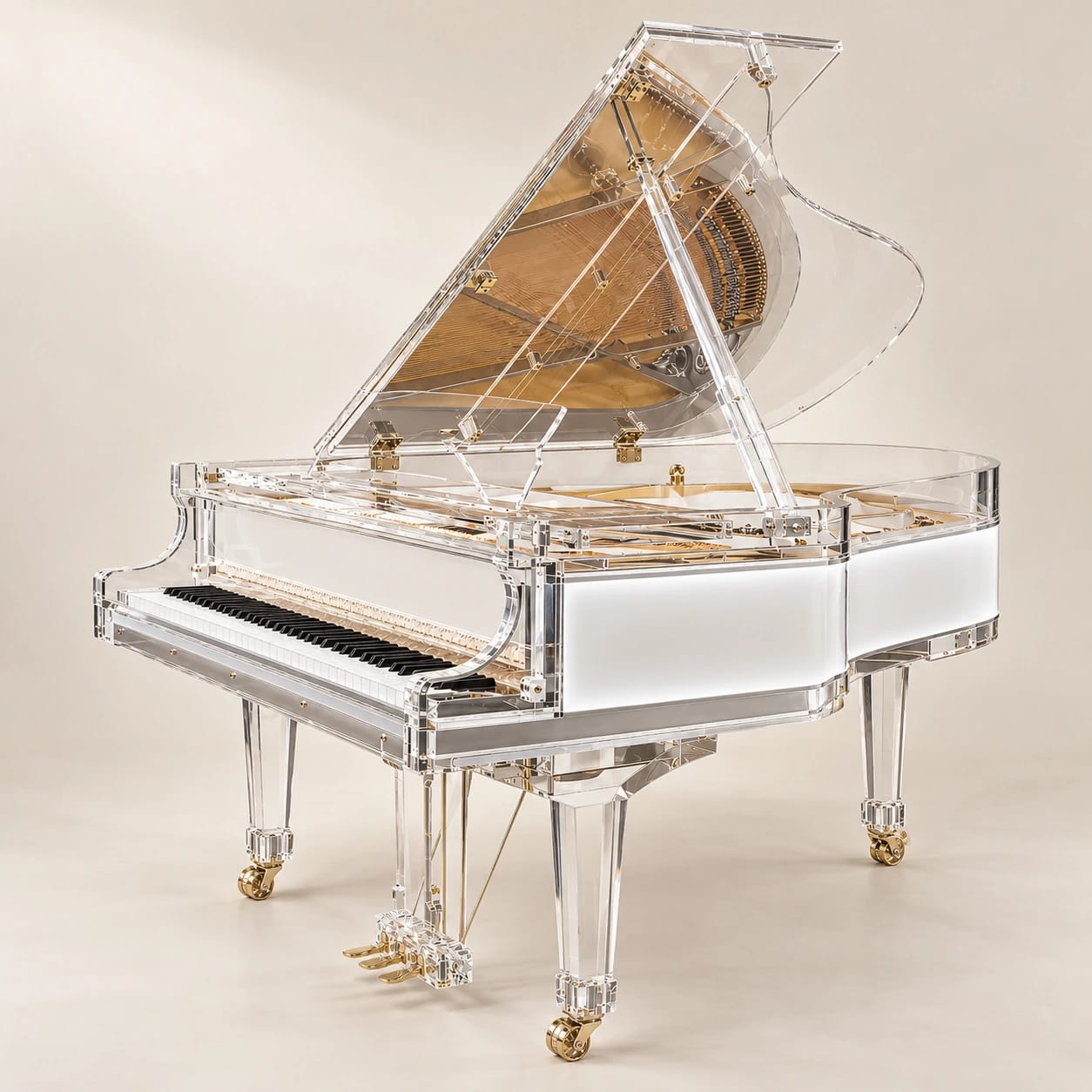
Black, white and clear grand pianos. We confirm availability and arrangements for each booking.
At a glance
What matters for your hire.
Start with a specific event or display need, then confirm the requested model and the venue’s permitted placement and access. Check delivery, preparation and collection against the room’s other commitments. A recurring hire, extended placement or special arrangement needs individual discussion. Do not advertise a guaranteed piano inclusion or availability before the relevant booking is confirmed.
The collection
Find your grand piano.
Explore the instrument as well as its finish. We can talk through the right option for your plans and dates.
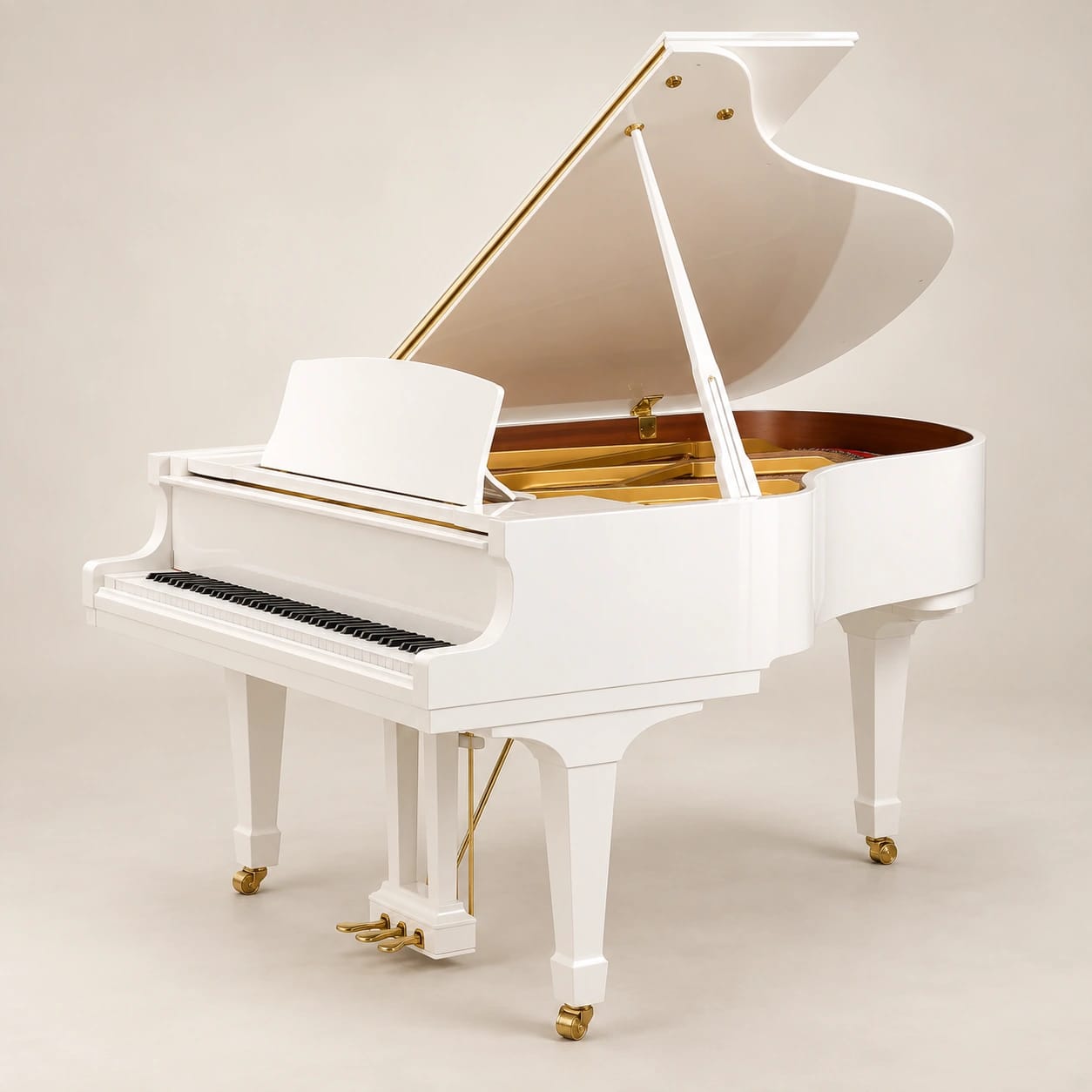
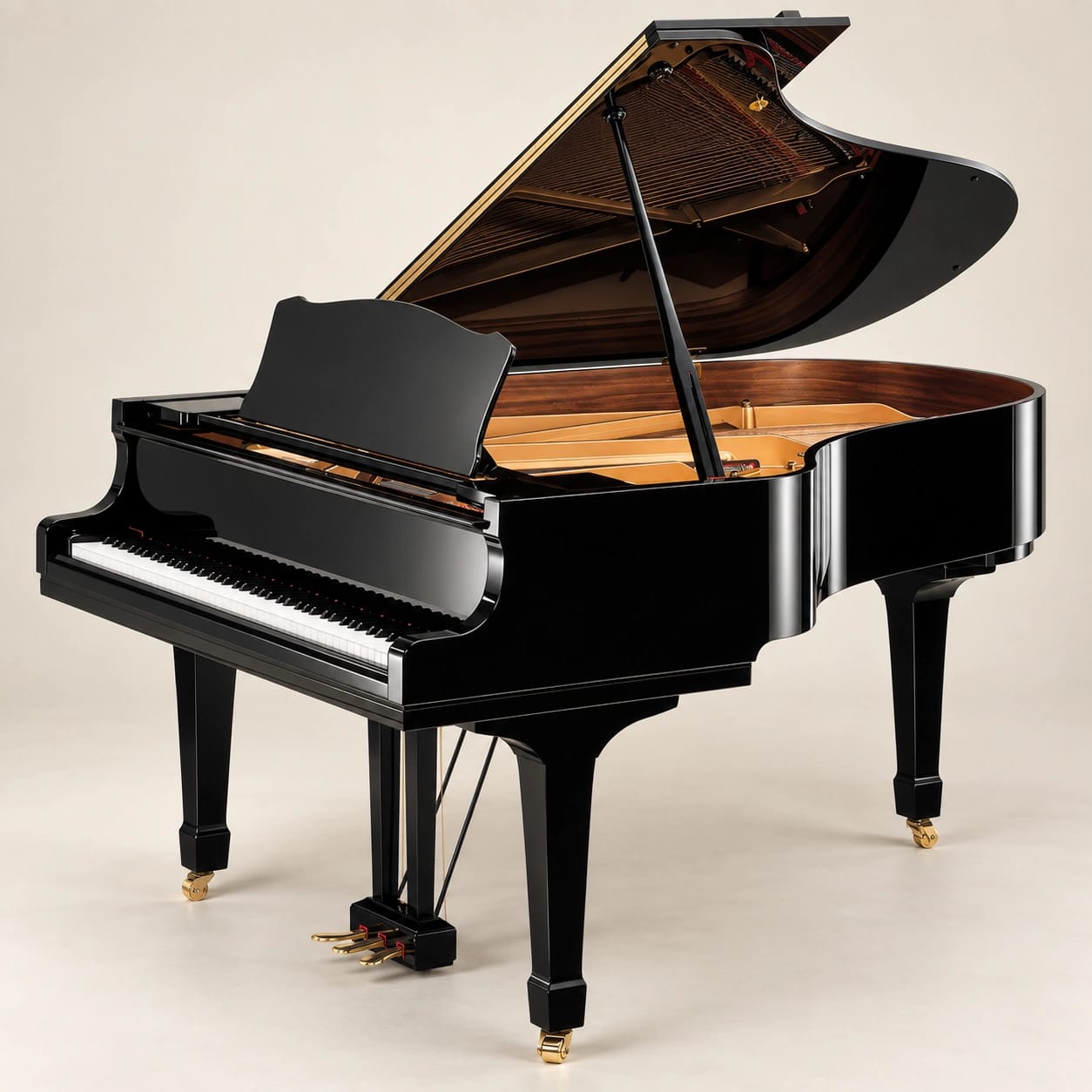
Studio visualisations. Date availability and venue arrangements are confirmed separately.
At a glance
From client request to venue arrangement
Define the client use
Identify a specific event or extended placement need.
Agree the instrument request
Clarify creative or performer approval and alternatives.
Review room operations
Check placement, turnover and transport constraints.
Confirm the hire scope
Resolve the quote, optional services and responsibilities.
Hand over the agreed plan
Give venue staff the current instrument arrangements.
Let’s talk about your hire
Have a date or venue in mind?
Tell us the occasion, the piano and the details you know. We can help work through the rest.
The practical details
Plan your hire with confidence.
Explore the parts that matter to your plans. If you’re unsure, we can talk them through with you.
A little more about this hire
A venue does not need to own a piano to explore including one in a particular event. Hiring can begin with a specific client request, a planned performance or a temporary room presentation. The useful question is what the instrument would add to that booking and whether the room, programme and operating arrangements can support it.
This page helps a venue consider a piano as part of an event offer without promising an instrument before it has been checked. It covers the decisions behind the hire: the intended use, the model discussion, the room’s operating pattern and the period the piano would remain on site. The venue-manager guide provides a separate handover workflow for the staff coordinating an agreed booking.
Explore the topics on this page
Define the event offer before making a promise
A request for a piano can mean several different things. A client may want a live performance, a visual feature in a reception room or an instrument available during a short series of activities. Ask which outcome they are seeking before describing what the venue can provide. This keeps the first discussion practical and avoids treating every request as the same service.
Read the detail about Define the event offer before making a promise
Distinguish between exploring a hire and including a confirmed instrument in an event agreement. You can explain that a grand-piano request can be discussed, but the model, dates and arrangements still need assessment. A photograph or a previous enquiry is not evidence that a particular piano will be available for a new event. The client-facing description should reflect what is actually known at that stage.
Decide whether the venue will coordinate the enquiry or whether the client will arrange the hire directly. Either approach needs a clear interface with the venue’s own requirements. The person making the booking needs accurate access and timing information, while the venue needs to know the intended instrument and use. Establishing that exchange early makes later planning much easier.
Match the instrument to the client’s purpose
The collection contains the white Stenberg 152, black Yamaha C3 and clear Teschendorf M170. When discussing a model with the client, consider whether playing, appearance or both is central to their event. A finish may be important to the room’s presentation, while a performer may have a specific instrument requirement. The venue can help connect these discussions without approving musical suitability on the artist’s behalf.
Read the detail about Match the instrument to the client’s purpose
If a performer is involved, ask who will obtain their approval of the proposed model. If the hire is primarily visual, ask the creative decision-maker to identify the intended setting and any non-negotiable preferences. Keep those decisions explicit. A venue coordinator should not need to guess whether a different finish would be acceptable when availability is being discussed.
Use the actual collection information rather than expanding the offer into unconfirmed stock or services. The three grand pianos do not imply that upright pianos, digital keyboards or piano shells are available. Instrument hire also does not automatically supply a musician or sound equipment. A precise description of the request helps both the client and the venue understand which separate arrangements remain necessary.
Consider the room as an operating space
The proposed piano position sits within a room that has other responsibilities: guest circulation, seating, event production and the venue’s own operating requirements. Ask the appropriate venue representative to consider the final layout rather than only the empty floor. A piano shown on a concept plan does not establish that its placement, support or route into the room has been approved.
Read the detail about Consider the room as an operating space
Think about what changes before and after the event. Temporary seating, set pieces, catering arrangements or another booking may affect the available route. The relevant people should identify when the room will be ready for specialist placement and which parts of the layout must remain consistent with the assessed plan. This is especially useful when different teams prepare the venue at different times.
Where a stage is proposed, its suitability belongs with the qualified venue or staging professional. Avoid broad statements that a regular stage will be sufficient. Likewise, a lift or a ground-floor room does not by itself establish access. Supply the known facts for assessment and keep any unresolved question visible until the people responsible have provided an answer.
Connect the hire to room turnover and event changeovers
A venue’s booking calendar can create constraints that are not obvious from the event programme. A room may be occupied before setup, needed again after the function or available only during specific loading periods. Give the piano team those actual constraints early. The event start and finish times alone may not describe the period in which delivery and collection can happen.
Read the detail about Connect the hire to room turnover and event changeovers
Look at the full occupied period rather than assuming the shortest hire is always the simplest. A client may need the instrument ready for a rehearsal or a photographic session before guests arrive. Collection may need to happen under an agreed later arrangement. Discuss the practical options, then confirm the dates and windows that fit the venue and the instrument booking.
Do not solve a changeover problem by assuming the piano can be moved into a spare corner or another room by venue staff. A proposed relocation needs assessment and an agreed handling plan. If the venue’s next booking makes the original position unavailable, raise that as part of the enquiry. The final arrangement should explain what happens during the transition rather than leaving it to the team finishing the event.
Describe access for the actual instrument movement
A useful venue access brief follows the complete journey from the permitted unloading arrangement to the final room position. Identify entries, changes of level, lifts and any booking requirements attached to them. Ask whether the same arrangements apply to collection. The person receiving the piano and the person working at the end of the hire may need different instructions from the venue.
Read the detail about Describe access for the actual instrument movement
Provide the venue’s current information and relevant photographs through the agreed enquiry process. Avoid certifying the route yourself from a plan or a single measurement. The specialist team needs to assess the whole movement, including features that may not be visible on a standard event floor plan. Be clear about what has been measured, what is a venue rule and what remains uncertain.
If access depends on a building representative, reserved loading facility or supplier induction, identify who coordinates that requirement. Do not assume the piano booking has automatically made a separate venue reservation. Confirm the responsibility and the agreed timing, then keep any later change connected to the instrument plan. Accurate access information is useful only if it still describes the conditions on the booked date.
Discuss extended placements as their own arrangement
A venue might be considering a piano for a longer display period, a series of functions or repeated events. Describe that idea separately from a single-event hire. State the proposed dates, intended uses and whether the instrument would remain in one position throughout. Extended or special hires are discussed individually; this page does not establish unpublished rental terms or a standing venue package.
Read the detail about Discuss extended placements as their own arrangement
Consider what happens between public events. The room may be used by different clients or staff, and the piano’s position may become part of ordinary venue operations. Identify who is responsible for keeping the agreed arrangement consistent and for reporting a proposed change. An instrument remaining on site should not become an object that staff relocate as part of routine room resets.
If future bookings are not yet confirmed, distinguish the committed period from the possible extension. Ask about additional dates rather than presenting them as automatically available. A sensible review point can help the venue decide whether to seek an amendment in time. The applicable confirmation and terms govern the hire; a general intention to use the piano regularly is not itself a reservation.
Keep client approval and supplier approval separate
A client may approve the visual concept or the event budget while the instrument arrangement still awaits practical confirmation. Track those decisions separately. Client approval does not establish route suitability, and a venue’s permission for outside suppliers does not establish model availability. Each approval answers a different question and should be recorded in the plan under the right responsibility.
Read the detail about Keep client approval and supplier approval separate
Review current pricing against the actual scope. Use the live booking total or the individual quote, with the selected model, dates and optional services visible. If the venue passes a proposal to its client, retain its context and any unresolved conditions. A headline amount without the associated dates and access assumptions can easily be mistaken for a standing rate that applies to every event.
Changes should follow the same clear path. If the client asks for a different room, another use or a longer period, collect the new requirement and ask for assessment. Update the client-facing plan once the relevant arrangements are agreed. Keeping one current version reduces the chance that venue staff prepare for one event concept while the piano team has a different confirmed instruction.
Turn a venue opportunity into a specific enquiry
The brief builder on this page helps a venue summarise a proposed event or placement. Record the intended use, requested instrument, room operating pattern and the access or preparation questions that remain. It creates text in the browser for you to copy into the appropriate discussion. It does not send information, reserve stock or certify that the room can accept a piano.
Read the detail about Turn a venue opportunity into a specific enquiry
Before making the enquiry, check the outline with the venue representative responsible for the room and with the client or performer responsible for the instrument choice. If the enquiry concerns repeated or extended use, make that visible in the first description. A precise question about a particular event is more useful than a broad request for a generic venue partnership that has not been defined.
After confirmation, move from this opportunity brief into the venue’s operational handover. The venue-manager guide can help organise staff responsibilities and current documents. Keep the distinction clear: this page helps decide what the venue is trying to arrange; the handover makes sure the people receiving, hosting and releasing the instrument understand the arrangement that has actually been agreed.
Want to organise your notes first?
Your enquiry
Build a venue piano enquiry
Prepare a specific event or placement enquiry. This does not establish a partnership or standing reservation.
Your notes stay in this page. Nothing is sent or saved automatically.
0 / 4,000 enquiry-note characters. Only answered fields and selected checks are included.
Read or select your brief
Your venue piano enquiry

Client or venue purpose: To confirm
Instrument request: To confirm
Room operating pattern: To confirm
Proposed hire period: To confirm
Access arrangements: To confirm
Preparation questions: To confirm

Planning checklist
[ ] The enquiry describes a specific use.
[ ] No unconfirmed piano inclusion has been promised to the client.
[ ] The proposed model and approval responsibility are clear.
[ ] Room turnover is reflected in the dates.
[ ] Delivery and collection access are both considered.
[ ] Any extended use or relocation is declared.
[ ] The operational handover will follow the confirmed booking.

Planning notes only. Piano availability, access and arrangements need confirmation before booking.
Good to know
Your questions, answered.
Can our venue advertise that a grand piano is available?
Describe only what is confirmed for the relevant offer. Exploring an outside hire does not establish permanent availability or a guaranteed inclusion for every event. If you want to offer a recurring arrangement, discuss the scope, dates and responsibilities with the team before presenting a standing promise to clients.
Can a client choose a different finish for each event?
A client can express a preference from the current collection, subject to availability and the booking assessment. Each requested model and date should be checked. Do not assume that an earlier hire creates a reservation for another instrument at a later event or that every proposed position works for each model.
What if the piano needs to remain between functions?
Explain the complete period and all intended uses when enquiring. Confirm where the instrument would remain and whether the room’s other bookings affect that position. Extended or special arrangements are discussed individually, and any relocation or later extension needs agreement rather than being treated as routine venue handling.
Who should arrange access documents and loading reservations?
The venue and booking coordinator should identify who is responsible for each requirement. The piano team needs the relevant current information to assess its part, but a hire enquiry does not automatically reserve a venue loading area or lift. Confirm the responsibility and timing before treating those arrangements as settled.
Let’s talk about your hire
Tell us what you’re imagining.
Tell us the occasion, the piano and the details you know. We can help work through the rest.