For venue managers
Piano hire for venue managers: assess and coordinate an outside instrument
Coordinate an outside grand piano with your venue’s event arrangements. Share the proposed room, programme and access information so we can discuss the instrument, placement and collection with your team.
Black, white and clear grand pianos. We confirm availability and arrangements for each booking.

At a glance
What matters for your hire.
Ask for a defined instrument, room, use and programme, then provide current venue permission and access information for assessment. Distinguish the room entrance from stage or final-position access, coordinate other activity and confirm the staff roles for both visits. A venue feature or client request is not a complete piano-delivery approval.
The collection
Find your grand piano.
Explore the instrument as well as its finish. We can talk through the right option for your plans and dates.
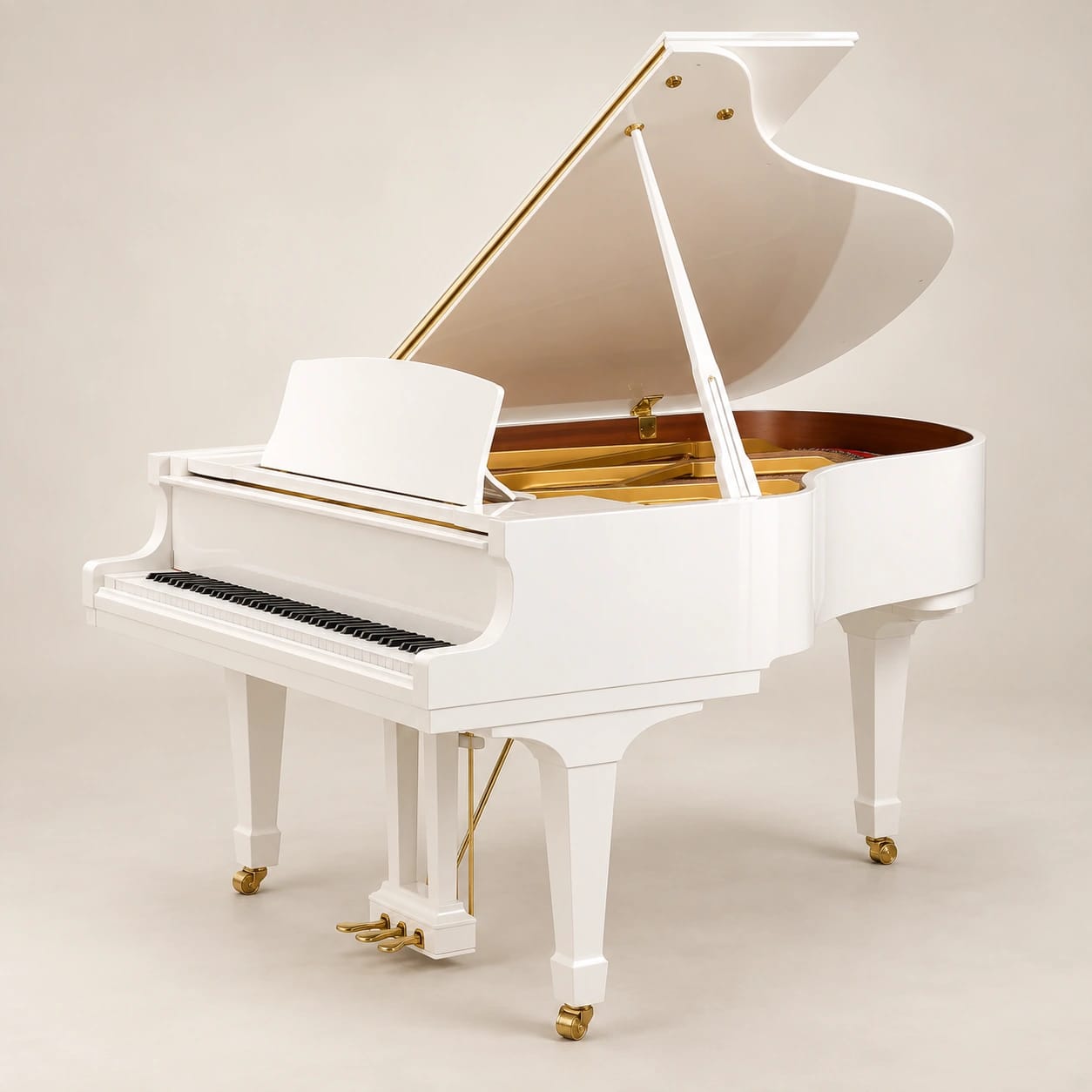
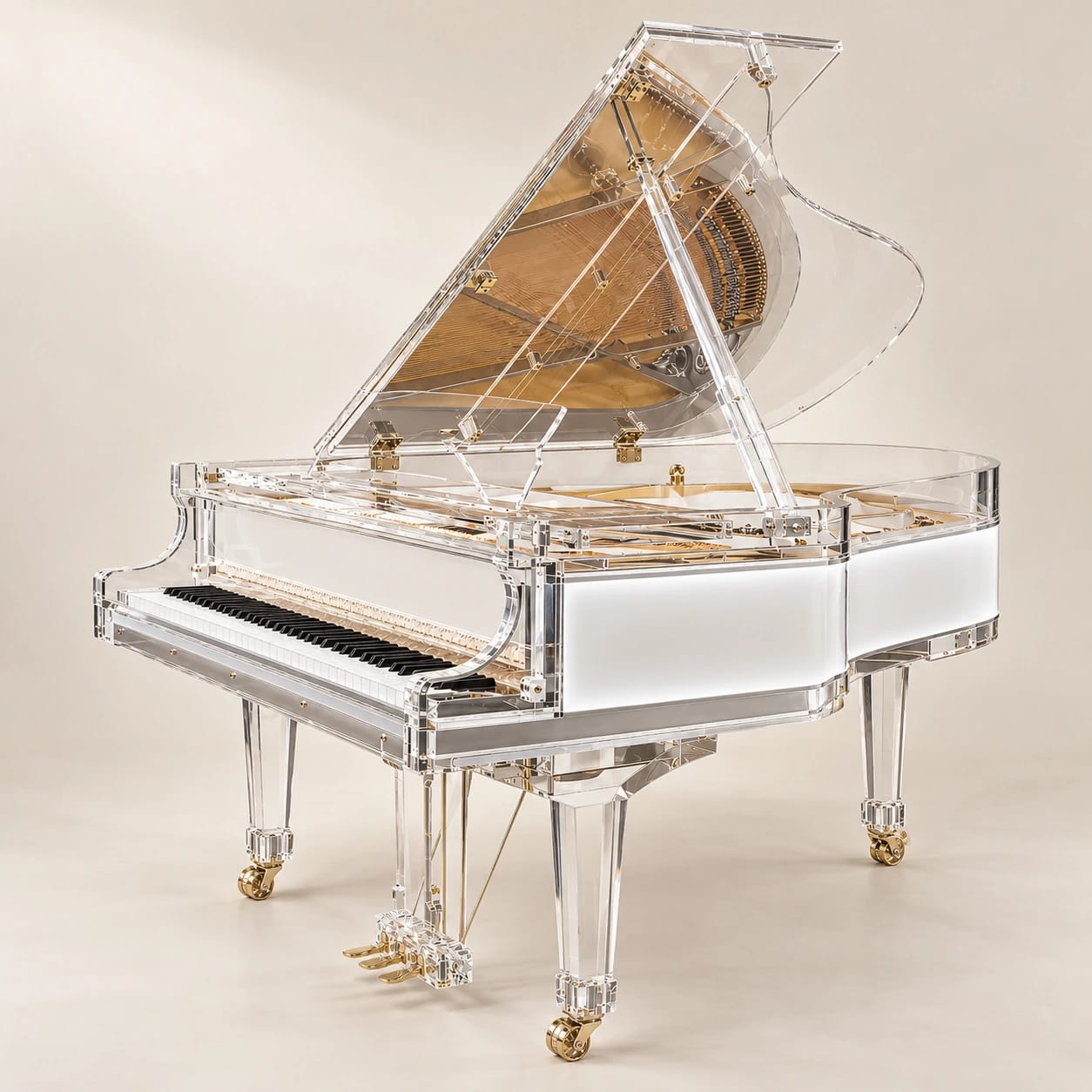
Studio visualisations. Date availability and venue arrangements are confirmed separately.
At a glance
Coordinate an outside piano through the venue
Define the request
Identify the instrument, room, use and period.
Provide current venue information
Share configuration, permissions and relevant conditions.
Resolve route and position questions
Keep structural and handling assessments with the appropriate parties.
Coordinate the programme
Align preparation, shared access and room release.
Hand over and update
Give each shift the accepted arrangement and retain current venue information.
Let’s talk about your hire
Have a date or venue in mind?
Tell us the occasion, the piano and the details you know. We can help work through the rest.
The practical details
Plan your hire with confidence.
Explore the parts that matter to your plans. If you’re unsure, we can talk them through with you.
A little more about this hire
A venue manager may receive a piano request before the client knows the model, the performer requirements or the final room layout. The venue’s useful first task is to turn that idea into a specific proposal: which instrument, which room, what use and which dates. Only then can the relevant permissions and operating conditions be considered clearly.
This guide focuses on the venue’s role when a client wants to bring in a hired grand piano. It covers information ownership, room configuration, the difference between house equipment and an outside instrument, staff handovers and the return of the space after the event. It does not describe a standing supplier relationship or promise that every venue can accept a piano.
The venue controls its premises and conditions; the piano business confirms its own instrument and arrangements. Keeping those responsibilities distinguishable helps the organiser obtain the right answers without asking either party to approve matters it has not assessed.
Explore the topics on this page
Convert the client’s idea into a room-specific request
Ask what the client wants the piano to do and where they propose to place it. A performance, reception display and photographic setting can create different programme and room questions. If the client has several ideas, label them as alternatives rather than treating all locations as approved parts of one booking.
Read the detail about Convert the client’s idea into a room-specific request
Request the actual instrument model being considered. Piano Hire Australia’s current collection contains a white Stenberg 152, black Yamaha C3 and clear Teschendorf M170. A general description such as grand piano may be insufficient for the supplier’s assessment, and a photograph from another venue does not identify the instrument or arrangements being requested.
Identify the earliest use and the proposed period on site. The client’s event hours may not include rehearsal, optional tuning, delivery preparation or collection. Obtain those details before confirming a room configuration that depends on the instrument. A specific request makes it easier to identify which venue information is needed and which questions belong with the supplier.
Distinguish house instruments from an outside hired piano
If the venue has its own piano, explain its availability and conditions through the venue’s own current process. Do not assume that a house instrument can be moved or that an outside grand can be placed beside it without considering the room and intended use. The client needs to know which proposal is actually being assessed.
Read the detail about Distinguish house instruments from an outside hired piano
If the client chooses an outside hire, keep its agreement separate from the venue’s equipment offer. Piano Hire Australia’s booking does not establish access to a venue-owned instrument, and the venue’s general equipment description does not define the outside supplier’s scope. Clarify responsibility for each item rather than allowing the word piano to refer to different instruments in different conversations.
Where existing equipment affects the room layout or route, show it on the current plan. Ask the relevant authorised people to resolve any proposed change. Do not make independent handling assumptions about either instrument. A clear distinction at the beginning prevents confusion when the event team arrives expecting a different setup from the one the venue has prepared.
Provide the current configuration, not only the generic room plan
Identify the precise room and configuration booked for the event. A divided ballroom, a combined room or a stage setup may differ from the venue’s general brochure plan. Show the partitions, fixed features and substantial event equipment that are relevant to the proposed piano position and the route to it.
Read the detail about Provide the current configuration, not only the generic room plan
Mark which information is current and which is provisional. If a seating layout or stage arrangement has not been finalised, make that clear. A plan should not acquire the authority of a confirmed technical drawing merely because it is professionally presented. The supplier needs an accurate description of the actual proposal, including the remaining uncertainties.
When the client revises the layout, identify what changes for the piano. A nearby position may still have a different approach or relationship to other activity. Keep the current version with the venue’s working event record and communicate material differences. Approval of an earlier configuration should not silently be carried over to a new one.
Separate public access features from instrument access assessment
An accessible entrance, lift or stage is useful venue information, but it does not establish every requirement for a hired grand piano. The complete route and proposed delivery method need assessment using the actual instrument. Avoid presenting a feature list as a certificate that any piano can reach any position in the room.
Read the detail about Separate public access features from instrument access assessment
Describe the authorised arrival point and each connection to the final location. Include controlled areas, doors, turns, changes of level and any lift or platform transition. Where measurements or documents are available, identify their source. Where information is missing, tell the organiser what needs to be obtained rather than filling the gap with a broad assurance.
The venue should identify who can answer structural or building questions, while the appropriate delivery specialists determine the instrument-handling arrangements. Do not calculate safe floor or stage loading from a product weight alone. Keeping those questions with the relevant people makes the assessment clearer and avoids implying approval that neither party has actually provided.
Explain supplier conditions for the actual booking
Give the organiser the venue conditions that apply to this event and room. These may concern access periods, arrival arrangements or other operating requirements, but they should come from the venue’s current process rather than assumptions drawn from another facility. Ask the client to share relevant conditions with the piano business before arrangements are finalised.
Read the detail about Explain supplier conditions for the actual booking
Be precise about the status of permission. The venue may agree to consider an outside piano subject to further information, or may approve a defined proposal once its requirements are met. Keep that distinction visible. A conditional response should not be circulated as unconditional permission for any model, position or timetable.
Likewise, the supplier’s willingness to assess the booking should not be interpreted as acceptance of every venue condition or requested appointment. Bring conflicting requirements into the discussion early. The useful outcome is an agreed arrangement that both sides understand, not a chain of separate approvals based on different versions of the event.
Align preparation and performer use with room availability
The instrument may be needed before the public event begins. Ask the organiser to identify rehearsal, photography or other first use, then compare that requirement with the room’s actual availability. A venue booking start time and a requested piano readiness time should be checked against each other rather than treated as interchangeable.
Read the detail about Align preparation and performer use with room availability
If on-site tuning is requested, keep it visible as an optional service needing confirmation. The published FAQs ask customers to allow a quiet hour for a visit. The venue can help the organiser understand what room activity is planned, while the business confirms the actual service and timing. Do not assume a named technician or included visit.
If a performer has requirements affecting the position or preparation, ask the organiser to consolidate them before issuing the final layout. Keep performer services and technical production separate from instrument hire. The venue’s role is to coordinate the relevant interfaces, not to infer that the piano booking includes all the people or equipment needed for the performance.
Give staff a concise arrival and collection handover
Different staff may be present for the two visits. Create a short handover from the accepted event record showing the instrument arrangement, authorised route, room and position, relevant times and the role that handles questions. Keep private contact information and access details in the appropriate venue system or direct correspondence.
Read the detail about Give staff a concise arrival and collection handover
Explain what the staff member is being asked to do. They may facilitate the agreed access and direct questions to the responsible people, but should not be expected to approve a new physical route, relocation or extension independently. Clear limits help prevent a helpful on-site suggestion from becoming a conflicting instruction.
Update the handover when a material change is confirmed. Old room plans and provisional dates should not remain mixed with the current instructions. If a last-minute request has not been accepted, label it as unresolved and escalate it through the agreed route rather than asking the shift team to decide which version to follow.
Plan the room’s release and next use
Collection needs an agreed place in the venue schedule. Identify when the piano’s final use ends, when the room must be available for its next purpose and what other pack-down activity occurs. Share those requirements early so the organiser and supplier can consider the full sequence.
Read the detail about Plan the room’s release and next use
Do not assume the instrument can remain after the booking or be collected at an arbitrary time because another event is due. Equally, a client’s event ending does not automatically mean the route is ready. Keep the relevant room and supplier conditions clear, and communicate any change before relying on the original arrangement.
If an overnight stay is proposed, identify the permitted room use and who controls the space during that period. Ask the organiser to obtain supplier confirmation of the actual hire and collection dates. Venue willingness to retain the piano is one part of the decision, not confirmation of availability or every responsibility under the hire agreement.
Maintain reusable venue information without implying standing approval
A venue can make future enquiries more efficient by maintaining current room plans, arrival information and the contact role for specialist questions. Date the information when it is actually checked and identify configurations or conditions that change between events. A useful information pack separates stable building facts from booking-specific decisions.
Read the detail about Maintain reusable venue information without implying standing approval
Do not turn one completed delivery into a blanket statement that every piano or route is approved. A different instrument, room configuration or programme may raise new questions. Keep any previous booking record as factual history, while asking for assessment of the current proposal. The same applies to supplier relationships: only describe an affiliation or standing arrangement when it actually exists and is authorised to be stated.
After an event, note where the coordination process could improve. Perhaps the final position was decided late or collection information did not reach the incoming shift. Use those observations to refine the venue’s briefing process. The goal is a consistent route to current, specific answers rather than a generic promise that leaves future organisers with unresolved practical questions.
Make the information pack easy to update when the building or operating arrangement changes. Identify an owner for the room plans and route description, and remove superseded versions from ordinary circulation. If the venue is temporarily using another entrance or a different room configuration, put that change beside the relevant plan rather than in a separate message that future organisers may not see. This helps an outside supplier recognise the current situation quickly while preserving the distinction between venue information and approval of a particular piano booking.
Want to organise your notes first?
Your enquiry
Build a venue piano assessment brief
Organise the venue’s information and unanswered questions without private contacts or access codes. This does not certify a route or approve a booking.
Your notes stay in this page. Nothing is sent or saved automatically.
0 / 4,000 enquiry-note characters. Only answered fields and selected checks are included.
Read or select your brief
Venue outside-piano coordination brief

Instrument and intended use: To confirm
Room configuration: To confirm
Permission status: To confirm
Access information: To confirm
Operating dependencies: To confirm
Staff handover roles: To confirm

Planning checklist
[ ] Ask for the actual model and intended use.
[ ] Distinguish house equipment from the outside hire.
[ ] Use the current event room configuration.
[ ] Treat access features as information, not certification.
[ ] Provide the applicable venue conditions.
[ ] Coordinate preparation and shared spaces.
[ ] Give both shifts the accepted arrangement.
[ ] Plan collection before the next room use.
[ ] Refresh venue information without claiming standing approval.

Planning notes only. Piano availability, access and arrangements need confirmation before booking.
Good to know
Your questions, answered.
Can a venue approve a piano based on its room capacity?
A published capacity describes a particular venue arrangement, not piano route or structural suitability. Obtain the actual instrument, position and layout, then provide relevant information for the appropriate assessment. Do not infer safe placement or delivery permission from a general capacity figure.
Does an accessible entrance confirm instrument delivery access?
No. It is useful information about the venue, but the complete connected route and actual instrument arrangements still need assessment. Doors, turns, changes of level and the final position may raise separate questions. Describe the route rather than treating the accessibility label as a universal approval.
Who should answer questions about a stage or floor?
The venue should identify the authorised role or appropriate specialist for its structural and building information. The piano delivery specialists assess their own arrangements. Do not substitute a simple calculation from a published instrument weight for the relevant assessment and confirmation.
Can venue staff reposition the piano during a room turnover?
Do not assume they can. Explain any planned position change before booking and obtain the relevant assessment and agreement. General event staff should not improvise handling to accommodate a later room setup or another supplier’s pack-down.
What information is most useful to keep for repeat enquiries?
Maintain current room configurations, the authorised arrival route, operating conditions and the role that can answer specialist questions. Identify what changes by event. Reusable information supports a fresh assessment; it does not establish permanent approval for every instrument, date or layout.
Let’s talk about your hire
Tell us what you’re imagining.
Tell us the occasion, the piano and the details you know. We can help work through the rest.