Wedding receptions
Piano hire for wedding receptions
Bring a grand piano into your reception’s music and setting. Explore the instruments, then discuss the venue layout, entertainment programme and collection arrangements with us as you plan the evening.
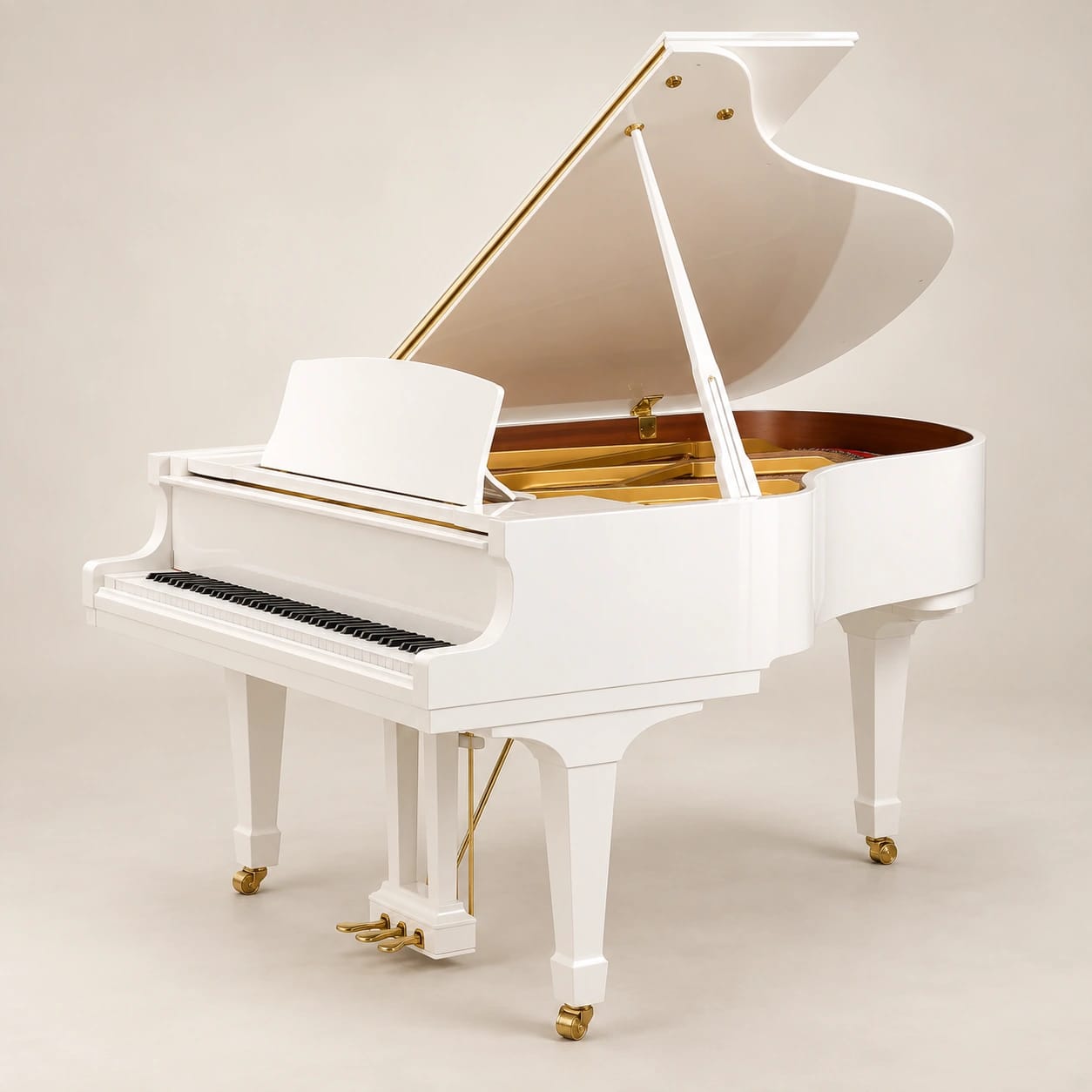
Black, white and clear grand pianos. We confirm availability and arrangements for each booking.
At a glance
What matters for your hire.
Plan reception piano hire around the entertainment programme and the venue’s operating schedule. Ask the musician to consider the named instrument, agree a proposed position with the venue, and provide the full access route for assessment. Separate placement, optional tuning, soundcheck, guest arrival and collection. Do not assume late-night collection or a move from the ceremony is included. Confirm the whole use and schedule in the booking, with audio and performer services assigned separately.
The collection
Find your grand piano.
Explore the instrument as well as its finish. We can talk through the right option for your plans and dates.
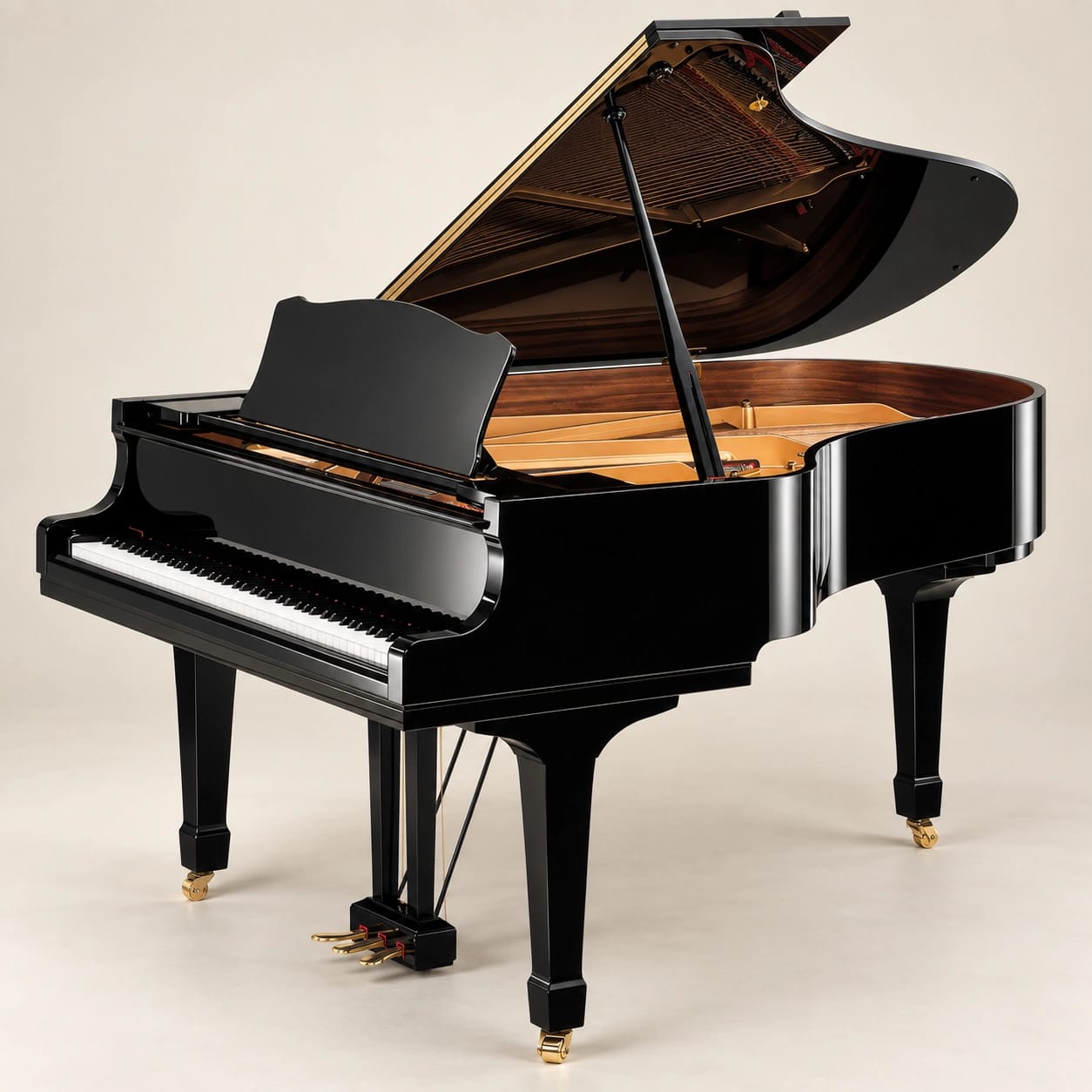
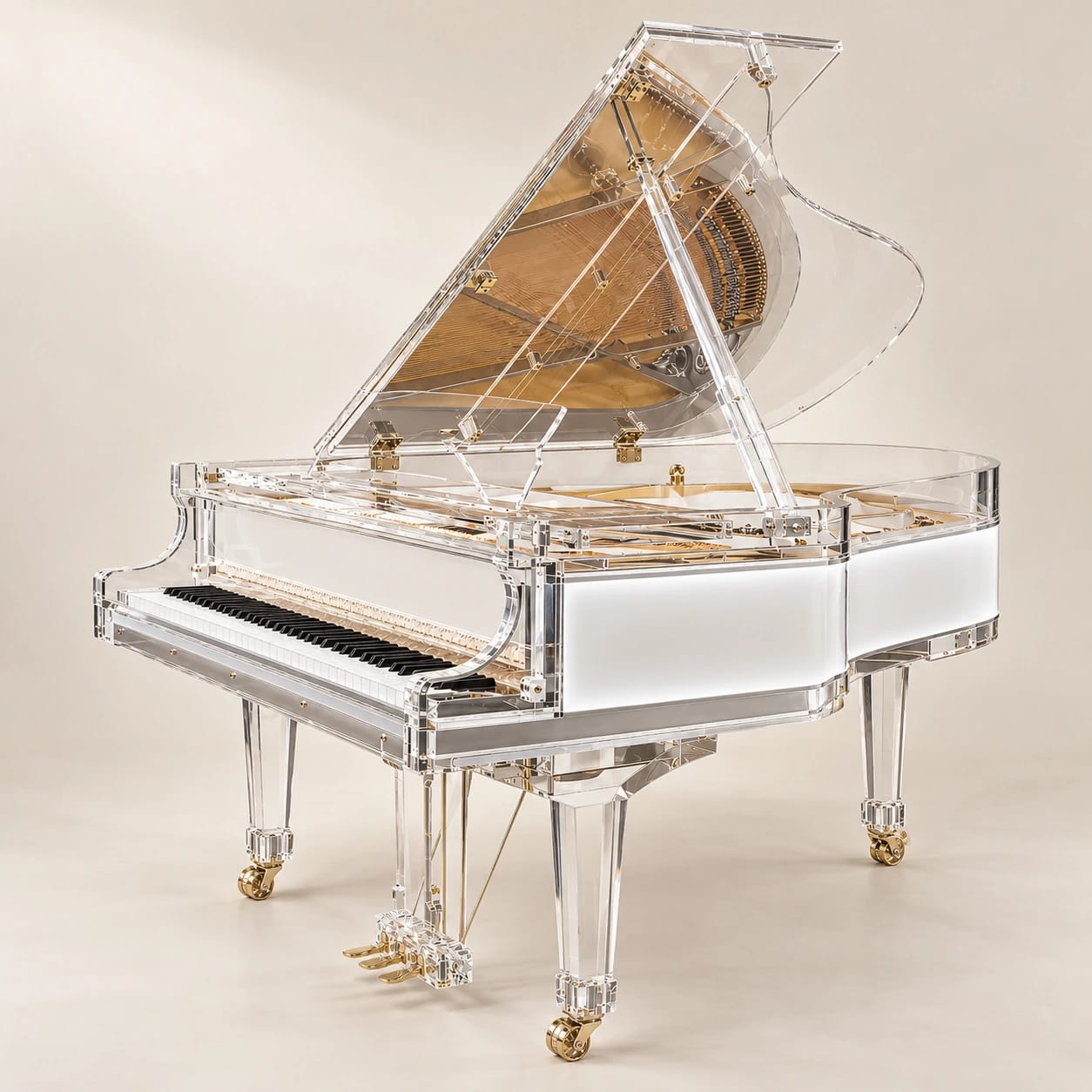
Studio visualisations. Date availability and venue arrangements are confirmed separately.
At a glance
Fit the piano into the reception programme
Define the entertainment role
List performance moments and the musician’s first required use.
Choose the named model
Obtain musical and visual acceptance where needed.
Review the full room layout
Include tables, service, entertainment and the proposed instrument position.
Confirm the build sequence
Coordinate specialist placement, optional tuning and audio preparation.
Settle the collection plan
Agree access, timing and the responsible handover role.
Let’s talk about your hire
Have a date or venue in mind?
Tell us the occasion, the piano and the details you know. We can help work through the rest.
The practical details
Plan your hire with confidence.
Explore the parts that matter to your plans. If you’re unsure, we can talk them through with you.
A little more about this hire
At a wedding reception, the piano has to work within a room that changes through the evening. Guests arrive, meals are served, speeches happen and the entertainment programme develops. A useful hire plan explains the instrument's place in that sequence as well as the practical arrangements for bringing it in and collecting it.
Start with the reception music you want, then connect the musician, venue and hire team around one proposal. The questions are specific: which piano, where it will remain, when it is first needed, what preparation is requested and how the room will be accessed after the celebration. Those answers are more useful than a generic wedding package description.
Explore the topics on this page
Decide what the piano will do during the reception
Describe the actual musical role before choosing the hire period. The piano might accompany a singer during arrival, support a featured performance, provide music during dinner or appear for a particular moment. Ask the musician and reception coordinator which parts of the programme require the instrument and when the player needs to check it.
Read the detail about Decide what the piano will do during the reception
A short performance can still require the piano to remain in the room for a longer period. Delivery, preparation and collection depend on the venue's access and the agreed supplier arrangements, not just the minutes of music. Include those needs in the enquiry rather than assuming the hire begins at the first note and ends at the last.
Identify who is supplying the performer and who manages the entertainment schedule. Piano hire does not automatically include a pianist, vocalist, audio equipment or an operator. If several entertainment suppliers are involved, give each a clear role so a missing responsibility is not hidden behind the phrase “live music organised”.
Keep any visual purpose visible too. If the piano is intended as part of the room styling when it is not being played, tell the supplier and venue. That affects the proposed position and the period it needs to remain accessible, even though it does not change the instrument into an unrestricted display prop.
Choose the model for the musician and the room
Piano Hire Australia's current grand pianos are the white Stenberg 152, Gordon; black Yamaha C3, Sebastian; and clear Teschendorf M170, Oscar. Refer to the exact model when enquiring about your reception date. Availability is confirmed for the actual booking, not established by the instrument appearing in the collection.
Read the detail about Choose the model for the musician and the room
Ask the musician to consider the proposed instrument for their programme. If they have a specific requirement, send it to the hire team early and ask for a direct response. Do not assume a finish preference resolves the musical question, or that all grand pianos satisfy the same performer brief.
Review the visual choice in relation to the reception's actual lighting, backdrop and furniture. The stylist and photographer can identify whether the piano should be a focal point or a quieter part of the composition. Avoid absolute claims that a white or black piano is always the right wedding choice; the room and desired images provide the context.
If a model change becomes necessary, obtain the relevant acceptance again. The couple's visual approval and the musician's practical approval may be separate. Record the final choice in the shared run sheet so the venue and production team do not continue planning around an earlier instrument.
Place the piano within the full reception layout
Review the proposed position against tables, service routes, the dance floor, speeches and the entertainment area. Ask the venue how the room will operate throughout the event, including any furniture changes. A piano position that appears attractive in an empty room may conflict with the actual reception plan.
Read the detail about Place the piano within the full reception layout
Show the instrument area, performer and related audio equipment on a simple layout. Ask the appropriate venue and supplier specialists to assess the proposal. This page does not provide a clearance calculation, stage rating or floor-load approval. The drawing communicates intent; it does not certify the physical arrangement.
Consider the musician's practical relationship to the programme. They may need to see an event cue or another performer, while the couple may want the piano visible in photographs. Identify the essential requirements and discuss them together. Do not depend on spontaneous repositioning to solve competing sightlines later in the evening.
Keep the agreed position in the current event plan. If a new table, backdrop or stage changes the proposal, send the revision to the hire team before the day. The final layout should show where the instrument remains when it is not being played, rather than treating it as something that can be moved aside by general venue staff.
Coordinate bump-in with catering and production
Ask the venue for the actual loading location, route and permitted access arrangements. Include stairs, stages, lifts and any restrictions in the information supplied for assessment. Do not assume the guest entrance is the delivery route or that a room being available for decoration means it is ready for instrument placement.
Read the detail about Coordinate bump-in with catering and production
The reception build may involve several suppliers using the same space. Have the event coordinator sequence deliveries and preparation so the agreed piano route is available. Floristry, furniture, audio cases and catering equipment should not inadvertently occupy the path needed for specialist movement. This is a coordination task, not a request for other crews to help move the piano.
Give the hire team the first required use, including the musician's check or rehearsal. Ask what delivery and optional tuning arrangements can be confirmed, then place them in the run sheet. Avoid relying on a historic contractor name or a previous event's arrival window; use the response for this booking.
If the reception is in an upper-level room or on temporary staging, make that explicit. The responsible building or staging provider needs to assess their part using current information. A venue hosting weddings regularly does not by itself establish that the proposed piano route or platform is suitable.
Make the entertainment handovers clear
Put the piano-related moments into the reception programme alongside speeches, meal service and other entertainment. The musician should know who gives the cue and how changes will be communicated. A brief run sheet can be enough if it identifies the important moments and the role responsible for decisions.
Read the detail about Make the entertainment handovers clear
Discuss optional on-site tuning and any performer preparation before finalising call times. Keep it distinct from audio setup and soundcheck. The instrument service and the production team's microphones, reinforcement and monitoring are different responsibilities, even when they happen in the same area.
If another performer will use the piano, share the proposed model and agreed use with them too. Do not allow a guest performance or additional act to introduce an unapproved technique, attachment or movement. A change in who plays may require a conversation about the intended use, particularly if the original booking described something more limited.
During the reception, the coordinator should be the point of contact for practical changes. The couple need not manage supplier logistics while hosting their guests. If the programme runs late, contact the relevant parties rather than quietly assuming that the hire and collection arrangements move with it.
Give the musician a clear way to distinguish a programme cue from an informal guest request. The event coordinator can decide how spontaneous contributions fit the reception, while the supplier's agreed use still governs the instrument. This prevents a guest's enthusiasm from becoming an unapproved change in performance or handling. The coordinator should also know who can answer a musical question if the originally engaged performer is temporarily away from the room.
Check the run sheet from the perspective of the person who joins the event late. They should be able to see whether the piano is currently in use, waiting for another performance or released for collection. A short status note is more helpful than assuming everyone has followed the whole evening. It also gives pack-down teams a clear reason to preserve the agreed area and route.
After a programme revision, update the operational note rather than relying on an announcement made only to one supplier. The piano may remain in the same place, but its last use or the availability of the collection contact can still change. Keeping those details together protects the reception flow without claiming that every late request can be accommodated.
Resolve late collection before the event
Ask the venue what access is available after the reception and identify the person who can provide it. The end of guest service, the closing of the building and the supplier's possible collection arrangements may be different times. Put the actual constraints in the enquiry instead of requesting “pickup after the wedding” without further detail.
Read the detail about Resolve late collection before the event
Late-night collection is not promised by this page. Ask what can be arranged for the date and location. If collection on another day is being considered, include the full hire period and confirm how the instrument can remain in the agreed place. Do not assume that overnight storage at the venue or a next-day handover is automatically permitted.
Plan the route while other suppliers pack down. A clear daytime entrance can become blocked by stacked furniture or cases after an event. The venue and coordinator should keep the agreed collection route available and avoid assigning piano movement to general pack-down crew.
Same-day hire means delivery and collection on the same booked future date. It does not mean an immediate booking today, and it does not guarantee every combination of arrival and departure times. Online booking needs at least two days' notice; unusual timing requests should be discussed and confirmed through the appropriate enquiry process.
Disclose ceremony use and room changes in the same enquiry
If the piano is also intended for the ceremony, describe that use from the beginning. Give both locations or rooms, the proposed positions and the timing between them. The supplier needs to understand whether the request is one continuous use in one place or a plan involving an additional movement.
Read the detail about Disclose ceremony use and room changes in the same enquiry
Do not assume a ceremony-to-reception move is a standard inclusion. Ask whether it can be assessed and arranged, and who would carry it out. Venue staff, musicians and guests should not be assigned the task by default. The reception schedule must reflect the agreed method rather than a guess about how quickly the piano can be repositioned.
If the ceremony changes location because of weather or another reason, tell the hire team which part of the plan is affected. Any outdoor or partly enclosed element requires individual assessment and does not become approved merely because the reception is indoors. Keep the alternative plan explicit until it has received the relevant response.
A single coordinator should hold the current combined plan. That helps prevent one supplier working from the ceremony version while another expects a different reception position or collection time. The accepted booking should describe the whole arrangement that the wedding team intends to use.
Confirm a reception booking with a complete scope
Prepare the enquiry with the exact venue address and room, reception date, proposed model and entertainment role. Add the first required use, requested optional tuning, access information and collection constraints. Include ceremony use or room changes if relevant, and mark unresolved decisions clearly.
Read the detail about Confirm a reception booking with a complete scope
Use the live booking or current quote for the cost and inclusions. A reception is not a fixed package in this guide, and no numeric hire or delivery amount should be inferred from another wedding. Review the current terms and ask how proposed changes to date, venue or duration need to be handled.
Before the event, check that the venue, musician and coordinator share the same final version. The operational note should identify the instrument position, preparation sequence, cue role and collection handover. Keep personal and payment information in the actual booking correspondence rather than distributing it across the whole supplier team.
The tool on this page builds a copyable reception brief. It does not make a reservation, approve a venue or confirm late collection. Use its questions to identify the decisions that still need a response, then replace requested arrangements with the actual confirmations as they arrive.
Want to organise your notes first?
Your enquiry
Wedding reception piano brief
Build a shared note for the venue, musician and hire enquiry. This does not confirm a late collection or reserve stock.
Your notes stay in this page. Nothing is sent or saved automatically.
0 / 4,000 enquiry-note characters. Only answered fields and selected checks are included.
Read or select your brief
Reception piano planning brief

Reception date and room: To confirm
Music programme: To confirm
Proposed instrument: To confirm
Layout and build access: To confirm
Preparation and first use: To confirm
Collection or overnight request: To confirm
Ceremony or room changes: To confirm

Planning checklist
[ ] Music and performer responsibility defined
[ ] Named instrument accepted for the programme
[ ] Reception layout includes the piano throughout the event
[ ] Bump-in route and special access disclosed
[ ] Preparation and audio responsibilities separated
[ ] Late or next-day collection specifically requested
[ ] Any ceremony movement assessed in advance
[ ] Venue handover role confirmed

Planning notes only. Piano availability, access and arrangements need confirmation before booking.
Good to know
Your questions, answered.
Can the piano be collected late after the reception?
Ask about the exact date, venue and required timing before relying on that arrangement. Late collection is not guaranteed here. The venue also needs to confirm who can provide access and whether the agreed route remains available during pack-down. If a different collection date is proposed, include the resulting hire period and obtain agreement for the instrument to remain at the venue.
Can the musician’s sound equipment be included?
Do not assume an audio package is part of the piano hire. Ask the musician, venue or production provider who supplies microphones, reinforcement, monitoring and any operator needed for the reception. Optional on-site tuning is a separate instrument-preparation choice. If you request an additional service from the hire team, rely on the specific confirmed scope rather than treating it as an automatic wedding inclusion.
Can venue staff move the piano away for dancing?
Do not plan that movement without prior assessment and agreement with the hire team. Explain the desired room change and timing in the enquiry, including the proposed second position. The venue layout may instead be planned around an instrument that remains in one place. A piano being unused during dancing does not make it general furniture that staff can reposition as part of the room reset.
Is one booking enough for ceremony and reception?
The enquiry can describe both parts, but the accepted scope needs to cover the complete use, locations, timing and any movement. Do not assume a ceremony booking automatically includes transport to another room or venue. Give the supplier the full plan and ask what can be arranged. Keep the final combined version with the wedding coordinator so all parties work from the same information.
Let’s talk about your hire
Tell us what you’re imagining.
Tell us the occasion, the piano and the details you know. We can help work through the rest.