Wedding ceremonies
Piano hire for wedding ceremonies
Choose a grand piano for the musical moments in your wedding ceremony. Share the proposed venue, date and performer requirements so we can discuss the instrument, preparation and ceremony arrangements.
Black, white and clear grand pianos. We confirm availability and arrangements for each booking.
At a glance
What matters for your hire.
Choose the ceremony music and proposed piano with your musician, then confirm venue permission, the intended position and the full delivery route. Plan preparation before guests arrive and identify who gives musical cues during the ceremony. Outdoor or partly enclosed locations need individual assessment. If the piano is also wanted at the reception, request the complete plan, including any movement; do not assume venue staff can move it. Availability, access and delivery or collection arrangements require confirmation for the actual booking.
The collection
Find your grand piano.
Explore the instrument as well as its finish. We can talk through the right option for your plans and dates.
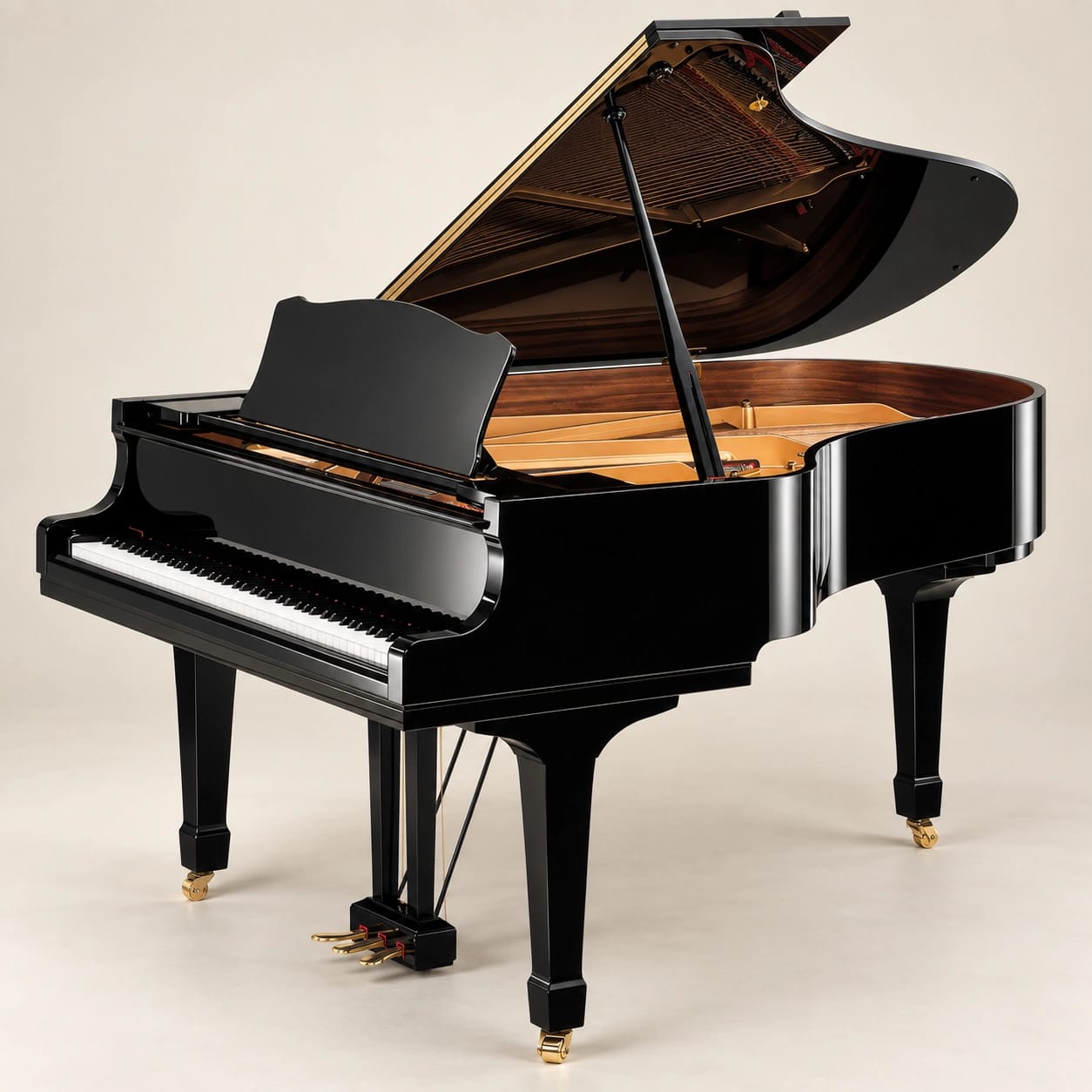
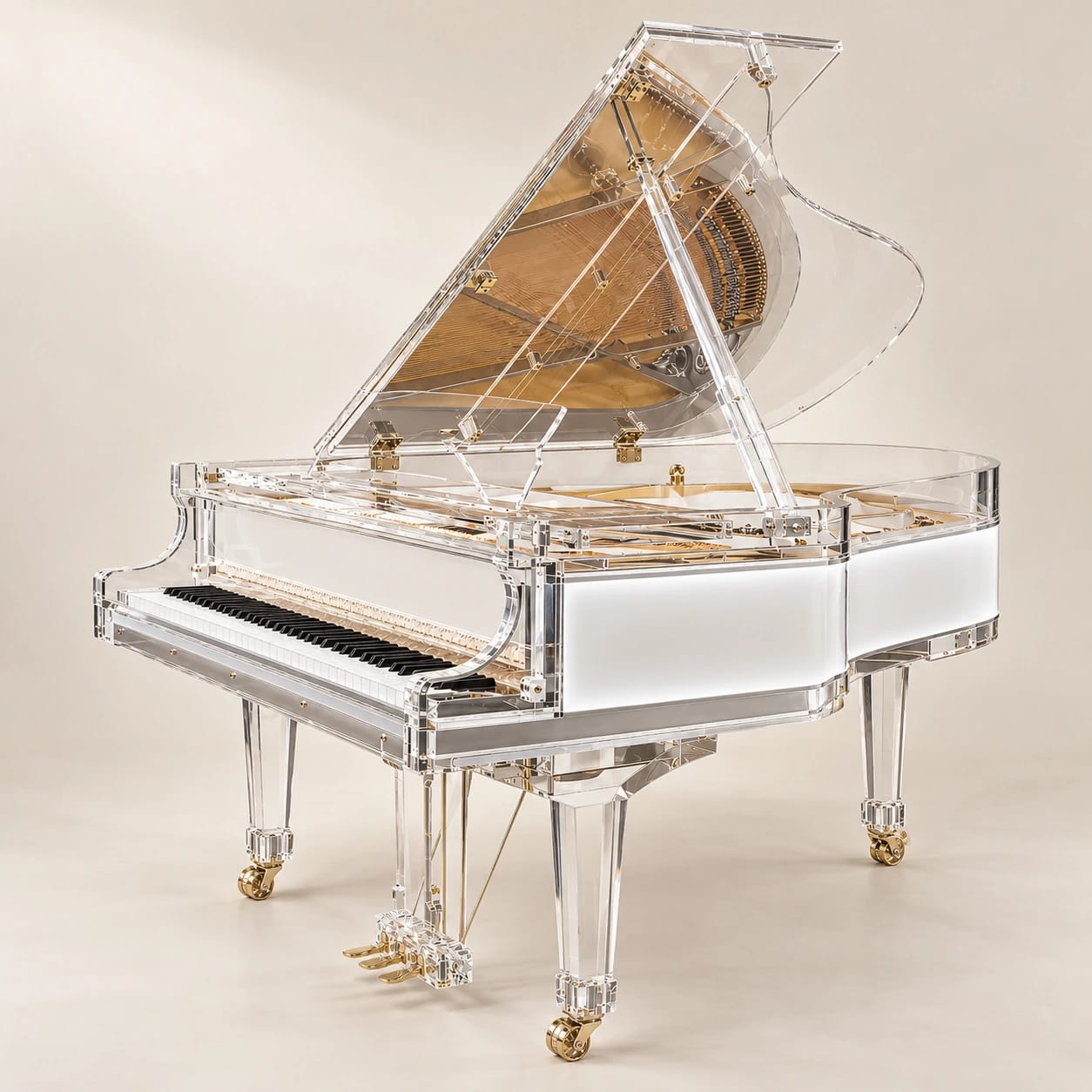
Studio visualisations. Date availability and venue arrangements are confirmed separately.
At a glance
From ceremony music to an agreed piano plan
Describe the ceremony music
List the moments, performer and first required use.
Choose the proposed model
Consider the instrument with the musician and styling team.
Assess the ceremony position
Confirm venue permission and submit route and layout details.
Agree preparation and transitions
Request tuning if needed and disclose any reception movement.
Confirm the day’s handover
Use agreed logistics and assign a practical coordinator.
Let’s talk about your hire
Have a date or venue in mind?
Tell us the occasion, the piano and the details you know. We can help work through the rest.
The practical details
Plan your hire with confidence.
Explore the parts that matter to your plans. If you’re unsure, we can talk them through with you.
A little more about this hire
A grand piano can be part of the ceremony itself: the music before guests are seated, an entrance, a signing moment or the close of the service. The hire plan needs to follow those moments while fitting the venue's access and the musician's preparation.
For a ceremony, the most useful early decision is where the piano will remain during the proceedings. Once the instrument, position and timing are agreed, the celebrant, musician and venue can plan around the same arrangement. If the idea includes a garden, marquee or a move to the reception, explain that at the enquiry stage so it can be assessed rather than assumed.
Explore the topics on this page
Match the piano hire to the ceremony moments
List the parts of the ceremony where live piano is wanted. The musician and celebrant can help turn those intentions into a simple cue plan. An entrance, a reflective pause and an exit each have a different relationship to the people moving through the space. The hire enquiry does not need your entire ceremony script, but it should describe the instrument's role accurately.
Read the detail about Match the piano hire to the ceremony moments
Decide whether the same musician is playing throughout or whether someone else will use the piano for a particular moment. Share the proposed model with the relevant players so they can consider it. A grand piano hire should not be assumed to include a pianist, singer or sound system; those arrangements need their own confirmation.
Keep the personal music choices separate from the physical logistics. You can decide on the feeling of the ceremony while the supplier and venue assess the instrument position. Neither decision needs to be disguised as expertise in the other. A clear musical brief and a clear access brief are easier to answer than one vague request for “a wedding piano”.
If recorded music is also part of the ceremony, ask the person responsible for audio how the live and recorded moments join together. That is a production coordination question, not an automatic inclusion in the piano hire.
Agree the point at which the ceremony music plan is considered final enough for the instrument enquiry. The couple may continue refining song choices without changing the piano's role, while adding a second performer or a separate rehearsal can affect the practical brief. Ask the coordinator to recognise those differences so ordinary musical decisions do not trigger unnecessary supplier messages, and meaningful changes are not missed.
A useful ceremony note states the cue role, the musician's first access requirement and whether the piano remains in place afterwards. It need not include private vows or personal service wording. This keeps the logistical document focused and makes it easier to share only the information each supplier needs.
If the ceremony start is flexible, tell the coordinator what flexibility has actually been agreed with the venue and suppliers. Do not assume all preparation or collection can move with the guest programme. The music plan can be responsive to the ceremony while the responsible person keeps the physical hire arrangements clear. Any required variation should be discussed through that person, with the supplier's response recorded before it is treated as accepted.
Select a named instrument with both player and styling in mind
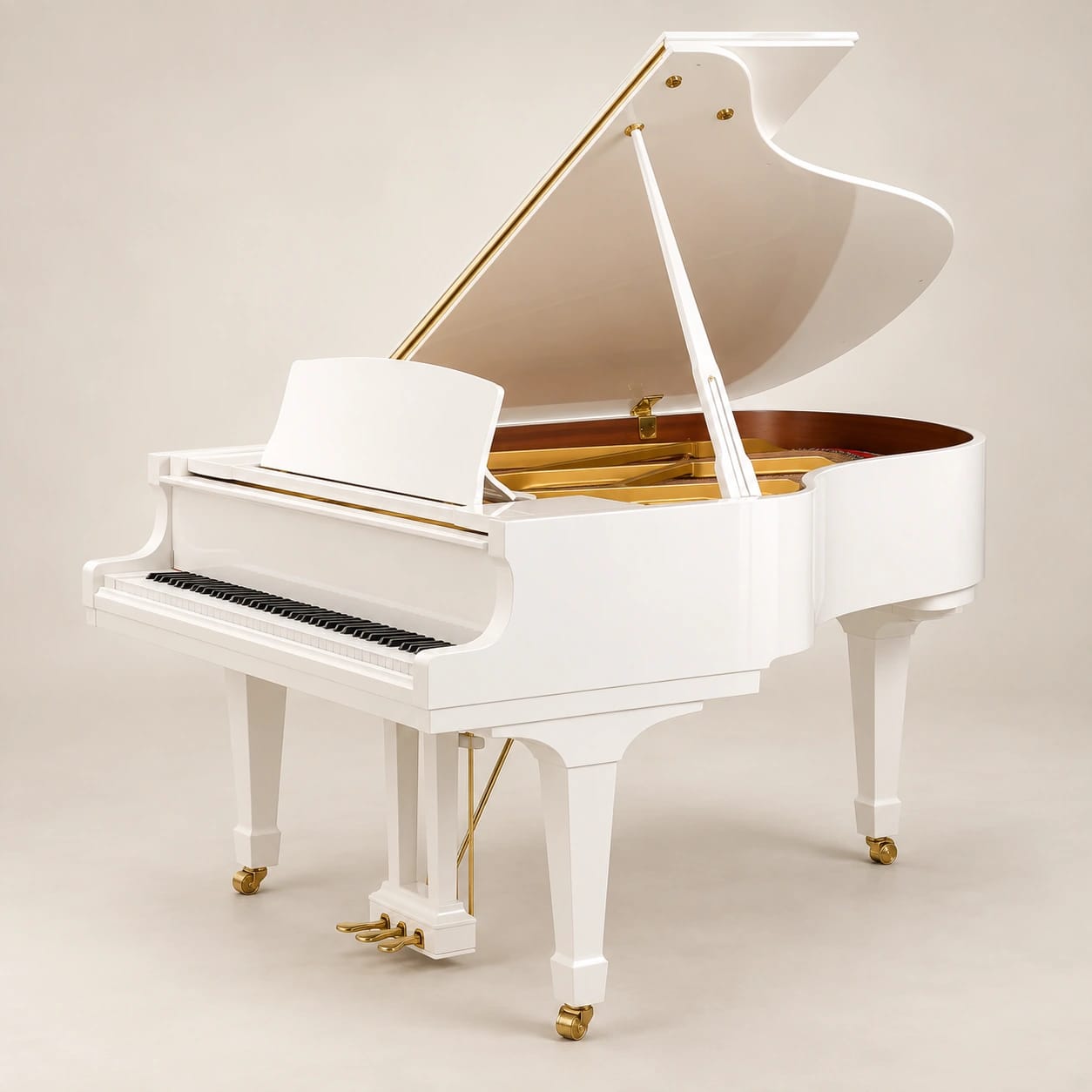
The current collection includes the white Stenberg 152, Gordon; the black Yamaha C3, Sebastian; and the clear Teschendorf M170, Oscar. Use the exact model in your enquiry and ask about availability for the ceremony date. A finish preference is a useful starting point, but it does not reserve the instrument or establish its suitability for the location.
Read the detail about Select a named instrument with both player and styling in mind
Ask the musician to consider the proposed piano for the music they will perform. At the same time, review the finish with the person responsible for the ceremony styling. The visual team may want the instrument to sit quietly within the room or become a visible focal point. These are preferences to discuss, not universal rules about which piano is right for a wedding.
Use the actual venue setting when considering the look. Collection photographs and visualisations can communicate the instrument, but they are not proof of a past event at your venue or a promise that your ceremony will look the same. Ask for current information if a detail is essential to the choice.
If a different model is proposed later, check both musical and visual acceptance again where needed. Keeping the decision explicit avoids a last-minute assumption that all three instruments are interchangeable for every ceremony plan.
Choose a position that works with the ceremony layout
Discuss the piano position alongside guest seating, the couple's position, the celebrant and the intended aisle or movement route. The musician should be able to understand the cues and the venue should review how the proposed arrangement works within the room. Do not choose the position solely because it fills an attractive corner in a photograph.
Read the detail about Choose a position that works with the ceremony layout
Prepare a simple layout showing the instrument area and surrounding activity. Include the performer and any audio equipment the event team plans to use. The diagram is for discussion; it does not prove that the piano fits or that a floor or platform is suitable. The responsible venue and moving specialists need to assess those questions.
Think about the views that matter during the ceremony. The couple, guests, photographer and musician may each have different priorities. Ask them to identify any essential sightline rather than trying to satisfy every possible camera angle through repeated piano moves. An agreed position usually gives the rest of the plan a stable reference.
If the ceremony layout changes, pass the new position and route information to the hire team. An earlier assessment applies to the proposal that was supplied, not automatically to another room, stage or side of the venue.
Treat gardens and marquees as requests for assessment
If any part of the proposed ceremony is outdoors, say so clearly in the first enquiry. Describe the location, structure and intended position, and ask what information is needed for assessment. Do not assume that a garden ceremony, marquee, veranda or partly enclosed space is suitable for a grand piano simply because it is commonly used for weddings.
Read the detail about Treat gardens and marquees as requests for assessment
Weather planning belongs in the venue and supplier conversation before the day. A favourable forecast, an umbrella or a drawn canopy is not an approval for the instrument. This page does not promise outdoor suitability, weather protection or a method for managing exposure. The proposed use needs a specific response from the responsible parties.
Discuss an alternative ceremony arrangement with your organiser while the assessment is pending. If the plan changes to an indoor room, provide that room's route and position for review too. A backup venue plan is only useful when the people handling the instrument know what it involves and can confirm the relevant arrangements.
Keep the decision deadline visible. The venue may need to decide on the ceremony location before the couple arrives, while the hire team needs confirmed logistics. Agree how those decisions will be communicated rather than leaving a last-minute location choice to someone who cannot approve a piano movement.
Give preparation its own place before the ceremony
Work backwards from the first moment the musician needs the piano. That may be a player check or rehearsal before the guest arrival period. State the requested delivery and preparation sequence in the enquiry, then use the actual supplier confirmation when finalising the wedding run sheet.
Read the detail about Give preparation its own place before the ceremony
Optional on-site tuning can be requested. Discuss it with the musician and coordinate the agreed preparation with the venue's other work. Florists, stylists, audio crew and ceremony staff may all need the same area. The organiser should make the sequence clear rather than expecting each supplier to find an empty moment independently.
Online booking requires at least two days' notice. Same-day hire means delivery and collection on one booked future date, not that a piano can be ordered for immediate delivery today. A precise or unusual schedule should be raised as an enquiry, with the actual date and time constraints stated plainly.
Avoid placing a delivery promise into invitations, vendor schedules or musician call times before it is confirmed. The ceremony team can prepare the rest of the programme while the logistics are being resolved, but the instrument should only be described as secured once the relevant booking arrangements are accepted.
Coordinate cues and guest arrival without expanding the hire scope
Nominate the person who gives the musician the ceremony cues. It might be the celebrant or another agreed organiser. The pianist needs to know when to start, pause or finish a piece and who will communicate a change. A short cue sheet is more useful than expecting the musician to infer every moment from guest movement.
Read the detail about Coordinate cues and guest arrival without expanding the hire scope
Keep audio responsibilities explicit. If microphones, speakers or other equipment are needed, ask the venue or audio provider to plan them. The piano hire does not automatically include reinforcement or an operator. If the musician has particular requirements, share them early with the responsible production role.
Arrange for a practical coordinator to handle supplier questions while the couple is preparing. That person should know the agreed position and schedule, and should contact the hire team if something changes. They should not authorise a new movement or unusual use simply because the wedding party is busy.
Before guests arrive, check that the instrument area and agreed routes are clear of set-dressing clutter and other equipment. This is coordination of the room, not an instruction to move or adjust the piano. Let the agreed specialist arrangements govern placement and any necessary change.
Plan the transition to the reception explicitly
Decide whether the piano is needed only for the ceremony or for later parts of the wedding as well. Give the supplier the complete use, locations and timing in the enquiry. A longer musical programme may be straightforward to describe, but a second position or venue adds questions that cannot be answered by extending the ceremony label alone.
Read the detail about Plan the transition to the reception explicitly
If the reception uses another room, show both proposed positions and the route between them. Ask whether and how the movement can be arranged. Do not assume that venue staff, the musician or guests can roll the instrument into the new space. A changeover is a separate practical requirement that needs agreement.
If the piano remains in one place, consider how the venue will use that area after the ceremony. Guest movement, furniture changes and supplier pack-down should be planned around the agreed instrument position and collection route. The reception team needs to know the piano is still there even if it is no longer being played.
Confirm whether collection is requested after the ceremony, later that day or on another date. The event ending does not automatically create an available collection window. Use the accepted arrangements to decide who provides access and who remains responsible for the handover.
Send a ceremony enquiry that joins the decisions together
Include the ceremony date, exact venue address and room or proposed outdoor location. State the named piano under consideration, the musical role and the first required use. Add the venue's access information and a simple position plan. If any part is provisional, label it rather than presenting a preference as an agreed arrangement.
Read the detail about Send a ceremony enquiry that joins the decisions together
Describe optional tuning, any rehearsal use and whether the piano is wanted at the reception. Ask about the specific schedule and any proposed movement. The current booking or written quote controls the cost and inclusions; this page does not provide a fixed wedding package price or promise availability.
Before confirming, review the current hire terms and ensure the venue and musician are working from the same version of the plan. Keep the accepted booking information with the wedding coordinator, while sharing only the operational details each supplier needs. There is no need to distribute personal payment information around the vendor team.
Use the brief builder on this page to organise the ceremony plan. It creates a note you can copy into an enquiry, not a reservation or location approval. The checklist is most useful when it shows which decisions still need an answer before the wedding schedule is finalised.
Want to organise your notes first?
Your enquiry
Wedding ceremony piano brief
Gather the ceremony decisions without personal wedding-party details. This note does not reserve a piano or approve an outdoor site.
Your notes stay in this page. Nothing is sent or saved automatically.
0 / 4,000 enquiry-note characters. Only answered fields and selected checks are included.
Read or select your brief
Ceremony piano enquiry brief

Ceremony date and location: To confirm
Music and performer: To confirm
Proposed instrument: To confirm
Position and route: To confirm
Preparation and first use: To confirm
After the ceremony: To confirm

Planning checklist
[ ] Musical role and performer responsibility are clear
[ ] Exact model considered by the musician
[ ] Venue permission and position discussed
[ ] Complete access information supplied for assessment
[ ] Outdoor elements remain individually assessed
[ ] Preparation is separate from guest arrival
[ ] Reception use and any movement disclosed
[ ] Collection responsibility assigned

Planning notes only. Piano availability, access and arrangements need confirmation before booking.
Good to know
Your questions, answered.
Can a grand piano be used for an outdoor ceremony?
An outdoor or partly enclosed proposal needs individual assessment. Describe the actual site, structure, access and intended use to the hire team and venue. This page does not claim outdoor suitability or that a marquee, roof or forecast makes the arrangement acceptable. Keep an alternative ceremony plan available while the relevant questions are being resolved, and obtain a specific response before treating the location as approved.
Can we use the same piano at the reception?
Include the reception in the original enquiry, with its room or venue, timing and proposed position. If a move is involved, it needs to be assessed and agreed separately; do not assume venue staff can handle it. If the piano stays in place, the venue still needs to plan later activity and collection around it. The accepted booking should describe the full intended use.
Does the hire include a wedding pianist?
Do not assume a musician is included. Arrange the performer separately and share the proposed instrument with them so they can consider it for the music. The celebrant or coordinator should also agree how cues will be given during the ceremony. Audio equipment and an operator are separate questions for the venue or production team unless they have been expressly included in an agreed service.
How early should the piano arrive before guests?
Give the supplier the first required use, including any musician check and optional preparation, and ask what delivery arrangements can be confirmed. There is no universal arrival interval that suits every venue or schedule. Coordinate the accepted sequence with the other wedding suppliers. Online booking needs at least two days’ notice, and urgent or tightly timed requests remain enquiries until confirmed.
Let’s talk about your hire
Tell us what you’re imagining.
Tell us the occasion, the piano and the details you know. We can help work through the rest.