For property developers
Piano hire for property developers: a project coordination guide
Coordinate a grand piano for your development’s presentation space. Share the display concept, project dates and site information so we can discuss the instrument, placement and proposed hire period.
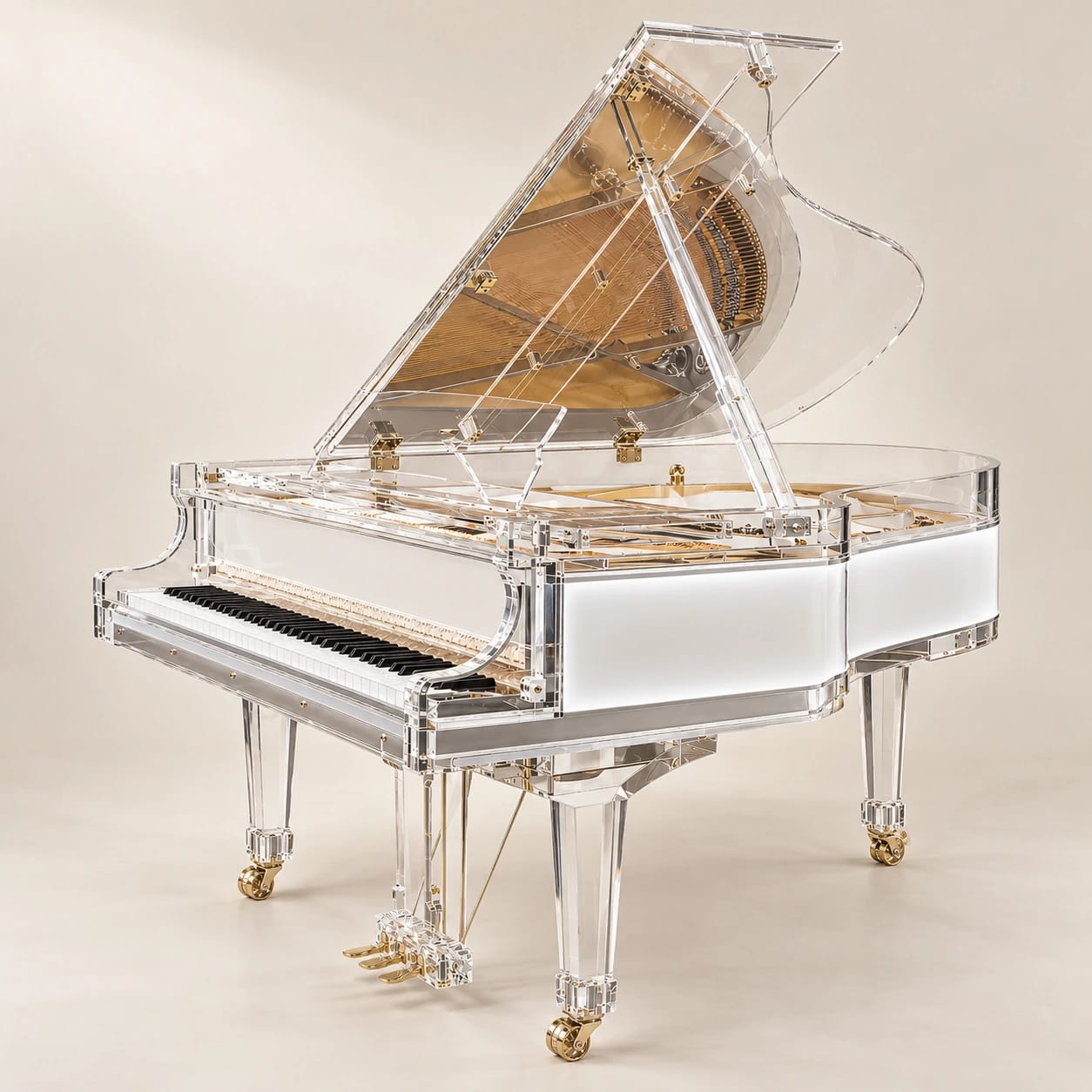
Black, white and clear grand pianos. We confirm availability and arrangements for each booking.
At a glance
What matters for your hire.
Give the piano a defined purpose, name the role authorising the hire, align the requested period with site readiness and launch milestones, and document the actual room and route. Separate launch performance needs from continuing display use. Assign responsibility for changes, extensions and collection throughout the project.
The collection
Find your grand piano.
Explore the instrument as well as its finish. We can talk through the right option for your plans and dates.
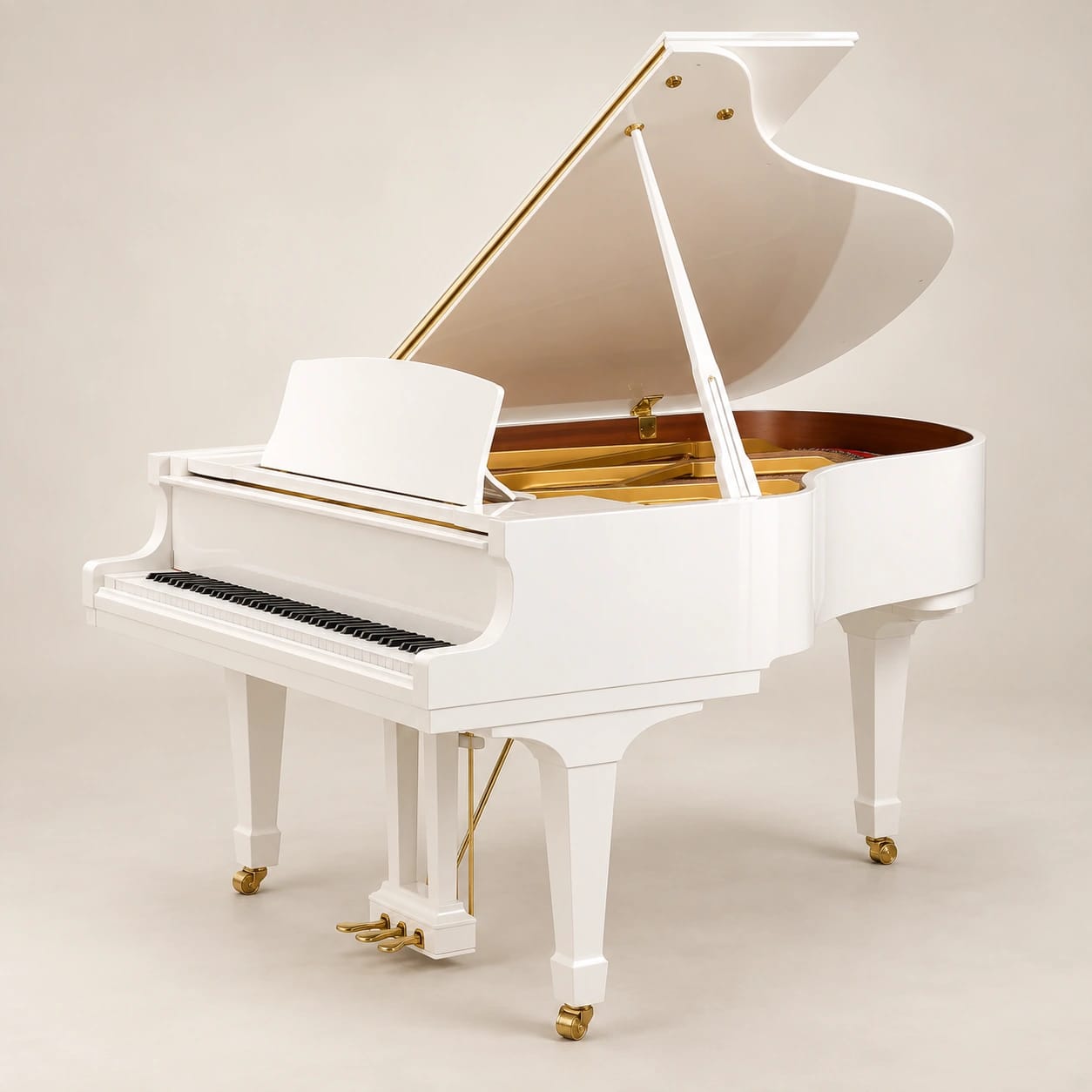

Studio visualisations. Date availability and venue arrangements are confirmed separately.
At a glance
Coordinate the instrument across project phases
Define the project use
Separate launch activity from the continuing display.
Assign decision owners
Identify design, procurement and site responsibilities.
Confirm the physical proposal
Use the current room plan and complete route evidence.
Agree the booking scope
Match the quote to the real period and requested services.
Hand over and conclude
Maintain responsibility through changes and collection.
Let’s talk about your hire
Have a date or venue in mind?
Tell us the occasion, the piano and the details you know. We can help work through the rest.
The practical details
Plan your hire with confidence.
Explore the parts that matter to your plans. If you’re unsure, we can talk them through with you.
A little more about this hire
A developer display can involve a design team, project manager, sales team, site representative and several suppliers. A grand piano may be a small part of the overall project budget, but its location and timing still need a clear decision owner. The instrument should enter the plan as a defined hire arrangement, not as an unresolved item passed between departments near launch.
This guide focuses on the developer’s coordination task. It helps connect the display intention to procurement, site readiness, campaign milestones and responsibility after the installation team leaves. It does not claim that a piano increases sales or project value, and it does not describe invented developments as examples of past work.
Use the process to prepare a specific enquiry for the actual sales centre or display. Current availability, the route and placement assessment, the proposed period and accepted terms all remain booking-specific. A project programme or purchase request does not by itself confirm the supplier’s arrangement.
Explore the topics on this page
Define the display objective without promising project results
State how the piano is intended to contribute to the setting. It might be part of a furnished display room, a focal point in a sales centre or an instrument for a launch that later remains on display. Explain that purpose in practical terms so the design and project teams can agree what is actually being requested.
Read the detail about Define the display objective without promising project results
Separate design intent from a commercial forecast. This guide does not establish increased enquiries, faster sales or a change in property value. The project’s marketing decisions should use its own evidence and objectives. The piano proposal needs a clear scope even when it is part of a much larger presentation strategy.
Identify every intended use from the start. If a launch performance is followed by a static display, include both phases. If later photography or events are already planned, describe them too. A brief that says display only should not silently become a request for additional playing, services or position changes once the instrument is on site.
Assign a decision owner across the project teams
Identify which role can authorise the design choice, which role can confirm the hire commitment and which role controls the premises. They may sit in different teams. Record those responsibilities so the supplier is not left interpreting whether a request from a designer, sales representative or site manager is an approved instruction.
Read the detail about Assign a decision owner across the project teams
Use one coordination lead to maintain the current brief. Other contributors can supply the information they own, but the final proposal should be consistent. A drawing approved by the design team, a date from the launch programme and a route described by the site team need to refer to the same room and arrangement.
Keep procurement approval separate from supplier acceptance. Internal authorisation may allow the project to proceed with a request, while availability and physical arrangements still need confirmation. Mark those stages clearly. This avoids a purchase request or budget allocation being circulated as proof that the instrument is reserved and the delivery plan settled.
For a project with several approval stages, add a simple decision trail to the brief. Record the role that selected the visual proposal, the role that authorised the commitment and the response that confirms the supplier arrangement. Keep private procurement documents in the proper project system. The brief only needs to show the current status and the next unanswered question. This makes a handover easier when another project manager takes over: they can see which parts are settled, which remain conditional and who can answer a new question without reopening every design conversation or assuming that an internal approval also settled access and availability.
Choose the model against the actual design and use brief
The current collection comprises the white Stenberg 152, black Yamaha C3 and clear Teschendorf M170. Use the actual model name in the design proposal and the procurement brief. A generic rendered piano in an architectural visualisation should not be treated as a specification for an instrument that has not been selected.
Read the detail about Choose the model against the actual design and use brief
Explain which design features are essential and which are preferences. If the visual composition depends on a particular finish, say so before the project relies on it. If playing is planned, obtain the performer’s genuine requirements and include them in the enquiry. Appearance and performance requirements should be considered together rather than resolved in separate conversations.
Ask about availability for the real period. A display may remain longer than a launch event, and the requested instrument cannot be assumed available indefinitely. If alternatives are acceptable, identify who would approve a revised model and which parts of the design would need checking. Do not promise an automatic substitution or identical spare.
Connect site readiness to the requested installation
Describe the condition the premises will be in at the proposed arrival. If fit-out, furniture installation or other work is still being coordinated, identify what needs to be complete before the piano arrangement can proceed. Ask the authorised site representative for current information rather than relying on an early design drawing as a description of the finished route.
Read the detail about Connect site readiness to the requested installation
The project team should provide the relevant venue or site requirements to the business for assessment. Explain access controls, permitted supplier periods and the route to the proposed room. Do not infer that another supplier’s permission or equipment delivery establishes the piano’s access approval. The actual instrument and method need the appropriate consideration.
Keep readiness separate from the desired launch date. A project can have a fixed public milestone while the premises remain provisional. Make that dependency visible and communicate changes promptly. The supplier should not be expected to discover a materially different site condition on arrival or to solve an unresolved project handover at the same time as delivery.
Maintain one current plan for the room and route
Use a clearly labelled plan showing the intended piano position and the other furniture or displays expected to be present. Identify whether dimensions are measured, taken from current venue documents or approximate. If a drawing is a design concept rather than a verified site plan, state that distinction so it is not used as evidence of physical fit.
Read the detail about Maintain one current plan for the room and route
Document the complete authorised route from arrival point to final position. Include changes of level, turns, doors and any lift or stage access. The size-and-access guide can help organise the information. Do not calculate safe loading or route suitability from product figures; the relevant premises and delivery specialists need to assess the proposal.
Version the plan when the project changes. A revised partition, furniture layout or entrance arrangement may affect the earlier assessment. Explain what changed rather than sending a new drawing without context. The current approved project design and the current accepted piano arrangement should remain aligned as the display moves towards opening.
Separate the launch programme from the continuing display
A launch can create requirements that do not apply to the later display period. The piano may need to be ready for rehearsal, be played during a particular programme or have an optional tuning visit requested. Describe those requirements explicitly. The instrument remaining on site afterwards does not mean the launch preparation is automatically included.
Read the detail about Separate the launch programme from the continuing display
For the continuing display, identify who controls the space and what use is intended. If visitors, sales staff or later events will interact with the setting, ask about the relevant responsibilities and conditions. Do not assume a display hire grants unrestricted playing, relocation or additional event use without discussion.
Keep the transition between phases in the project handover. The installation or launch team may leave while the sales team remains responsible for the room. Give that team the accepted arrangement, the relevant contact route and a clear process for requesting changes. A long occupation period needs continuity of information as well as a confirmed first day.
Make procurement information support the real booking
Ask the project’s procurement role what information it needs and provide a concise, current scope to the supplier. The scope should identify the instrument, intended use, period, location, access and requested services. Where a project reference or billing detail is needed, share it privately through the appropriate process rather than placing it in a public planning tool.
Read the detail about Make procurement information support the real booking
Review the supplier’s actual quote alongside the internal request. Make sure the approved project scope matches what has been offered, including any conditions or questions still outstanding. Do not treat an internal template as a way to add unagreed obligations to the supplier’s arrangement or assume a required date has been accepted because it appears on a purchase request.
Keep separate contractors’ responsibilities distinct. Furniture installation, event production, site operation and instrument hire may be coordinated within one project but remain different scopes. Clarify uncertain interfaces before acceptance. This guide offers a coordination method, not legal procurement terms or a claim that any particular invoicing or contracting arrangement is automatically supported.
Plan longer occupation and possible programme changes
If the piano is proposed to remain beyond thirty nights, request an individual quote. Give a defined start and finish, and explain any uncertainty around the display period. Do not assume a rolling monthly product, open-ended reservation or automatic extension because the sales campaign has no fixed end.
Read the detail about Plan longer occupation and possible programme changes
Set a project review point for the collection date. Identify who will decide whether to request a change and who will obtain confirmation from the business. The published FAQs describe hire-time changes as reviewed case by case. A revised internal programme should not be treated as an accepted extension or a guarantee of continuing availability.
If the display moves to another room or site, describe the full revised proposal. The original access assessment and venue permission do not automatically apply elsewhere. Ask about the new location before committing the project team to a transfer, and do not arrange independent relocation on the assumption that the hire period permits it.
Give the sales and site teams a practical handover
The continuing team needs the information that affects the instrument, not every earlier design discussion. Provide the confirmed model, position, intended use, period and route for raising a concern or requesting a change. Keep the relevant accepted terms accessible to the responsible role and handle private contact details appropriately.
Read the detail about Give the sales and site teams a practical handover
Explain which actions are outside that role’s authority. A sales representative should not need to decide whether the piano can move for a later event, whether another person can work on it or whether the period can extend. Those questions should return to the business through the agreed process rather than being resolved informally on site.
If responsibility changes between teams, update the handover. A display can outlast the original project manager or launch coordinator, so continuity should not depend on one person remembering the arrangement. A short current record helps maintain the agreement without turning the instrument into an unmanaged part of the fit-out.
Include collection in the project close or next phase
Before the display ends, review how the premises will be used during the collection period. Another fit-out phase, a property handover or removal of other display items may change the route and available access. Confirm the current conditions and communicate relevant changes before the planned visit.
Read the detail about Include collection in the project close or next phase
Coordinate the sequence with the authorised site role and other suppliers. Keep the accepted access arrangement visible rather than assuming the piano can be moved temporarily to suit another contractor. Any position or route change needs assessment and agreement. The hire conditions remain relevant until the instrument has been collected and the arrangement concluded.
Retain a factual project record of the booking and accepted changes. For a future development, reuse the briefing structure but obtain current information about the new site, dates and instrument requirements. One completed project does not establish blanket service, a standing rate or guaranteed stock. A repeatable process works because its questions are consistent while its answers remain specific.
Want to organise your notes first?
Your enquiry
Build a developer display piano brief
Organise the project roles and dependencies without private addresses, billing details or access codes.
Your notes stay in this page. Nothing is sent or saved automatically.
0 / 4,000 enquiry-note characters. Only answered fields and selected checks are included.
Read or select your brief
Developer display piano coordination brief

Project purpose and phases: To confirm
Decision owners: To confirm
Site readiness dependency: To confirm
Instrument and position: To confirm
Period and change risk: To confirm
Continuing handover: To confirm

Planning checklist
[ ] Describe every project phase using the piano.
[ ] Separate internal approval from supplier acceptance.
[ ] Use the actual current model and room plan.
[ ] Make site readiness dependencies visible.
[ ] Document the complete authorised route.
[ ] Request optional services for launch use.
[ ] Assign ongoing responsibility after installation.
[ ] Confirm extensions and relocations explicitly.
[ ] Plan collection within the next project phase.

Planning notes only. Piano availability, access and arrangements need confirmation before booking.
Good to know
Your questions, answered.
Can a developer hire a piano for a sales centre display?
Submit the actual proposed use, location, dates and instrument preference for assessment. Explain whether it will be played at a launch or remain as a visual display. Availability, the route, placement and the complete hire arrangement need confirmation rather than being inferred from the type of project.
Can installation be booked before the fit-out is complete?
Explain the current site condition and the readiness milestones. The business needs accurate information about the proposed arrival and route. Do not present a design drawing or internal target date as confirmation that the premises and delivery arrangement are ready.
Does a purchase request reserve the piano?
Internal procurement approval and supplier acceptance are separate stages. Confirm the actual instrument, period and arrangements through the business’s process. A budget allocation or project reference should not be treated as proof of availability or an agreed delivery appointment.
Can the piano move to another display project later?
A new location or position needs its own assessment and agreement. Describe the revised address, room, route and dates before relying on a transfer. The existing hire period does not automatically permit independent relocation or confirm service to another site.
Can a long display renew month by month?
Do not assume automatic renewal. Longer or special hires are individually quoted, and changes need confirmation. Assign a role to review the end date and request an extension early, keeping the existing collection arrangement as the working plan until a revision is accepted.
Let’s talk about your hire
Tell us what you’re imagining.
Tell us the occasion, the piano and the details you know. We can help work through the rest.