Property campaigns
Piano hire for real estate campaigns
Include a grand piano in the presentation you are planning for a property campaign. Discuss the instrument, photography dates, inspection period and proposed room with us before settling the hire.
Black, white and clear grand pianos. We confirm availability and arrangements for each booking.
At a glance
What matters for your hire.
Map the piano hire against installation, photography, inspections and the intended end of the display. Confirm the model, position and access before delivery, then assign a review point for possible campaign changes. Extensions, reductions, relocations and collection changes require agreement. The hire does not promise a sale result or automatically continue until the property is sold.
The collection
Find your grand piano.
Explore the instrument as well as its finish. We can talk through the right option for your plans and dates.

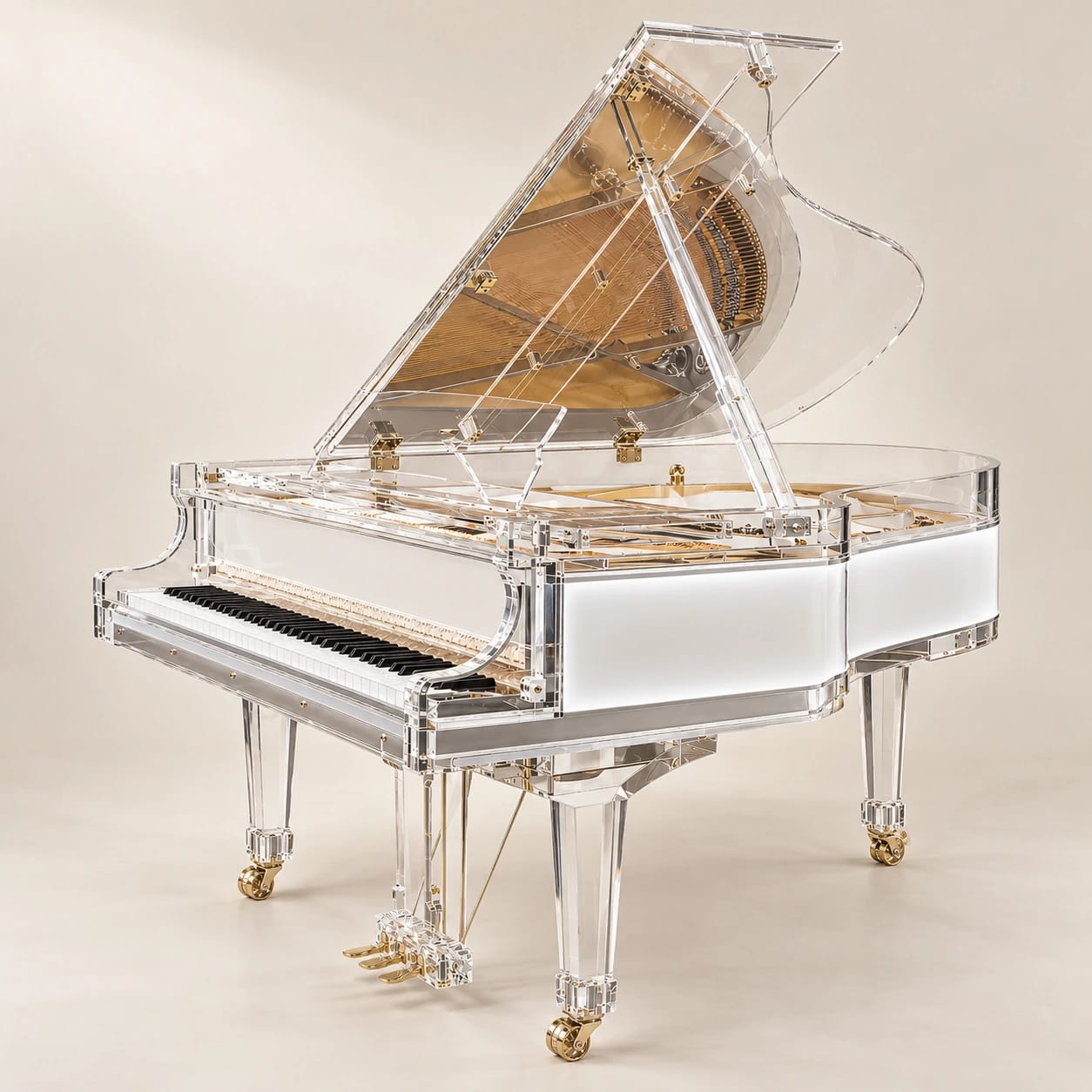
Studio visualisations. Date availability and venue arrangements are confirmed separately.
At a glance
Follow the campaign from installation to collection
Confirm the presentation
Agree the model and room purpose with the decision-maker.
Prepare the installation
Assess access and sequence specialist placement with styling.
Complete photography and inspections
Keep the intended use and position consistent.
Review the remaining period
Request any change before the confirmed end date.
Coordinate collection
Connect departure to the property’s next stage and current handover.
Let’s talk about your hire
Have a date or venue in mind?
Tell us the occasion, the piano and the details you know. We can help work through the rest.
The practical details
Plan your hire with confidence.
Explore the parts that matter to your plans. If you’re unsure, we can talk them through with you.
A little more about this hire
A real-estate campaign has several milestones, and a piano hired for the presentation needs to fit the sequence rather than only the first photograph. The property may be styled, photographed, opened for inspections and later changed or cleared for its next use. A practical hire plan identifies when the instrument is needed, who maintains the arrangement and when the dates should be reviewed.
This page follows that campaign timeline. It is for an owner, agent or organiser who has already identified a reason to include a piano and now needs to coordinate the period around the campaign. The property-styling guide addresses the earlier creative decision about whether the instrument belongs in the room and which finish supports the intended presentation.
Explore the topics on this page
Turn the marketing calendar into an occupied-period plan
Start with the campaign’s known milestones and distinguish them from estimates. Photography may have a confirmed date while later inspections or an auction remain provisional. The piano needs an occupied period that reflects when the room must be complete and how long the display is intended to remain. Do not use the public launch date as a substitute for the earlier preparation requirement.
Read the detail about Turn the marketing calendar into an occupied-period plan
Write down the first required-ready point, the expected display period and the earliest practical collection opportunity. Add any uncertainty rather than hiding it inside an approximate end date. This gives the piano team a clear basis for discussing the hire and helps the property representative understand which campaign decisions may later require an amendment.
Keep the campaign’s commercial outcome separate from the instrument arrangement. The piano is a presentation choice, not a promise that the property will sell within a particular period or achieve a particular price. The booking should therefore have an agreed scope and review process rather than an undefined expectation that it remains available until the campaign reaches its desired result.
Confirm the creative decision before scheduling the installation
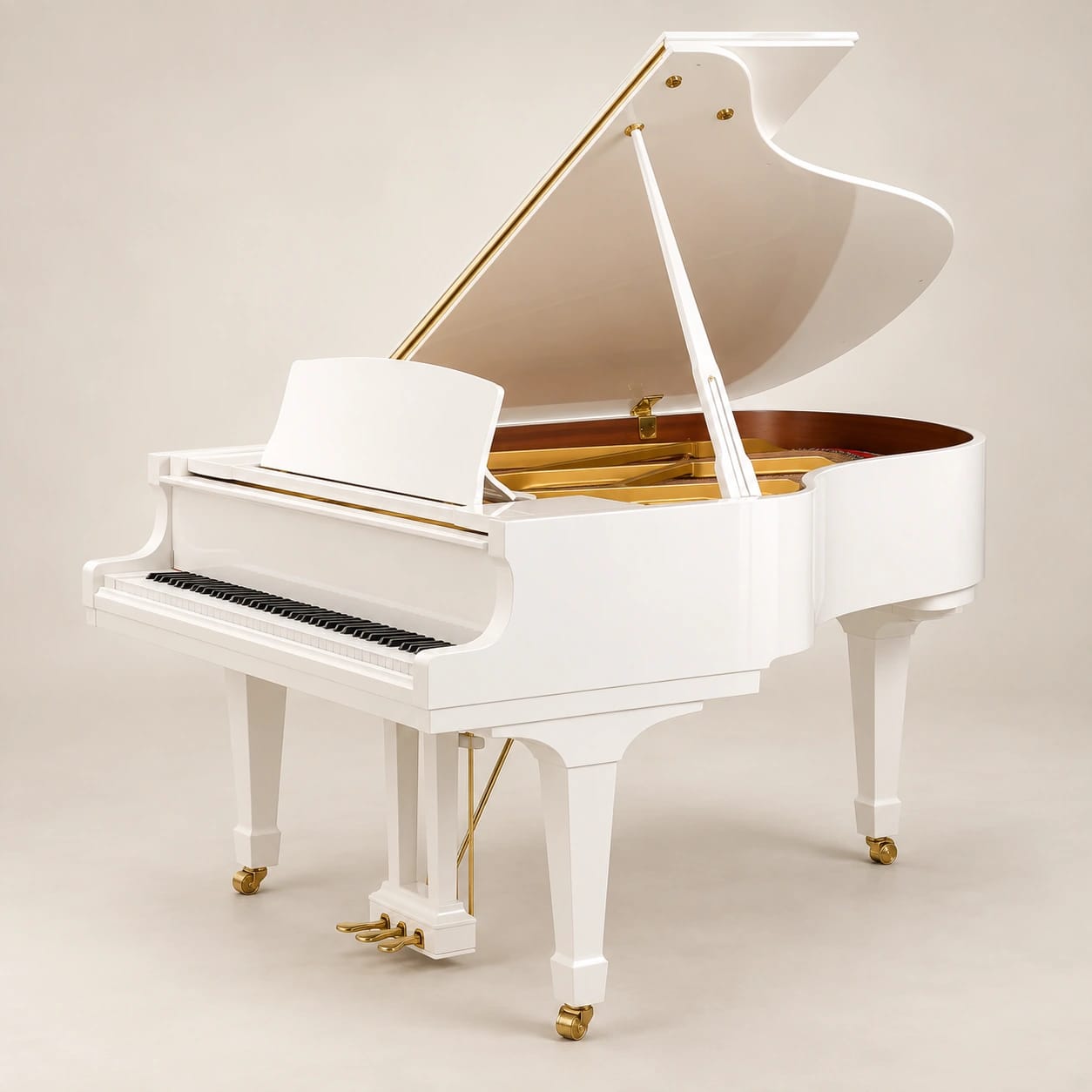
Identify the requested model and the reason it has been chosen for the property. The collection includes the white Stenberg 152, black Yamaha C3 and clear Teschendorf M170. The stylist and property decision-maker should agree the intended visual role, and any performer should be involved if playing is planned during a campaign event. These choices should be clear before transport is treated as the only remaining task.
Read the detail about Confirm the creative decision before scheduling the installation
If alternatives would be acceptable, record them with the person authorised to approve the change. A campaign can involve an owner, agent, stylist and photographer, each with a different view of the presentation. The booking team should not be left to infer whose preference controls the instrument choice. A specific approved request makes it easier to discuss actual availability for the dates.
Do not assume that a piano selected for display is an empty prop or can be handled like ordinary furniture. The actual instrument, intended use and proposed position need to be considered together. If the creative plan changes after the hire is arranged, check whether the new request affects the model, location or handling requirements before updating the installation instructions.
Coordinate delivery with the styling installation sequence
The property may receive furniture, artwork, photography equipment and other suppliers around the same time. Ask the installation coordinator to identify when the route to the piano position will be available. A room plan that works before furniture arrives may not describe the finished route. The specialist team needs current information about the complete movement and final placement.
Read the detail about Coordinate delivery with the styling installation sequence
Provide the known access facts, including steps, changes of level, lifts and any controlled entry arrangements. Photographs can support the enquiry through the proper process, but the owner or stylist is not expected to certify that the instrument will fit. Leave the assessment to the relevant specialists and label any unresolved part of the route as a question.
If the property is occupied, coordinate the preparation with the person responsible for the premises. Do not assume that a delivery can occur simply because a stylist has access at another time. The agreed arrival and placement should fit the property’s actual arrangements, and any proposed temporary position needs to be discussed rather than improvised while other installation work continues.
Make photography a milestone rather than the whole booking
Photography often creates the first firm deadline for a completed room. Give the piano team the point at which the instrument needs to be placed and ready, not only the photographer’s scheduled arrival. The production may need preparation time around the final position. A delivery window should not be interpreted as a precise appointment unless that specific arrangement has been confirmed.
Read the detail about Make photography a milestone rather than the whole booking
Tell the photographer which piano position has been agreed and what the styling concept is trying to show. If the shot plan relies on several instrument positions, raise that requirement before booking. The photographer, assistants and stylist should not move the piano as an ordinary scene adjustment. The specialist team needs to assess any proposed relocation and its place in the schedule.
After photography, check that the ongoing display plan still matches the hire. The instrument may remain for inspections or another campaign activity, but that use should already be included in the brief. Do not let the end of the shoot become an informal handover into an undefined period. The confirmed dates and responsibilities remain the reference for what happens next.
Set a consistent arrangement for inspections
Open inspections and private viewings can bring different people into the property over the display period. Identify the role responsible for keeping the piano’s agreed position and use consistent. That may be coordinated by the agent or property representative, depending on the arrangement. The important point is that the instrument is recognised as hired under specific terms rather than treated as an unrestricted part of the furniture package.
Read the detail about Set a consistent arrangement for inspections
If playing is intended at an inspection or campaign event, include that in the booking discussion. A visual display and a musical use are different requirements, even when the instrument does not move. Any requested on-site tuning is an explicit optional service decision, not an assumed inclusion. Ask the relevant musician to consider the model if a performance is planned.
Do not reposition the piano to change visitor flow or create space for another activity without agreement. If the campaign layout needs to change, contact the team with the actual proposal. A new position can affect handling and access even inside the same room. Keeping those changes deliberate helps maintain both the presentation and the agreed instrument arrangement throughout the inspection period.
Identify a review date before the campaign end becomes urgent
Choose a practical review point before the confirmed hire period ends. At that point, compare the campaign’s current plan with the booking dates and decide whether an amendment needs to be requested. This is useful when the campaign length is uncertain, but it does not create an automatic extension or a right to keep the instrument until a sale occurs.
Read the detail about Identify a review date before the campaign end becomes urgent
The review should ask a few specific questions: is the piano still needed for the planned presentation, are further inspections confirmed, and has the property’s next use changed? The answers help define an actual request for the team. Avoid sending a vague message that the campaign is continuing without stating the proposed new period or any changed arrangement.
Longer and special hires are discussed individually where necessary. Contact the team with the booking reference and the proposed change, then check the applicable terms and availability. Retain the current arrangement until a revision is agreed. The purpose of an early review is to create time for a clear decision, rather than allow an uncertain campaign to turn into an unplanned hire overrun.
Treat an auction or campaign event as a separate use decision
An auction, launch or other campaign event may change how the property is used, even if the piano remains in the same room. Ask whether the instrument is simply part of the display, will be played or is proposed to move for the event layout. Those are different requirements and should be considered before the event plan is finalised.
Read the detail about Treat an auction or campaign event as a separate use decision
If a musician is involved, arrange that service separately and involve them in the instrument discussion. The piano hire does not provide a performer, amplification or staging package. The property or event coordinator should connect the separate suppliers’ schedules and requirements without assuming the instrument booking covers the complete event.
A proposed relocation should be assessed explicitly. The piano should not be moved by agents, residents or event staff to make room for seating or presentation equipment. If the layout can work around the agreed position, record that. If it cannot, raise the actual requirement with the team and wait for an agreed arrangement before relying on the revised plan.
Keep the owner’s approval tied to the current scope
Use the live booking total or individual proposal for the current cost. Present the model, dates, transport arrangement and optional services with that amount so the person approving it understands the scope. A piano figure copied into a wider campaign budget can lose its conditions if the associated hire period and assumptions are omitted.
Read the detail about Keep the owner’s approval tied to the current scope
Keep instrument hire distinct from styling, photography, advertising and the agent’s other services. This helps the owner see what is being approved and who to contact about a particular change. If the booking includes a security deposit, identify that actual arrangement rather than assuming every hire uses the same payment structure. The applicable terms and confirmation govern the booking.
When the campaign changes, explain the new requirement before requesting approval of a revised amount. A longer period, another venue or a different instrument should not be presented as though it were part of the original decision. One current scope makes it easier for the owner, agent, stylist and piano team to stay aligned as the marketing programme develops.
Plan collection around the property’s next stage
At the end of the display, the property may be restyled, cleared or prepared for another use. Put piano collection into that sequence before other suppliers begin changing the route. The instrument should not be left as the final obstacle after furniture has been stacked in the entry or the agreed position has become unavailable.
Read the detail about Plan collection around the property’s next stage
Ask what access will be available at collection and who will coordinate it. The person who received the piano may no longer be involved at this stage, so the current property representative needs the agreed departure information. Do not assume that a styling-company collection appointment also covers the instrument or that another supplier can move it while waiting for the specialist team.
If the display ends earlier than expected, contact the team about the requested change and consult the applicable terms. An early sale or a revised campaign is not itself a confirmed collection arrangement. Keep the piano under the current agreed conditions until the revised plan is accepted. A clear departure sequence closes the hire without leaving responsibility ambiguous.
Maintain a simple campaign handover record
The campaign brief builder on this page collects the key instrument decisions and milestones in one place. It works locally in the browser and produces text you can copy into the planning discussion. It does not submit an enquiry, extend a booking or calculate a price. Use roles rather than personal details, and share private address and contact information through the proper booking channel.
Read the detail about Maintain a simple campaign handover record
Keep the record short enough that the people working on the property can find the current position, dates and review point quickly. If a decision is pending, say which role needs to resolve it. A note that extension requested is different from one that says extension confirmed. Preserving those distinctions helps prevent a campaign update from becoming an unapproved change to the instrument hire.
The property-styling page can support the creative brief, while the guides for agents and stylists address their professional responsibilities. This campaign timeline connects those contributions across the occupied period. It gives the piano a defined place in the sequence from installation to collection, with enough clarity to handle changes without promising availability or commercial outcomes that have not been established.
Want to organise your notes first?
Your enquiry
Build a real-estate campaign piano timeline
Prepare a copyable campaign outline. This does not extend a hire or predict a sale outcome.
Your notes stay in this page. Nothing is sent or saved automatically.
0 / 4,000 enquiry-note characters. Only answered fields and selected checks are included.
Read or select your brief
Your campaign piano timeline

Presentation purpose: To confirm
First required-ready milestone: To confirm
Inspection period: To confirm
Campaign events: To confirm
Review point: To confirm
Collection handover: To confirm

Planning checklist
[ ] The occupied period includes preparation before photography.
[ ] The requested model is approved by the relevant decision-maker.
[ ] Specialist access assessment is part of installation planning.
[ ] Inspection use and any playing are declared.
[ ] No relocation is assumed to be ordinary furniture handling.
[ ] A review point precedes the confirmed end date.
[ ] Requested amendments remain pending until agreed.
[ ] Collection is coordinated with the property’s next stage.

Planning notes only. Piano availability, access and arrangements need confirmation before booking.
Good to know
Your questions, answered.
Can the hire run until the property sells?
Describe the anticipated campaign period and discuss the arrangement with the team. The hire needs confirmed dates or an individually agreed scope; it does not automatically continue until a sale occurs. Set a review point and request any extension before relying on additional availability.
What if the campaign finishes earlier than planned?
Contact the team with the booking reference and the proposed change, then consult the applicable terms. An early campaign finish does not itself create a revised collection appointment or change the agreement. Keep the instrument under the current arrangement until the team confirms what will happen next.
Can the piano remain after the styling furniture is removed?
Explain the proposed sequence before the removal begins. The piano’s position, route and responsibility still need to remain consistent with the agreed hire. Do not assume a separate furniture collection can move the instrument or leave it in an unassessed position. Ask the team to consider the actual revised arrangement.
Who should keep track of the hire during the campaign?
Identify a current property-coordination role, such as the agent or another appointed organiser, and make sure they have the confirmed dates, position and review point. They can collect requests and communicate changes, while the relevant people still approve instrument, venue and booking decisions within their responsibilities.
Let’s talk about your hire
Tell us what you’re imagining.
Tell us the occasion, the piano and the details you know. We can help work through the rest.